Maddy summaryHR 4304, the FAIR Bet Act, amends the tax code to allow gamblers to deduct 100% of their wagering losses instead of the current 90% limit. This change directly affects individuals who report gambling losses on their federal income tax returns. The key provision modifies Section 165(d) of the Internal Revenue Code to remove the 90% restriction on deducting gambling losses. The bill does not alter how gambling winnings are taxed, only the deduction available for losses.
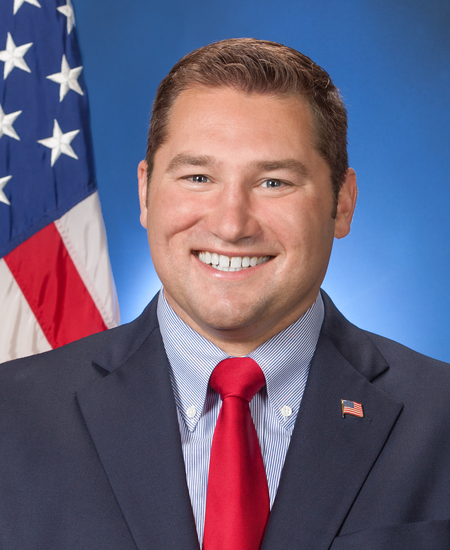
Rep. Guy Reschenthaler
Sponsored bills
Maddy summaryThis bill prevents state or local governments from banning or restricting energy connections (like installation, modification, or access) based on the type or source of energy, such as electricity, natural gas, or renewable fuels. It directly affects consumers choosing energy providers and energy companies seeking to offer services. The key provision prohibits local laws, regulations, or policies that limit energy services sold in interstate commerce, covering all energy types listed in the bill’s definitions. It does not create new programs but limits regulatory authority at the state or local level. The law aims to ensure open access to diverse energy sources without source-based restrictions.
Safeguard American Voter Eligibility Act or the SAVE America Act This bill requires individuals to provide documentary proof of U.S. citizenship when registering to vote, and requires photo identification to vote, in federal elections. Specifically, the bill prohibits states from accepting and processing an application to register to vote in a federal election unless the applicant presents documentary proof of U.S. citizenship. The bill specifies what documents are considered acceptable proof of U.S. citizenship, such as identification that complies with the REAL ID Act of 2005 that indicates U.S. citizenship. Further, the bill (1) prohibits states from registering an individual to vote in a federal election unless, at the time the individual applies to register to vote, the individual provides documentary proof of U.S. citizenship; and (2) requires states to establish an alternative process to demonstrate U.S. citizenship. Each state must take affirmative steps on an ongoing basis to ensure that only U.S. citizens are registered to vote, which shall include establishing a program to identify individuals who are not U.S. citizens using information supplied by certain sources. Additionally, states must remove noncitizens from their official lists of eligible voters. The bill (1) provides for a private right of action for certain violations, and (2) establishes criminal penalties for certain offenses. Individuals voting in federal elections must present an eligible photo identification document. An individual who votes by absentee ballot must submit a copy of their identification document with both the request for, and the submission of, the absentee ballot.
Miracle on Ice Congressional Gold Medal Act This act provides for the award of Congressional Gold Medals to the members of the 1980 U.S. Olympic men's ice hockey team in recognition of the team's achievement at the 1980 Winter Olympic Games.
Maddy summaryHR 1461 designates the U.S. Postal Service facility at 521 Thorn Street in Sewickley, Pennsylvania, as the "Mary Elizabeth 'Bettie' Cole Post Office Building." The bill updates all official references to this specific post office location to reflect the new name. This is a ceremonial naming resolution honoring Mary Elizabeth "Bettie" Cole, with no new policies, funding, or operational changes to the postal facility.
Give Kids a Chance Act of 2025 This bill expands the Food and Drug Administration’s (FDA’s) authority with respect to research on rare pediatric diseases, including by permitting the FDA to take enforcement action against drug sponsors that fail to satisfy pediatric study requirements and by reauthorizing programs that support pediatric research. Specifically, the bill modifies requirements relating to molecularly targeted pediatric cancer investigations to permit research on new drugs in combination with active ingredients that have already been approved, provided certain conditions are met; permits the FDA to take enforcement action against drug sponsors that fail to comply with pediatric study requirements, if such sponsors demonstrated a lack of due diligence in satisfying the requirement; renews the FDA’s authority to award priority review vouchers to sponsors of new products intended to treat rare pediatric diseases through September 30, 2029; and reauthorizes through FY2027 certain funding for the National Institutes of Health to support priority pediatric research. The bill also provides statutory authority for the FDA’s interpretation of the orphan drug exclusivity period. The bill specifies, consistent with FDA regulations, that the seven-year market exclusivity period for drugs for rare diseases or conditions (i.e., orphan drugs) prohibits the approval of the same drug for the same approved use or indication with respect to the disease or condition. (In Catalyst Pharmaceuticals, Inc. v. Becerra , a court rejected the FDA’s interpretation and held that orphan drug exclusivity extends to all uses or indications for the disease or condition.)
Maddy summaryThis bill requires all new passenger vehicles manufactured for sale in the U.S. to include AM radio as standard equipment (not an optional add-on) by 2027-2028, depending on manufacturer size. It mandates that AM radio receivers must be easily accessible to drivers and allows compliance through digital AM broadcast technology. During a transition period, manufacturers must clearly label vehicles without AM radio but cannot charge extra for this feature. The bill also mandates a GAO study on AM radio's role in emergency alerts and includes a 10-year sunset provision for the rule. It preempts state laws regarding AM radio access in vehicles.
Maddy summaryThe 21st Century Dyslexia Act amends the Individuals with Disabilities Education Act (IDEA) to explicitly include dyslexia in the definition of specific learning disabilities and provide a clear definition of dyslexia as an unexpected difficulty in reading due to challenges in phonological processing. It requires schools to provide equal access to accommodations and services for all eligible students, including those from low-income families, low socioeconomic backgrounds, and limited English proficient students. This change ensures students with dyslexia are formally recognized under IDEA and that schools must consider these equity factors when determining eligibility and service provision. The bill does not alter existing eligibility criteria but clarifies definitions and mandates equitable access to support services.
Maddy summaryThis bill amends the National Instant Criminal Background Check System (NICS) process to strengthen due process for individuals denied firearm purchases. It requires courts to hold hearings on challenges within 30 days, places the burden on the government to prove ineligibility by "clear and convincing evidence," and mandates courts to award attorney fees to successful challengers. The bill also requires the FBI to submit annual reports to Congress detailing NICS challenge volumes, reversal rates, and processing times. These provisions directly affect people wrongly flagged in the NICS database who seek to correct their records. The law focuses on procedural fairness, not altering firearm eligibility criteria.
Maddy summaryThis bill would require all states to recognize valid concealed carry permits issued by other states, allowing permit holders to carry concealed handguns (excluding machine guns) in any state that either issues such permits or doesn't prohibit concealed carry. It directly affects law-abiding gun owners with valid permits from their home state, ensuring they can carry in states with similar permit systems or no prohibitions. Key provisions include treating valid permit documents as proof of legal carry (reducing officer stops), shifting the burden of proof to prosecutors if challenged, and allowing civil lawsuits for violations with attorney's fee awards. The bill does not override state laws restricting firearms on private property or government land, nor does it affect federal gun restrictions like those in section 922(q).