Maddy summaryThis resolution expresses support for designating April as Undiagnosed Awareness Month to highlight the challenges faced by the approximately 25 million Americans living with rare diseases that have not yet been identified. The bill aims to raise public awareness about the difficulties these patients endure, such as long diagnostic delays, misdiagnoses, and lack of treatment options, while honoring the work of the Undiagnosed Diseases Network and related research efforts. By acknowledging this month, the House intends to promote greater understanding of the need for improved diagnostic tools and equitable access to medical care for individuals with undiagnosed conditions.
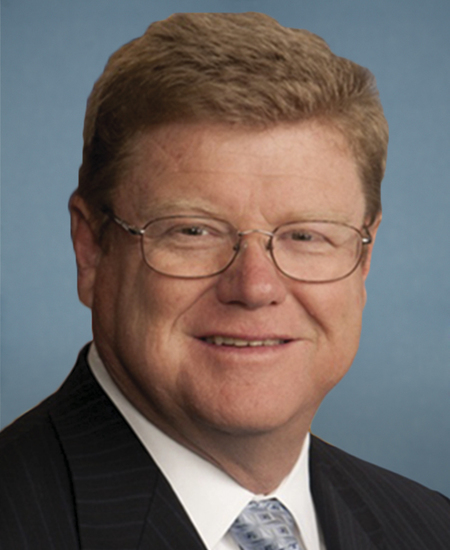
Rep. Mark E. Amodei
Sponsored bills
Maddy summaryThis House Resolution recognizes the efforts and public safety contributions of linemen and the important role they play in maintaining the nation's energy infrastructure. It expresses support for designating April 18, 2026, as "National Lineman Appreciation Day" and acknowledges linemen as first responders.
Maddy summaryThe ESA Amendments Act of 2025 makes significant changes to the Endangered Species Act of 1973 to streamline conservation efforts and reduce regulatory burdens. It establishes a national listing work plan with priority classifications for species to better allocate resources, and creates "Candidate Conservation Agreements with Assurances" that provide private landowners with regulatory certainty in exchange for conservation actions. The bill also requires the government to publish the basis for listings online, streamlines permitting processes for projects that comply with conservation measures, and modifies critical habitat designation to better accommodate existing conservation plans on private lands. These changes aim to improve conservation outcomes while reducing delays for landowners, developers, and federal agencies working with listed species.
Maddy summaryThe Swalwell Act aims to reform how workplace misconduct claims involving Members of Congress and senior staff are handled. It prohibits the use of federal or campaign funds to pay settlements or awards for such claims, making the individuals personally liable for the full amount. The bill mandates the creation of a public database disclosing details of these settlements and awards, including historical data, while protecting victims' identities. Additionally, it requires prompt referral of any allegations of criminal conduct by Members or senior staff to the Department of Justice, regardless of settlement agreements.
Maddy summaryThis bill, titled the Bonneville Power Leadership Recruitment Act, adjusts the pay scale for the Administrator and employees of the Bonneville Power Administration to match compensation levels at consumer-owned utilities in the Western Interconnection. It requires the Secretary of Energy to conduct an annual survey of utility compensation and set pay rates accordingly, with considerations for recruitment, retention, and the agency's budget and mission goals. The changes apply to the Administrator's basic pay and to Senior Executive Service employees, aiming to make their total compensation competitive with similar private utility positions in the region.
Maddy summaryThis bill establishes new safety and medical requirements for "unified boxing organizations" (UBOs), which are boxing groups that manage title belts and rankings without separate sanctioning bodies. It directly affects UBOs and boxers under their contracts by mandating comprehensive medical screenings (including annual physicals, brain MRIs, and pregnancy tests for female boxers), requiring two ambulances and three physicians at ringside during matches, and providing boxers with mandatory health insurance covering $25,000 in injury costs. Key provisions include strict anti-doping testing protocols (with no cost to boxers), prohibitions on boxers betting on matches, and UBOs covering all medical expenses. The bill also requires UBOs to register publicly with the Federal Trade Commission and adhere to updated industry standards for boxer compensation and safety.
Maddy summaryThe SILVER Act aims to improve the resilience and efficiency of the U.S. precious metals futures market by allowing storage facilities outside New York City to be approved for use in futures contracts. The bill requires derivatives clearing organizations to use transparent, objective criteria when selecting storage vaults and to approve new facilities that promote geographic diversity, competition, and lower storage costs. It mandates that at least two approved depositories be available in each of the four U.S. time zones, ensuring broader market access and reducing risks associated with concentrating vaults in one location. The legislation also requires periodic assessments of how easily market participants can access physical delivery of commodities regardless of where the storage facilities are located.
Enhanced Iran Sanctions Act of 2025 This bill imposes sanctions on certain foreign persons (individuals and entities) that are involved in Iran's petroleum sector as well as certain associated persons. The bill also requires or authorizes actions to facilitate the enforcement of sanctions on Iran. Specifically, the bill requires the President to impose visa- and property-blocking sanctions on any foreign person that, after the bill's enactment, knowingly engages in any transaction related to the processing, export, or sale of oil, condensates, gas, liquefied natural gas, or other petrochemical products in whole or in part from Iran. The President must also impose sanctions on certain foreign persons associated with a sanctioned individual or entity. For example, the President must sanction the subsidiaries and corporate officers of a sanctioned business. The bill provides certain exceptions to these sanctions, including specifying that sanctions do not apply to the importation of goods or to conducting or facilitating transactions for humanitarian assistance. The Department of State must establish an interagency working group that shall seek to establish a multilateral contact group to coordinate international efforts to enforce sanctions on Iran. The bill expands the State Department rewards program to authorize a reward payment to any individual who furnishes information leading to the identification of a person (1) subject to sanctions under this bill, or (2) that has attempted or is attempting to evade sanctions under this bill.
Mining Regulatory Clarity Act This bill allows mining operators to use federal lands for activities ancillary to mining, such as waste disposal, regardless of whether those lands contain mineral deposits valuable enough to be mined (mineral validity). It also establishes the Abandoned Hardrock Mine Fund. The bill addresses a 2022 decision in the U.S. Court of Appeals for the Ninth Circuit related to the Rosemont Copper Mine in Arizona (commonly known as the Rosemont decision , described further in CRS Report R48166 ). The court held that mining claims are only allowed where mineral validity has been established and that mill site claims are more appropriate means for establishing a mining waste disposal site under the Mining Act. The bill allows a mining operator to (1) locate and include within its plan of operations as many mill site claims (e.g., areas for waste rock disposal) as are reasonably necessary for its operations, and (2) use or occupy public land in accordance with an approved plan of operations. Additionally, the bill requires any revenue generated from fees for such mill site claims to be deposited into the Abandoned Hardrock Mine Fund. The Department of the Interior must use the fund for certain abandoned hardrock mine reclamation activities.
Maddy summaryHR 6062 transfers approximately 25 acres of federal land from the Department of the Interior (DOI) to U.S. Customs and Border Protection (CBP) for its Advanced Training Center in Harpers Ferry, West Virginia, while returning about 71.51 acres from CBP back to DOI to expand Harpers Ferry National Historical Park. The bill requires adjusting park boundaries to exclude the transferred CBP land and include the returned land, with a survey finalizing exact boundaries. It specifies no monetary reimbursement for the transfers and allows CBP to revert unused land back to DOI for park inclusion. The transfer relies on a specific 2021 National Park Service map for land descriptions.