

Maddy summaryThe BLANCHE Act of 2026 prohibits the United States government from entering into settlement agreements with the President that result in the President or a third party receiving any payment, including cash, goods, or legal fees. This rule applies to claims filed by the President or individuals who assumed office while a claim was pending, ensuring no such agreements are valid unless a federal court explicitly approves them. To gain court approval, the agreement must be proven to be between adverse parties, not collusive or fraudulent, and in the interest of justice, requiring a formal hearing with evidence presented by both sides. The law also mandates that the President file the proposed terms with the court if no separate civil action has already been initiated. These provisions aim to prevent potential conflicts of interest and ensure transparency in any legal settlements involving the highest office in the land.
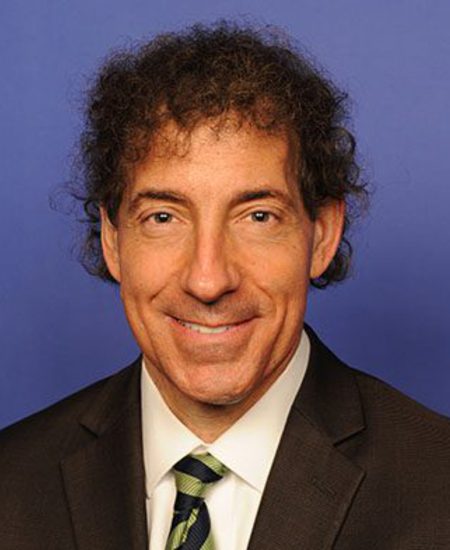
Rep. Jamie Raskin
Sponsored bills
United States Commission on International Religious Freedom Reauthorization Act of 2026 This bill reauthorizes the U.S. Commission on International Religious Freedom through 2028. The commission is an independent federal commission tasked with monitoring international religious freedom conditions, reviewing U.S. government policy, and making policy recommendations. (Under current law, the commission is authorized through FY2026.)
Maddy summaryThis bill, known as the Alice Cogswell and Anne Sullivan Macy Act, amends the Individuals with Disabilities Education Act to improve special education services for children who are deaf, hard of hearing, deafdisabled, blind, visually impaired, or deafblind. It requires states to identify these students regardless of how they are currently classified, ensuring they receive specialized instruction in their primary language and access to qualified professionals. Key provisions mandate that state plans include specific strategies for language development, Braille instruction, and the use of assistive technologies, while also establishing a new national center to support research and training for educators of students with visual disabilities. Additionally, the legislation clarifies definitions for deafblindness and interveners, updates data reporting requirements to track these populations more accurately, and ensures early intervention services are delivered in natural environments to support language and communication milestones.
Maddy summaryThis bill, known as the Arlington National Cemetery Viewshed Protection Act, restricts the construction of large triumphal arches in the Washington, D.C. area to preserve visual sightlines. It specifically bans the building of any such arches within Lady Bird Johnson Park and prohibits the use of federal funds for these structures there. Additionally, the law prevents the erection of triumphal arches taller than 50 feet on any land managed by the National Park Service unless Congress explicitly approves them. These measures aim to limit new monumental structures that could obstruct views of the Arlington National Cemetery from the capital region.
Maddy summaryThe America Bikes Act expands federal funding and flexibility for building and improving infrastructure for walking and bicycling, primarily affecting state and local transportation agencies. It allows the federal government to cover up to 100% of project costs for specific safety improvements and creates a new competitive grant program to fund large-scale networks connecting communities, schools, and workplaces. The legislation also introduces a new grant program to help integrate bicycle facilities with public transit systems and provides tax breaks for employers who reimburse employees for bicycle commuting expenses. Additionally, the bill requires the Department of Transportation to update safety guidelines for schools and set aside dedicated funding for active transportation projects on federal and tribal lands.
Maddy summaryThe Federal Funding Protection Act amends federal law to allow district courts to hear lawsuits challenging the termination of government grants. This change directly affects individuals or organizations whose funding has been cut due to agency actions that are already being reviewed in court. By adding a new provision to the U.S. Code, the bill clarifies that these specific civil actions fall under the original jurisdiction of district courts. The legislation ensures that legal challenges to grant terminations can proceed alongside related administrative reviews without requiring the case to be moved to a different court.
Maddy summaryThe SCCOTUS Act creates a new Supreme Court Certification Panel composed of 13 randomly selected federal circuit judges to review and decide on petitions for writs of certiorari. This body would determine whether cases are granted review based on specific criteria, such as conflicts between different courts or questions of major federal importance, and would issue written explanations for grants while denying cases without detailed reasons. Once the Panel grants a petition, the case is automatically treated as if the Supreme Court itself had granted it, effectively shifting the initial gatekeeping function from the nine Supreme Court justices to this larger panel of appellate judges.
Maddy summaryThe SHADOW Act requires the Supreme Court to provide detailed written reasons when it grants or denies emergency stays or issues certain injunctions. Specifically, justices must explain why a party will suffer unique harm without relief, confirm they are not judging the case's final outcome, and state whether the decision serves the public interest. These explanations must be published on the public docket, unless immediate action is needed to prevent urgent harm, in which case the reasons must be posted within seven days. The law also restricts the issuance of emergency writs to situations involving critical circumstances that protect indisputably clear legal rights. This legislation directly affects the Supreme Court's internal procedures and increases transparency regarding its emergency rulings.
Maddy summaryThis bill authorizes the U.S. Mint to produce commemorative $5 gold and $1 silver coins marking the 25th anniversary of the September 11, 2001, terrorist attacks. The coins must feature designs honoring victims and first responders (including the inscription "Never Forget") and will be sold only during 2027-2028. All surcharges ($35 per gold coin, $10 per silver coin) collected from sales will fund the National September 11 Memorial and Museum at the World Trade Center, with no net cost to the federal government. The coins are legal tender but primarily intended for collectors, not circulation.
Maddy summaryThe Smithsonian American Women’s History Museum Act authorizes the creation of a new Smithsonian museum dedicated to women’s history, to be located within the National Mall Reserve in Washington, D.C. If the site is managed by another federal agency, the bill requires that agency to transfer the land after notifying Congress and relevant committees. The museum must ensure exhibits and programs accurately represent diverse women’s experiences by consulting a broad range of experts and community voices. The Smithsonian will submit biennial reports to Congress detailing how the museum meets these representation standards.