Maddy summaryHR 3492, the Protect Children’s Innocence Act, makes it a federal crime to perform genital or bodily mutilation or chemical castration on minors under 18, except for specific medical reasons. The bill broadly defines prohibited procedures to include gender transition-related surgeries (like hysterectomies or mastectomies) and medical treatments such as puberty blockers or cross-sex hormones administered to minors. It criminalizes these acts when they occur across state lines, involve payments, or use interstate commerce, while explicitly banning religious tradition as a defense. Exceptions include medically necessary procedures for health emergencies, childbirth, or conditions certified by a physician.
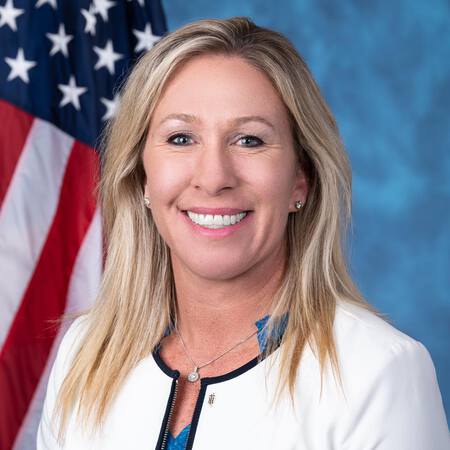
Rep. Marjorie Taylor Greene
Sponsored bills
Maddy summaryHR 498, the "Do No Harm in Medicaid Act," prohibits federal Medicaid funding for gender transition procedures for individuals under 18 years old. The bill amends the Social Security Act to define "specified gender transition procedures" broadly, including surgeries, hormone treatments, and certain medications, and bans federal Medicaid coverage for these services for minors. Exceptions are made only for medically necessary treatments related to precocious puberty, genetic disorders of sex development, or urgent medical conditions requiring bodily correction (like infections or injuries from prior procedures). This directly affects minors enrolled in Medicaid state plans, as states would no longer receive federal funds for these specific covered services.
Maddy summaryHCONRES 64 is a congressional resolution directing the President to withdraw U.S. military forces from any hostilities against Venezuela that lack explicit congressional authorization. It applies to ongoing military operations in Venezuela not approved by Congress through a declaration of war or specific law authorizing force. The resolution invokes the War Powers Resolution (50 U.S.C. 1544(c)), requiring the removal of troops within the timeframe specified by that law. This bill does not affect military actions already authorized by Congress but mandates the end of unapproved operations.
Miracle on Ice Congressional Gold Medal Act This act provides for the award of Congressional Gold Medals to the members of the 1980 U.S. Olympic men's ice hockey team in recognition of the team's achievement at the 1980 Winter Olympic Games.
Maddy summaryThis bill amends federal labeling rules for beef products sold in the U.S. It requires clear country-of-origin labeling for beef (including ground beef), expanding existing rules that previously covered lamb and venison. The key change increases penalties for non-compliance: $5,000 per pound of beef sold without required labeling, compared to $1,000 per violation for other meats. These rules directly affect meat producers, processors, and retailers selling beef products. The bill also ensures U.S. labeling authority cannot be overridden by international trade rulings.
Maddy summaryThis bill authorizes Congress to award two gold medals in honor of Charlie Kirk, a conservative activist and founder of Turning Point USA, who was tragically killed in 2025. One medal will go to his family, and the other will be displayed at the Smithsonian Institution to preserve his legacy. The bill does not create new policy or affect any laws - it is purely commemorative, following standard procedures for Congressional Gold Medals. It includes provisions for striking the medals and selling bronze duplicates to cover costs, but contains no substantive legislative changes.
Maddy summaryThis bill prohibits federal funds from being used to cover any abortion-related expenses for individuals classified as "illegal aliens" under immigration law. It specifically blocks taxpayer money from paying for travel, lodging, meals, childcare, translation, doula care, or patient education services connected to abortion access. The law directly affects non-citizens who are inadmissible or deportable under specific immigration statutes (as defined in the Immigration and Nationality Act). It applies to all federal programs and funds, restricting assistance for abortion services beyond the procedure itself.
Maddy summaryHR 4070, the Tren de Aragua Border Security Threat Assessment Act, requires the Secretary of Homeland Security to conduct a detailed assessment of the criminal threats posed by the Venezuelan gang Tren de Aragua to U.S. borders within 180 days of the bill's enactment. The assessment must cover the group's origins, methods, funding, and specific threats to the southwest, northern, and maritime borders, followed by a strategic plan within one year outlining how federal, state, and local agencies will counter these threats through information sharing, interdiction, and preventing the group's expansion in the U.S. The bill directly affects DHS, intelligence agencies, and border law enforcement partners by mandating these reports and planning processes.
Maddy summaryHRES 581 is a procedural resolution that establishes rules for the House to consider H.R. 185, the Epstein Files Transparency Act. It waives all points of order against the bill, adopts a specific amendment (the full text of the Epstein Files Transparency Act), and limits debate to one hour equally divided between the Judiciary Committee's chair and ranking minority member. The resolution also requires the Attorney General to release unclassified DOJ records related to Jeffrey Epstein within 30 days, with limited exceptions for privacy or national security.
Maddy summaryThis bill requires all new passenger vehicles manufactured for sale in the U.S. to include AM radio as standard equipment (not an optional add-on) by 2027-2028, depending on manufacturer size. It mandates that AM radio receivers must be easily accessible to drivers and allows compliance through digital AM broadcast technology. During a transition period, manufacturers must clearly label vehicles without AM radio but cannot charge extra for this feature. The bill also mandates a GAO study on AM radio's role in emergency alerts and includes a 10-year sunset provision for the rule. It preempts state laws regarding AM radio access in vehicles.