

Maddy summaryThe American High-Speed Rail Act expands federal funding and streamlines regulations to support the development of high-speed and higher-speed rail projects across the United States. It authorizes billions of dollars in grants for corridor planning, technology improvements, and construction, while allowing the federal government to cover up to 100% of project costs under specific conditions. The bill also introduces new provisions to facilitate land acquisition, prioritize border projects, and extend labor protections to workers involved in federally funded rail infrastructure. Additionally, the legislation defines higher-speed rail as trains traveling between 110 and 186 miles per hour and includes tax incentives for rail carriers that sell or lease property to support these projects.
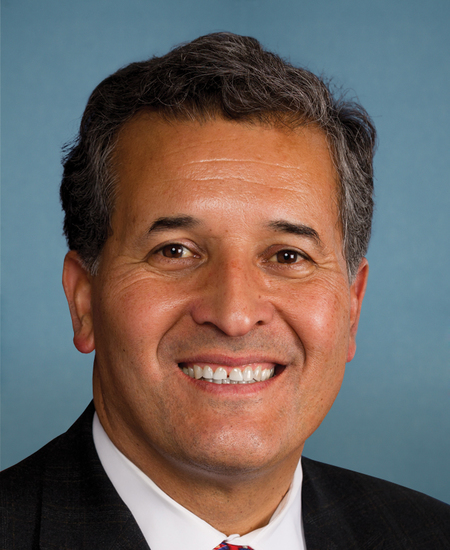
Rep. Juan Vargas
Sponsored bills
Maddy summaryThis bill, titled the Ending Fossil Fuel Bailouts Act of 2026, modifies federal bankruptcy laws to specifically target oil, gas, and coal companies. It requires these companies to prioritize paying worker wages and environmental cleanup costs over other debts, including those owed to shareholders. The legislation also prevents fossil fuel firms from abandoning their assets during bankruptcy and extends the time period for investigating fraudulent financial transfers to ten years. Additionally, it prohibits the transfer of certain federal energy leases if the company holding them files for bankruptcy. These changes aim to ensure that environmental liabilities and employee compensation are addressed before other financial claims are settled.
Maddy summaryThis bill establishes new federal standards requiring oil and gas companies operating on the Outer Continental Shelf to be certified as "fit to operate" before they can obtain or maintain leases. To receive this certification, companies must demonstrate a clean safety and environmental record over the past decade, maintain an investment-grade credit rating, and prove they have sufficient funds to cover future decommissioning costs. The legislation also mandates that operators place a significant portion of estimated decommissioning costs into interest-bearing escrow accounts and limits the time a well can be temporarily abandoned to three years, with a possible one-time extension to five years. Additionally, the bill requires the Department of the Interior to conduct annual compliance checks and submit detailed reports to Congress regarding enforcement actions and escrow account balances.
Maddy summaryHRES 1314, the America 250 Commemorative Flag Act, designates a special flag featuring the number 250 within the circle of stars as an official United States flag for the 250th anniversary of the Declaration of Independence. This resolution authorizes the America 250 flag to be flown alongside the national flag and POW/MIA flags at all government buildings, embassies, and official U.S. locations worldwide during the commemoration year. The bill serves as a ceremonial measure to honor the nation's history and the sacrifices made by patriots, without altering any existing laws or policies.
Maddy summaryThis resolution honors the victims of the May 18, 2026, mass shooting at the Islamic Center of San Diego and expresses condolences to their families. It specifically recognizes the bravery of security guard Amin Abdullah and community members Nader Awad and Abul Izz, who died while protecting others. The measure also condemns the violence and Islamophobia that led to the attack and affirms support for the affected Muslim community. As a symbolic gesture, the bill does not create new laws or funding but serves to officially acknowledge the tragedy and unite against hate.
Maddy summaryThis bill authorizes the President to award the Medal of Honor to Sergeant Rafael Peralta for his heroic actions during the Second Battle of Fallujah in Iraq on November 15, 2004. The legislation specifically directs that he receive the nation's highest military decoration for pulling an enemy grenade under his body to shield fellow Marines from harm, even though he was already mortally wounded. To ensure this award can be granted, the bill overrides existing time limits on posthumous medal presentations that would otherwise prevent the recognition. Ultimately, the act serves to formally recognize Sergeant Peralta's conspicuous gallantry and intrepidity in the face of extreme danger.
Maddy summaryThis bill authorizes the U.S. Mint to produce commemorative $5 gold and $1 silver coins marking the 25th anniversary of the September 11, 2001, terrorist attacks. The coins must feature designs honoring victims and first responders (including the inscription "Never Forget") and will be sold only during 2027-2028. All surcharges ($35 per gold coin, $10 per silver coin) collected from sales will fund the National September 11 Memorial and Museum at the World Trade Center, with no net cost to the federal government. The coins are legal tender but primarily intended for collectors, not circulation.
Maddy summaryThe Smithsonian American Women’s History Museum Act authorizes the creation of a new Smithsonian museum dedicated to women’s history, to be located within the National Mall Reserve in Washington, D.C. If the site is managed by another federal agency, the bill requires that agency to transfer the land after notifying Congress and relevant committees. The museum must ensure exhibits and programs accurately represent diverse women’s experiences by consulting a broad range of experts and community voices. The Smithsonian will submit biennial reports to Congress detailing how the museum meets these representation standards.
Maddy summaryThe IMPACT to Save Moms Act directs the Centers for Medicare & Medicaid Services to run a five-year demonstration project from 2027 to 2031, allowing states to test new payment models for maternity care under Medicaid and state child health plans. This initiative aims to improve health outcomes for pregnant and postpartum individuals, with a specific focus on reducing disparities among groups that experience higher rates of maternal mortality and severe complications. To achieve these goals, the project requires states to consider alternative payment structures that account for pregnancy risk levels, include diverse care teams with training on bias, and address social factors affecting health. The bill also mandates that the federal government evaluate the project's impact on health outcomes and spending, and submit a final report to Congress with recommendations on whether to expand the program nationwide.
Maddy summaryH.Res. 1291 is a non-binding resolution that formally recognizes May 3 through May 9, 2026, as Wildfire Preparedness Week. The bill aims to raise public awareness about wildfire risks and promote educational initiatives regarding fire safety and evacuation planning. It highlights the dangers of smoke exposure for both the general public and firefighters while noting that human activity causes the majority of wildland fires. This measure does not change laws or allocate funding, but rather expresses the House of Representatives' support for these preparedness goals.