Maddy summaryHR 2175 designates the U.S. Postal Service facility at 130 South Patterson Avenue in Santa Barbara, California, as the "Brigadier General Frederick R. Lopez Post Office Building." The bill updates all official U.S. government references to this location to reflect the new name. This is a ceremonial naming bill with no policy changes or direct impact on residents or services.
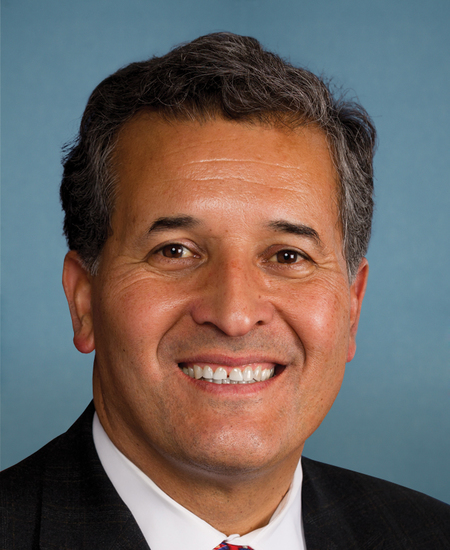
Rep. Juan Vargas
Sponsored bills
Maddy summaryThis bill designates the United States Postal Service facility at 4640 Cass Street in San Diego, California, as the Mary Wilding Memorial Post Office Building. It directly affects the specific postal location by changing its official name to honor Mary Wilding. The key provision ensures that all future legal documents, maps, and records referring to this building will use the new memorial name. This is a commemorative measure that updates official records rather than changing operational policies or funding.
Maddy summaryHR 4283 designates the U.S. Postal Service facility at 1157 West Mission Avenue in Escondido, California, as the "Captain E. Royce Williams Post Office Building." The bill updates all official references (laws, maps, documents) to this specific post office to use the new name. This is a ceremonial naming bill with no policy changes or direct impact on citizens' rights or obligations. It affects only the postal facility's official designation and related records.
Maddy summaryThe No Passes for Polluters Act of 2026 requires Congress to explicitly approve any exemptions from Clean Air Act regulations before the President or federal agencies can use them. Under this bill, the President must submit a detailed message to both houses of Congress explaining the reasons and facts behind any proposed exemption, which then triggers a special legislative process. To pass such an exemption, a joint resolution must be approved by a two-thirds vote in both the Senate and the House of Representatives, with limited debate and no amendments allowed. Additionally, the Comptroller General will review these proposals to ensure they have legal authority, and any unauthorized use of exemptions could lead to civil lawsuits. The legislation also mandates that the President reconsider certain executive branch emissions regulations every three years.
Maddy summaryThe Protecting Immigrants From Legal Exploitation Act of 2026 aims to combat fraud by increasing criminal penalties for individuals who falsely represent themselves as immigration lawyers or provide fraudulent services. It requires non-lawyer immigration service providers to identify themselves on applications and allows victims of unauthorized practice of law to withdraw and resubmit their immigration forms without penalty. The bill also empowers the Attorney General to issue civil injunctions against fraudulent providers and mandates that convicted fraudsters reimburse their clients for services rendered. To support legitimate legal aid, the legislation authorizes funding for outreach programs and grants to nonprofit organizations that provide direct legal assistance to immigrants.
Maddy summaryHR 4288 would rename the Department of Veterans Affairs community-based outpatient clinic in San Jose, California, as the "Corporal Patrick D. Tillman VA Clinic." The bill directly affects this specific VA facility, updating all official references to it. The key provision requires the clinic to be designated by this new name in all federal records, documents, and maps following the bill's enactment. This is a procedural naming bill honoring Corporal Tillman, a former NFL player and Army Ranger killed in action in Afghanistan in 2004.
Maddy summaryThis resolution expresses support for designating July 10th as Journeyman Lineworkers Recognition Day to honor the workers who maintain the nation's electrical grid. The bill specifically recognizes the dangerous conditions these employees face, such as working at heights near live power lines and responding to disasters like hurricanes and wildfires. It also commemorates Henry Miller, the first president of the International Brotherhood of Electrical Workers, who died on July 10, 1896, while performing his duties. Ultimately, the measure encourages the public to observe this day with reflection on the contributions of lineworkers.
Maddy summaryThe Find Our Families Act of 2026 requires the Department of Homeland Security to create a public online system that allows families to locate individuals detained by Customs and Border Protection or Immigration and Customs Enforcement. This system must provide search results within eight hours of detention, display information in multiple languages, and include specific details such as names, dates of birth, and facility locations, while excluding data for minors. The bill also mandates that families be notified within five hours if a detainee is transferred for medical care and establishes new reporting requirements for CBP arrests, including details on the circumstances of the arrest and the number of agents involved. Additionally, the legislation creates a process for families to report errors in detainee information and imposes penalties on employees or contractors who fail to comply with these data-sharing and reporting obligations.
Maddy summaryThis resolution honors the life of Father Stan, a human rights activist who died in Indian custody in 2021, and urges the Indian government to conduct an independent investigation into his arrest and death. The text highlights allegations that Father Stan was detained based on fabricated digital evidence planted on his computer by hackers linked to Indian police agencies. It calls for an inquiry into these claims of evidence tampering and the subsequent mistreatment of the activist, who suffered from Parkinson's disease and COVID-19 while in prison. Additionally, the resolution expresses concern over the use of antiterrorism laws against human rights defenders and supports the rights of indigenous and marginalized communities in India.
Maddy summaryThis resolution commemorates the upcoming 250th anniversary of the United States while reaffirming the House of Representatives' support for immigrant communities. It calls for expanding programs that help immigrants overcome barriers such as language limitations and employment obstacles, and encourages collaboration with local organizations to provide culturally responsive services. The text urges federal, state, and local governments to increase investments in initiatives that promote equity, inclusion, and access to essential services like healthcare and education. Ultimately, the bill celebrates the contributions of immigrants to American society and highlights the importance of upholding human rights and dignity for all residents.