Maddy summaryThis House resolution expresses support for designating the week of September 19 through September 26, 2026, as National Estuaries Week to raise public awareness about the importance of these coastal ecosystems. The bill highlights that estuaries support a significant portion of the U.S. population and economy while providing critical services such as flood control, water filtration, and habitat for fish and wildlife. It acknowledges ongoing threats to estuary health, including pollution and sea level changes, and recognizes the efforts of government agencies, organizations, and individuals working to protect and restore these areas.
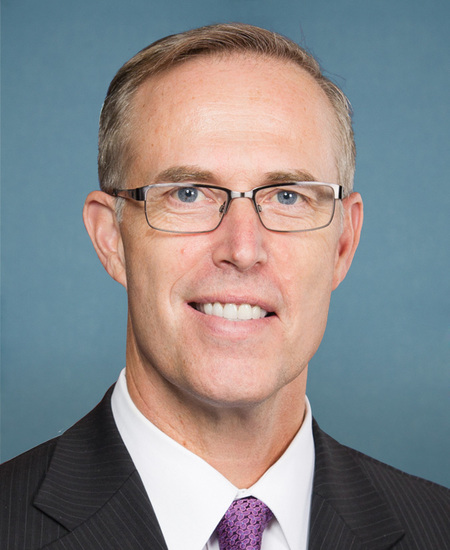
Rep. Jared Huffman
Sponsored bills
Maddy summaryThis House resolution marks the 25th anniversary of the September 11, 2001 terrorist attacks by formally honoring the memory of the nearly 3,000 victims and recognizing the sacrifices made by first responders, military personnel, and the passengers of United Airlines Flight 93. The bill acknowledges the ongoing health challenges faced by survivors and responders, highlighting the role of the World Trade Center Health Program in providing long-term medical support. It also credits charitable organizations and community groups that have continued to assist victims' families and veterans over the past two decades. Finally, the resolution urges the American public to observe the anniversary with ceremonies and reaffirms Congress's commitment to remembering the events and lessons of that day.
Maddy summaryThe Taxpayer Relief from Big Oil Act would eliminate existing royalty relief programs for oil and gas companies operating in the Gulf of Mexico and Alaska, requiring these firms to pay full royalties on their production. The bill also mandates that the Department of Interior establish standardized transportation cost deductions for calculating royalties on federal lands and offshore waters, capping these deductions at either 30 percent of the total value of production or actual reasonable costs, whichever is lower. Additionally, the legislation requires the Bureau of Land Management and the Bureau of Ocean Energy Management to submit annual reports to Congress detailing the number of royalty relief applications processed, approved wells, and estimated impacts on government revenue.
Maddy summaryThe Penalties for Polluters Act significantly increases the maximum civil penalties for violations of federal mineral leasing, oil and gas royalty management, and offshore lands laws to better account for inflation. These higher fines apply to companies and individuals who fail to comply with regulations regarding natural resource extraction and environmental protection. The bill also establishes a Penalty Revenue Reinvestment Fund that collects the additional revenue generated by these increased penalties. Half of this fund is distributed to states, Indian tribes, and local governments harmed by violations, while the other half supports federal agencies in enforcing compliance and safety standards.
Maddy summaryThe Hands Off Our Great Lakes Act prohibits the President and federal officials from changing the official names of Lake Superior, Lake Michigan, Lake Huron, Lake Erie, or Lake Ontario. The bill specifically nullifies Executive Order 14422, which had renamed Lake Ontario to Lake America, and bans any further attempts to alter these geographic names through similar executive actions. Additionally, it forbids the use of federal funds to implement or enforce the revoked order or any comparable measures.
Maddy summaryThis bill amends NOAA's policies to improve prevention and response to sexual harassment and assault for NOAA personnel and "covered personnel," including fisheries observers, protected species observers, and endangered species observers working with NOAA. Key provisions require annual reports on harassment and assault cases, establish new restricted reporting options that maintain victim anonymity, and mandate vessel operators to report incidents to the Coast Guard with specific details. The bill updates definitions to clarify who is covered, creates mechanisms for confidential reporting without automatically triggering investigations, and includes protections for victim privacy. It also requires summaries of cases reported to the Coast Guard and updates policies for handling restricted reports.
Maddy summaryThe Critically Endangered Animals Conservation Act of 2026 establishes a dedicated fund within the existing Multinational Species Conservation Fund to provide competitive grants for the protection of animal species classified as endangered or critically endangered by the International Union for Conservation of Nature. The Secretary of the Interior will manage this program, awarding financial assistance to foreign wildlife authorities and qualified organizations to support projects such as habitat restoration, illegal trade enforcement, and scientific research aimed at recovering wild populations outside the United States. To ensure accountability and effectiveness, grant recipients must submit periodic progress reports that are generally made available to the public, while specific restrictions prohibit the use of funds for captive breeding unless it is strictly necessary for releasing animals back into the wild. The legislation authorizes $5 million per year in appropriations from fiscal years 2027 through 2032 and requires the Secretary to report on the program's results to Congress every two years.
Maddy summaryThe Methane Pollution Accountability Act requires that royalties be paid on all natural gas extracted from federal lands and the outer Continental Shelf, including gas that is vented, flared, or lost through equipment failures during operations. This mandate applies to leases issued after the bill's enactment but includes exceptions for short-term emergency releases, gas used directly within the lease area, and unavoidable losses. Additionally, the legislation directs the Bureau of Land Management to enforce existing waste prevention rules and prohibits the agency from finalizing new regulations that would alter these standards unless they can demonstrate that the changes will further reduce gas waste or improve public health and air quality.
Maddy summaryThe Wildfire Response and Readiness Act establishes a national prescribed fire program that requires federal agencies to increase the acreage of controlled burns on public lands by 10 percent annually for a decade. It creates a ten-year national wildfire plan to coordinate landscape-scale forest restoration, reforestation, and watershed protection efforts across federal, state, tribal, and private boundaries. The bill also authorizes new funding for community resilience, including grants for home hardening, satellite monitoring technology, and a joint office dedicated to fire environment data and prediction. Additionally, it modernizes the firefighting workforce by establishing training academies, expanding civilian conservation centers, and providing liability protections for non-federal partners conducting prescribed fires.
This bill designates the facility of the United States Postal Service located at 6444 San Fernando Road in Glendale, California, as the "Paul Ignatius Post Office".