

Maddy summaryThe Eleanor Smith Inclusive Home Design Act of 2026 requires that new homes receiving federal assistance include at least one level designed to be accessible for people with mobility challenges. This rule applies to single-family houses, townhouses, modular homes, and ground-floor units in small buildings, provided they are made available for occupancy after one year from the law's enactment. To comply, builders must submit their architectural and construction plans to state or local officials for approval, ensuring the design meets specific accessibility standards before construction is finalized. The bill also establishes legal penalties for violations, allowing private individuals to sue for damages or court orders, such as requiring retrofits, while protecting existing contracts with buyers who were unaware of any violations.
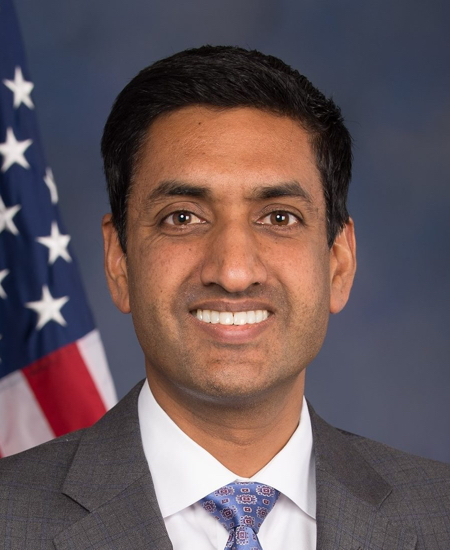
Rep. Ro Khanna
Sponsored bills
Maddy summaryThe American Manufacturing Renaissance Act establishes a nonprofit corporation within the Department of Commerce to develop a national manufacturing strategy that targets specific economic, environmental, and equity goals. The bill authorizes $4 billion per year for fiscal years 2026 through 2028 to fund this new entity, which is required to set objectives such as achieving net-zero greenhouse gas emissions in the manufacturing sector by 2030 and ensuring manufacturing represents 20 percent of gross domestic product by 2035. To implement these goals, the corporation will oversee 30 local Manufacturing Renaissance Councils that provide grants for workforce training, capital access, and ownership succession programs. These councils are designed to support small manufacturers, worker-owned businesses, and communities of color through targeted technical assistance and financial resources.
Maddy summaryThis bill establishes the Industrial Bank for American Manufacturing, a Treasury fund that can receive up to $15 billion annually from tariffs on goods from China and future congressional appropriations. The Secretary of Commerce is authorized to use these funds to provide loans, equity investments, or grants to U.S.-based manufacturers working in industries deemed critical for national security or supply chain resilience. To qualify, manufacturers must certify they have no tax liabilities or ties to prohibited foreign entities and agree to specific conditions, such as paying prevailing wages, hiring apprentices, and using funds only for domestic operations. The legislation also sets a $500 million cap on individual awards, requires public reporting on all grants, and limits the program's authority to ten years.
Maddy summaryThis bill expands federal election laws to prevent foreign nationals from influencing U.S. elections by tightening restrictions on domestic companies with significant foreign ownership or control. It requires businesses that are at least 50% owned by foreign individuals, or those with specific foreign influence, to file a sworn certification proving they are not foreign-controlled before making any political donations or spending money on election activities. Additionally, the law clarifies that these rules apply to state and local ballot initiatives and mandates that corporate political action funds certify their managers and board members are U.S. citizens or permanent residents. The legislation also prohibits recipients of funds from these businesses from using the money for further political contributions unless they receive and verify the required compliance certification.
Maddy summaryThe Protecting Americans from Doxing and Political Violence Act requires government agencies to remove the personal contact details, home addresses, and financial information of Members of Congress, their family members, and designated staff from public records within 72 hours of a written request. The bill also prohibits data brokers from knowingly selling or trading this private information for any individual in the United States and mandates that other online platforms take down such data if the affected person submits a takedown notice. While these protections apply broadly to prevent doxing, the law includes exceptions that allow the continued publication of information related to news stories, matters of public concern, or records required by federal election laws.
Maddy summaryThis bill requires pharmacy benefits managers (PBMs) administering prescription drug benefits for federal employee health plans to reimburse pharmacies at specific rates, including the national average drug cost plus a small percentage or $50, whichever is lower. It prohibits PBMs from favoring their own pharmacies, restricting patient choice, or reducing pharmacy payments after claims are processed. The bill establishes $10,000 civil penalties for violations, with debarment from federal health plans after 10 penalties in 10 years. This directly affects PBMs, in-network pharmacies, and federal health benefit plans covering millions of federal employees and their families. The law aims to ensure fair reimbursement practices and maintain pharmacy choice under the Federal Employees Health Benefits Program.
Maddy summaryThe Save MEDICARE Act of 2026 aims to improve the Medicare Advantage program by starting in 2028 with several changes to how health plans are paid and monitored. It requires the government to exclude diagnoses from chart reviews when calculating payments to prevent plans from inflating costs based on questionable data. The bill also speeds up audits and appeals to ensure faster resolution of coding disputes and introduces a new penalty system to recover overpayments from plans. Additionally, the law allows states to enforce Medicare rules within their borders and bans financial incentives for doctors based on how they code patient records. Finally, it establishes a mechanism for the Department of Veterans Affairs to recover costs when Medicare Advantage plans cover care that should have been paid for by the VA.
Maddy summaryThe Stop CHEATERS Act directs the Internal Revenue Service to increase its enforcement efforts against high-income individuals and large corporations by allocating billions of dollars in additional funding for tax audits, criminal investigations, and taxpayer services through fiscal year 2031. A significant portion of this funding is designated for modernizing the IRS's technology and business systems to improve its ability to detect fraud and noncompliance. The legislation also requires the IRS Commissioner to submit regular reports to Congress detailing plans to shift auditing resources toward wealthy taxpayers and analyzing how much unpaid tax is owed by different income groups.
Maddy summaryHR 4288 would rename the Department of Veterans Affairs community-based outpatient clinic in San Jose, California, as the "Corporal Patrick D. Tillman VA Clinic." The bill directly affects this specific VA facility, updating all official references to it. The key provision requires the clinic to be designated by this new name in all federal records, documents, and maps following the bill's enactment. This is a procedural naming bill honoring Corporal Tillman, a former NFL player and Army Ranger killed in action in Afghanistan in 2004.
Maddy summaryThis bill strengthens the Epstein Files Transparency Act by giving state attorneys general and victims the legal right to sue the U.S. Attorney General if they unlawfully withhold, redact, or delay access to investigation records. It requires the Justice Department to provide unredacted copies of documents to state officials for use in investigations and to victims personally, while allowing redactions only to protect the privacy of other victims. The legislation also mandates that courts expedite these cases, removes common legal excuses for hiding documents, and imposes criminal penalties on federal employees who obstruct compliance. Additionally, it grants Members of Congress the authority to request full access to records and to file lawsuits if the Attorney General fails to comply within a set timeframe.