

Maddy summaryThe Alzheimer's Early Detection Act of 2026 requires private health insurance plans and Medicaid programs to cover specific tests that detect biological markers for Alzheimer's disease. These tests, which can be performed on blood or tissue samples, are intended to help with early detection, diagnosis, and treatment management of the condition. The law mandates that insurers treat these tests like other standard medical benefits, meaning patients cannot face higher costs, separate waiting periods, or step therapy hurdles specifically for this care. Additionally, the bill requires insurance companies to approve requests for these tests within 72 hours and directs the National Institutes of Health to study the value of such testing over three years.
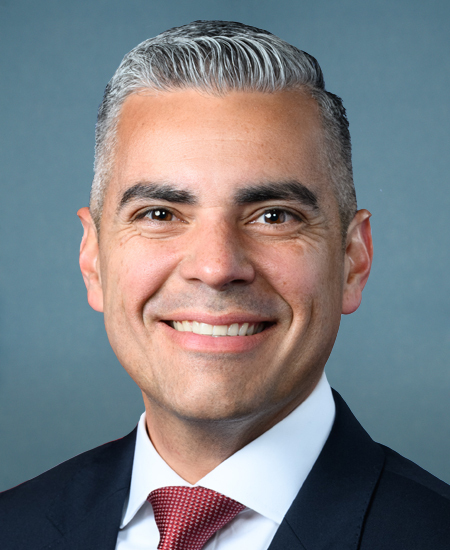
Rep. Juan Ciscomani
Sponsored bills
This bill designates the facility of the United States Postal Service located at 1225 Kempsville Road in Virginia Beach, Virginia, as the "Colonel Edward Shames Post Office Building".
Maddy summaryThis bill requires pharmacy benefits managers (PBMs) administering prescription drug benefits for federal employee health plans to reimburse pharmacies at specific rates, including the national average drug cost plus a small percentage or $50, whichever is lower. It prohibits PBMs from favoring their own pharmacies, restricting patient choice, or reducing pharmacy payments after claims are processed. The bill establishes $10,000 civil penalties for violations, with debarment from federal health plans after 10 penalties in 10 years. This directly affects PBMs, in-network pharmacies, and federal health benefit plans covering millions of federal employees and their families. The law aims to ensure fair reimbursement practices and maintain pharmacy choice under the Federal Employees Health Benefits Program.
North Rim Restoration Act This bill allows the National Park Service (NPS) to expedite the approval of contracts to restore forests, structures, and assets within areas of the Grand Canyon National Park impacted by the Dragon Bravo Fire in Arizona. Specifically, the bill authorizes the NPS to use emergency acquisition flexibilities without a presidential emergency or disaster declaration to contract for the following services in such impacted areas: managing or restoring forests, rebuilding structures affected by the fire, improving grounds and structures, conducting recovery efforts, or other specified activities. This authority expires on the date that is the earlier of the following: (1) seven years after the date of this bill's enactment, or (2) the date on which projects and recovery efforts within such area are completed. The NPS may request Congress extend such authority for 12 months if a new wildfire ignites within such area and impacts recovery efforts related to the Dragon Bravo Fire. The bill also authorizes the NPS to enter into noncompetitive procurement contracts for rebuilding, rehabilitating, replacing, or operating assets, such as lodging or utilities, to support the recovery and reopening of the Grand Canyon National Park North Rim. This authority is conditioned upon the NPS making certain determinations regarding the North Rim concessioner and it terminates seven years after this bill's enactment.
Maddy summaryThe AADAPT Act reauthorizes and expands Project ECHO grants to improve Alzheimer’s and dementia care through technology-enabled training. It specifically funds grants for healthcare providers in rural, frontier, or medically underserved areas to enhance early diagnosis, quality care, and provider retention for dementia patients. The bill authorizes $1 million annually (2027-2032) for these dementia-focused training programs, requiring funds to supplement - not replace - existing resources. This directly supports primary care providers licensed to serve underserved communities, using collaborative online learning to address care gaps.
Maddy summaryHR 2004, titled "Tyler’s Law," requires the Secretary of Health and Human Services to study how often hospital emergency departments test for fentanyl during overdose cases (beyond standard drug tests), including associated costs, patient benefits/risks, and impacts on privacy and patient-physician relationships. The study must be completed within one year of the bill's enactment. Based on the study results, the Secretary must issue guidance within six months on whether emergency departments should routinely test for fentanyl, how to inform clinicians about test contents, and how such testing may affect future overdose risks and health outcomes. This bill directly affects hospital emergency departments and patients experiencing overdoses by shaping future testing protocols.
Maddy summaryHR 1266, the Combating Illicit Xylazine Act, adds xylazine - a veterinary sedative increasingly found in illicit drug mixtures - to Schedule III of the Controlled Substances Act, regulating its use and trafficking. It directly affects veterinarians, animal owners, and manufacturers by allowing xylazine to be legally dispensed for animal use under specific veterinary prescriptions, while prohibiting non-veterinary human use. The bill includes transition periods (60 days for practitioners, 1 year for labeling) to ease compliance for manufacturers and practitioners, and requires the DEA and FDA to expedite necessary applications. It also mandates two congressional reports on xylazine's illicit use and trafficking patterns, and directs the Sentencing Commission to review penalties for offenses involving xylazine.
Maddy summaryThe TRUTH in Coverage Act of 2026 requires group health plans and health insurance issuers that cover gender-affirming procedures to also cover medical services intended to treat physical and psychological complications resulting from those procedures. This mandate applies regardless of whether the original gender-affirming treatment was covered by the plan and ensures that any required follow-up care faces the same cost-sharing rules and limitations as standard medical benefits. The bill defines "sex-rejecting procedures" broadly to include hormone therapy, surgeries, and puberty blockers, while explicitly excluding treatments for intersex conditions, life-threatening emergencies, and standard puberty suppression for early puberty. These provisions would take effect for plan years beginning on or after January 1, 2027, affecting individuals with access to employer-sponsored or individual health insurance.
Maddy summaryThe Take Care of America's Veterans Act is a comprehensive legislative bill designed to improve benefits, healthcare access, and administrative efficiency for veterans and their families. The bill directly affects veterans, their surviving spouses, caregivers, and the Department of Veterans Affairs (VA). Key provisions include expanding disability compensation for combat-related retirees, allowing remarried surviving spouses to retain certain survivor benefits, and increasing compensation rates for specific disability conditions like sleep apnea and tinnitus. The legislation also mandates significant healthcare improvements, such as establishing a pilot program to coordinate care between the VA and Medicare, creating a formulary for prosthetic items, and requiring the VA to provide lactation spaces in all medical centers. Additionally, the bill introduces administrative reforms to speed up claims processing, prohibit denying claims solely for missed medical appointments, and enhance oversight of the VA's disability rating system.
Maddy summaryThis bill, known as the Daughters of the American Revolution Membership Integrity Act, amends federal law to explicitly limit membership in the Daughters of the American Revolution to adult human females. It defines a female as someone who naturally possesses or would have the reproductive system capable of producing ova for fertilization, regardless of any congenital anomalies or medical disruptions. By adding this specific definition to the organization's governing code, the legislation clarifies the genealogical and biological requirements for joining the group. The change directly affects the organization's eligibility rules but does not alter its internal operations or funding.