Issue · Technology

Technology

Every technology bill, vote, and legislator stance in United States, automatically classified by Maddy, our AI policy reader.

Total bills
1,461
119th Congress
Top supporter
Ami Bera
86% support rate
Top opponent
Scott Perry
14% support rate
Ranked legislators
10
5 support · 5 oppose
Key legislators

Who's moving technology in United States

Legislators moving technology in United States
Legislator Party Stance Support rate Decisive votes
Ami Bera
Ami Bera House · District 6
D
Strong +
86% 22
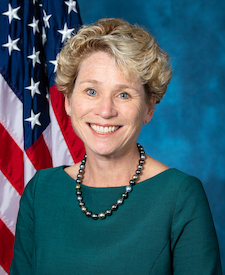
Chrissy Houlahan
Chrissy Houlahan House · District 6
D
Strong +
86% 22
Kim Schrier
Kim Schrier House · District 8
D
Strong +
86% 22
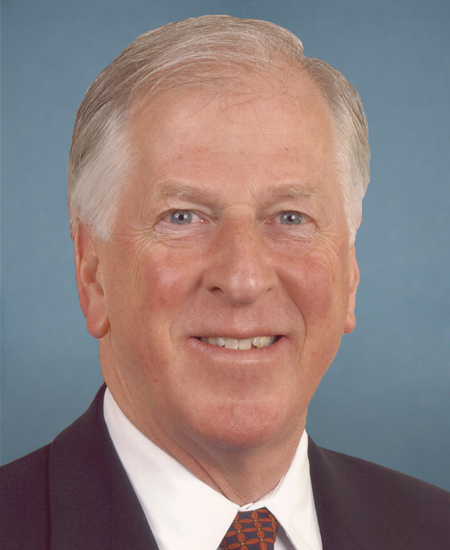
Mike Thompson
Mike Thompson House · District 4
D
Strong +
86% 22
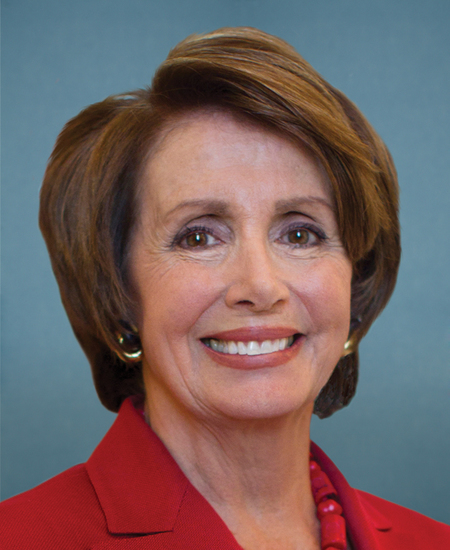
Nancy Pelosi
Nancy Pelosi House · District 11
D
Strong +
86% 22
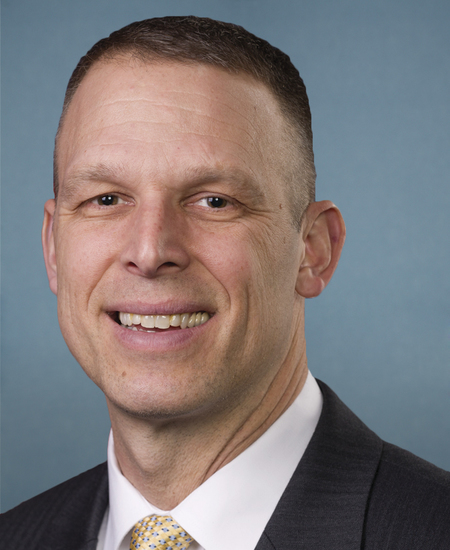
Scott Perry
Scott Perry House · District 10
R
Strong −
14% 21
AA
Alan Armstrong Senate
R
Strong −
17% 29
Rand Paul
Rand Paul Senate
R
Strong −
17% 46
Josh Hawley
Josh Hawley Senate
R
Strong −
18% 45
Andy Harris
Andy Harris House · District 1
R
Strong −
18% 22
Showing 951–960 of 1,461 bills

All technology bills

in committee · United States · House Apr 10, 2025

HR 2885: Bank Loan Privacy Act

HR 2885, the Bank Loan Privacy Act, amends the Equal Credit Opportunity Act to require the Consumer Financial Protection Bureau (CFPB) to follow a specific process before deleting or modifying credit data. The bill mandates that the CFPB issue a rule through advance notice and comment, detailing exactly what data changes it plans to make and how those changes will protect privacy interests. This applies directly to the CFPB’s handling of consumer credit data, not to borrowers or lenders. The key provision is a new procedural requirement for transparency in data modifications, ensuring the public understands the Bureau’s actions. It does not change credit terms or consumer rights but alters how the CFPB manages its data.
in committee · United States · House Feb 27, 2025

HR 1751: Stop Electronic Stalking Act of 2025

HR 1751, the Stop Electronic Stalking Act of 2025, amends federal stalking law to explicitly include unauthorized use of geotracking devices. It adds "uses an unauthorized geotracking device" to the definition of stalking under Title 18, U.S. Code, and defines two key terms: a "geotracking device" as any tool that remotely tracks a person's location, and "unauthorized" as use without the person's consent or after consent was revoked. This bill directly affects individuals who use such devices to track others without permission, making this specific conduct a federal stalking offense. The law does not create new penalties but expands existing stalking provisions to cover digital location tracking. It focuses on clarifying the legal definition of stalking related to modern technology.
Sub-Topics Domestic Violence
in committee · United States · House Jul 25, 2025

HR 4759: Ban Military Drones Spying on Civilians Act

HR 4759, the "Ban Military Drones Spying on Civilians Act," prohibits federal agencies (including DHS and the military) from using military-grade drones to surveil U.S. citizens participating in protests or civil disobedience. It bans the use of funds for operating covered drones - like the MQ-9 Reaper or high-altitude military drones - within the U.S. for this purpose. The bill also requires annual reports detailing any drone use, including justification, locations, equipment, and whether U.S. persons were identified, to Congress. This directly affects how federal agencies deploy surveillance technology during public demonstrations. The law aims to prevent military drone surveillance of civilians during protests, focusing on concrete policy restrictions rather than outcomes.
Sub-Topics Emerging Technology
failed · United States · Senate Feb 24, 2026

S 2503: ROTOR Act

Rotorcraft Operations Transparency and Oversight Reform Act or the ROTOR Act This bill addresses aviation safety by increasing requirements for aircraft tracking and communication using Automatic Dependent Surveillance-Broadcast (ADS-B) technology and expanding oversight. As background, ADS-B for broadcasting (Out) and receiving (In) transmits information (e.g., location and weather information) between aircraft and air traffic control. Under the bill, aircraft must generally operate with ADS-B In equipment to provide the aircraft with location information of other aircraft and traffic advisories. Current law does not require this equipment. Current Federal Aviation Administration (FAA) regulations allow aircraft performing a sensitive government mission to be excepted from requirements for using ADS-B Out equipment. This bill limits which flights may be considered sensitive government missions (e.g., not training flights) and requires additional reporting and notifications for the exception. The Government Accountability Office must review the use of the ADS-B Out exception and the Office of the Inspector General (OIG) of the Department of Transportation must annually audit FAA oversight of operations that use the exception. Further, the bill repeals a 2025 law that exempts certain military helicopters from the ADS-B Out requirements for the Washington, DC, metropolitan area. The bill also requires the OIG of the Army to audit the Army’s coordination with the FAA, the FAA to establish an office to coordinate airspace usage of military aircraft and review the safety of flight operations and routes around airports, and the FAA to enter into memoranda of understanding with military agencies for safety information sharing.
passed · United States · House Sep 16, 2026

HR 7436: Department of Homeland Security Intelligence and Analysis Training Act

HR 7436 requires the Department of Homeland Security (DHS) to create standardized training for all new employees in the Office of Intelligence and Analysis (OIA). This includes mandatory civil rights and privacy training (citing the Privacy Act of 1974), specialized training for analysts on intelligence standards, and open-source intelligence collection protocols. The bill also mandates tracking training completion, quarterly public lists of available advanced training from other agencies, and annual reports to Congress on implementation progress. It further requires a Comptroller General review comparing DHS training to other intelligence agencies within two years. The law directly affects OIA staff, including new hires and those in specific roles like open-source intelligence collection.
in committee · United States · House Jun 12, 2025

HR 3961: To prohibit the Secretary of Defense from entering into software source code contracts with entities with certain relationships with China, and for other purposes.

This bill blocks the U.S. Defense Department from signing new contracts for software source code with companies having specific ties to China. It prohibits contracts with entities that own or fund AI facilities in China, share source code allowing Chinese reverse engineering, or operate data centers in China for such software. The Secretary of Defense may waive the ban for national security reasons, but the rule only applies to contracts entered into within three years of the law's enactment. It directly affects defense contractors and tech firms seeking to provide sensitive software source code to the Pentagon.
passed · United States · House Jul 21, 2026

HR 4123: FIT Procurement Act

HR 4123, the FIT Procurement Act, modernizes federal information and communications technology (ICT) procurement by requiring new training for federal acquisition staff and streamlining processes to boost small business participation. The bill mandates a cross-functional ICT training program covering cloud computing, AI, cybersecurity, and commercial tech adoption, with learning objectives focused on outcome-based contracting and reducing waste. It increases simplified acquisition thresholds ($250,000 to $500,000) and micro-purchase limits ($10,000 to $25,000) to reduce administrative barriers. The Act also directs the Comptroller General to assess small business participation in federal tech contracts and requires agencies to eliminate unnecessary procedural hurdles for small businesses. These changes directly affect federal procurement staff, small businesses competing for contracts, and executive agencies managing ICT acquisitions.
Sub-Topics Artificial Intelligence Cybersecurity Tags Small Business
in committee · United States · House May 14, 2026

HR 7103: Improving Emerging Tech Opportunities for Veterans Act

This bill requires the Department of Veterans Affairs (VA) to partner with private sector stakeholders to identify high-growth emerging tech industries (like AI and semiconductors) and relevant training programs for veterans. It mandates the VA to prominently include these opportunities in veterans' transition programs and on its website, and to create a 90-day expedited process for approving qualifying education courses. The bill also updates existing VA programs by replacing "high technology" with "high technology or emerging technology" in key sections, ensuring emerging tech fields are explicitly included. The provisions expire on September 30, 2027.
in committee · United States · Senate May 7, 2025

S 1660: Research Advancing to Market Production for Innovators Act

S 1660, the Research Advancing to Market Production for Innovators Act, improves the Small Business Innovation Research (SBIR) and Small Business Technology Transfer (STTR) programs to help small businesses commercialize federally funded research. It requires federal agencies to include commercialization potential in peer reviews (adding specialized reviewers), creates a dedicated Technology Commercialization Official role in each agency, and expands funding for business/technical assistance (including cybersecurity support) for grant recipients. The bill also mandates annual commercialization impact reports tracking metrics like post-award revenue, patents, and Phase III contract success for businesses receiving multiple Phase II awards. These changes directly affect small businesses receiving SBIR/STTR grants and the federal agencies administering these programs.
Sub-Topics Cybersecurity Tags Small Business
in committee · United States · House May 8, 2025

HR 3280: Rural Broadband Modernization Act

The Rural Broadband Modernization Act would create a federal program to fund broadband infrastructure in rural areas through grants, loans, and loan guarantees. It establishes a minimum service standard of 100 Mbps symmetrical broadband for all rural households, prioritizing projects for communities without any existing broadband service (or with inadequate service) and requiring at least 90% of households in a service area to be unserved. The program would allocate $500 million annually from 2026-2030, with funds distributed based on the number of small communities (under 2,500 residents) in each state. Eligible applicants include local governments, tribal entities, and private companies that can demonstrate they'll meet the service requirements within 5 years.
Sub-Topics Broadband Access Telecommunications Tags Rural Communities
Showing 951 to 960 of 1,461 bills
Previous 1 … 95 96 97 … 147 Next