Issue · Technology

Technology

Every technology bill, vote, and legislator stance in United States, automatically classified by Maddy, our AI policy reader.

Total bills
1,678
119th Congress
Top supporter
Ami Bera
86% support rate
Top opponent
Scott Perry
14% support rate
Ranked legislators
10
5 support · 5 oppose
Key legislators

Who's moving technology in United States

Legislators moving technology in United States
Legislator Party Stance Support rate Decisive votes
Ami Bera
Ami Bera House · District 6
D
Strong +
86% 22
Chrissy Houlahan
Chrissy Houlahan House · District 6
D
Strong +
86% 22
Kim Schrier
Kim Schrier House · District 8
D
Strong +
86% 22
Mike Thompson
Mike Thompson House · District 4
D
Strong +
86% 22
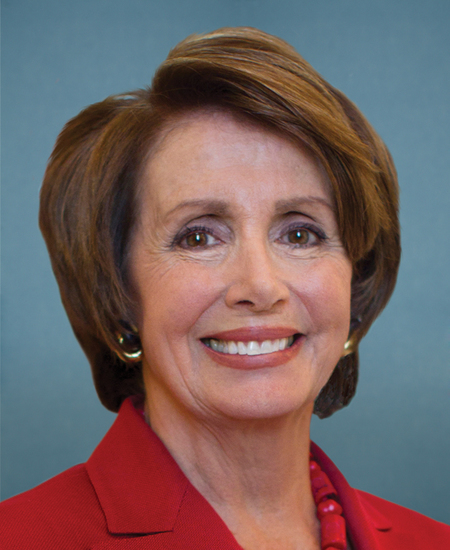
Nancy Pelosi
Nancy Pelosi House · District 11
D
Strong +
86% 22
Scott Perry
Scott Perry House · District 10
R
Strong −
14% 21
AA
Alan Armstrong Senate
R
Strong −
17% 29
Rand Paul
Rand Paul Senate
R
Strong −
17% 46
Josh Hawley
Josh Hawley Senate
R
Strong −
18% 45
Andy Harris
Andy Harris House · District 1
R
Strong −
18% 22
Showing 851–860 of 1,678 bills

All technology bills

in committee · United States · House Mar 3, 2025

HR 1777: SECURE Notarization Act of 2025

This bill allows notaries to perform remote and electronic notarizations for documents affecting interstate commerce, such as property deeds or legal agreements. It requires notaries to verify identities through multiple methods (e.g., two identity checks or a credible witness) and create audio-visual recordings of remote sessions, which must be retained for at least 5 years. The law applies to individuals needing notarization across state lines or for electronic records but does not require notaries to offer these services. It standardizes recognition of valid remote notarizations in federal courts and across state lines, ensuring consistency for users and notaries.
in committee · United States · House Jan 15, 2026

HR 1519: Public Safety Communications Act

HR 1519, the Public Safety Communications Act, creates a dedicated Office of Public Safety Communications within the National Telecommunications and Information Administration (NTIA). This office, led by a career-appointed Associate Administrator, manages federal grants for Next Generation 9-1-1 systems, analyzes public safety communication policies, and oversees the First Responder Network Authority (which operates the nationwide public safety broadband network). The office is responsible for testing new communication technologies, auditing the First Responder Network Authority annually, and advising federal agencies on public safety communication matters. This bill directly affects federal agencies managing emergency communications and ultimately impacts first responders who rely on these systems.
Sub-Topics Broadband Access Telecommunications Tags Public Safety
in committee · United States · House Apr 10, 2025

HR 2841: Putting Trust in Transparency Act

HR 2841, the "Putting Trust in Transparency Act," requires nonprofits receiving any federal funding to publicly disclose unredacted donor information (including name, zip code, and contribution amount) within 60 days of filing their annual IRS Form 990. This applies specifically to tax-exempt organizations that receive federal funds, making their major donors' details accessible to the public. Nonprofits failing to file the required Schedule B of Form 990 face automatic revocation of their tax-exempt status after a 60-day grace period. The bill aims to increase transparency around how federal funds are leveraged by nonprofits, requiring disclosure that was previously restricted under IRS rules. It amends tax code provisions to enforce this disclosure and maintain public access to donor information.
Tags Government Transparency
in committee · United States · House Mar 6, 2025

HR 1899: Audio-Only Telehealth Access Act of 2025

The Audio-Only Telehealth Access Act of 2025 would require Medicare to cover and pay for telehealth visits conducted over the phone (audio-only), not requiring video, during the emergency period defined in the Social Security Act. This change would directly affect Medicare beneficiaries - particularly older adults or those in rural areas with limited internet access - and healthcare providers who offer telehealth services. The bill amends Section 1834(m)(9) of the Social Security Act to include audio-only visits under existing Medicare coverage rules, ensuring providers receive reimbursement at the same rate as video telehealth. It expands access to care by removing the need for video technology during the specified emergency period.
in committee · United States · House Apr 17, 2025

HR 2939: Drone Espionage Act

HR 2939, the Drone Espionage Act, updates existing espionage law to explicitly prohibit taking or transmitting video footage of defense information. It amends Title 18, U.S. Code, Section 793 by inserting "video" after "photographic negative" in the definition of prohibited materials. This change directly affects individuals who capture or share video of classified military or defense-related information, whether using drones or other devices. The bill makes no new criminal penalties but ensures video evidence is covered under current espionage statutes.
Sub-Topics Emerging Technology
in committee · United States · House Aug 1, 2025

HR 4866: No Foreign Election Partnership Act

HR 4866, the "No Foreign Election Partnership Act," prohibits federal election agencies - including the Federal Election Commission (FEC) and Election Assistance Commission (EAC) - from entering agreements with international organizations that involve data sharing or allow those organizations an advisory role in U.S. federal elections. The bill defines "election agency" as entities administering federal elections and takes effect immediately upon enactment. It does not create new policies but restricts specific types of international collaboration involving election data or advisory input. This is a procedural measure focused on limiting foreign involvement in U.S. election administration processes.
Tags Elections
in committee · United States · House Mar 24, 2025

HR 2286: American Genetic Privacy Act of 2025

HR 2286, the American Genetic Privacy Act of 2025, prohibits commercial DNA testing services (like ancestry companies) from selling or disclosing genetic data collected from users to the People’s Republic of China or any entity controlled by China. It directly affects individuals who use these services, as their genetic information - defined as data obtained through such testing - cannot be shared with Chinese entities. The bill empowers the Federal Trade Commission (FTC) to enforce these restrictions as violations of unfair or deceptive trade practices under existing law. This creates a clear legal barrier to prevent U.S. genetic data from being accessed by Chinese entities through commercial DNA testing platforms.
in committee · United States · House Dec 18, 2025

HR 6879: RESTRICT Act

The RESTRICT Act (HR 6879) requires U.S. companies to obtain a license before exporting advanced computer chips to countries listed in a specific export control group (as of January 2025) and to regions like Hong Kong and Macau. It also blocks licenses for exports to entities primarily located in countries of concern (including those same nations plus Hong Kong and Macau). U.S. companies may avoid the license requirement if they meet strict conditions, such as limiting foreign ownership to 10% and implementing security measures to prevent misuse. The law expires five years after enactment.
in committee · United States · House Mar 26, 2025

HR 2363: DOGE POUND Act of 2025

This bill restricts access to Department of Health and Human Services (HHS) systems containing personal health records. It requires anyone accessing these systems to be either an HHS employee/contractor with pre-January 20, 2025 eligibility or hold a specific security clearance, complete privacy training, sign ethics agreements, and have at least one year of continuous federal service. Violating these rules carries penalties of up to five years in prison, fines, or both, with a 10-year statute of limitations for prosecution. HHS inspectors must also report unauthorized access within 30 days, including risk assessments of privacy or security threats.
in committee · United States · House Jul 14, 2025

HR 4365: Consumer Online Payment Transparency and Integrity Act

HR 4365, the Consumer Online Payment Transparency and Integrity Act, requires businesses to clearly disclose automatic renewal terms and cancellation procedures when selling goods or services with free trials or automatic renewal features. It mandates 7-day advance notice before charging consumers for renewals, requires express consent for each renewal (not just initial sign-up), and ensures cancellation is as easy as signing up (via online tools or toll-free numbers). The bill also prohibits "dark patterns" (manipulative design) from tricking consumers into unintended charges and voids automatic renewals if businesses violate these rules, requiring refunds for affected consumers. This directly affects consumers who encounter surprise charges from subscriptions or free trials that convert to paid services without clear consent.
Showing 851 to 860 of 1,678 bills
Previous 1 … 85 86 87 … 168 Next