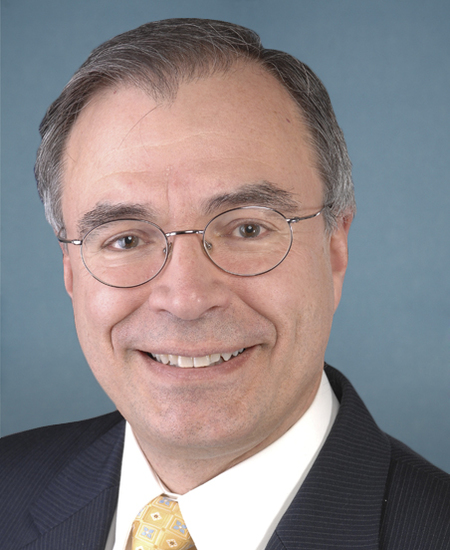
HR 546, the Investing in Safer Traffic Stops Act of 2025, creates a federal grant program to fund local, state, and tribal governments in replacing police officers with civilian staff or traffic monitoring technology for enforcing traffic violations. The program, authorized for $100 million annually from 2026 through 2031, allows grantees to purchase technology or hire non-law enforcement personnel (defined as "civilians" under the bill) to handle traffic enforcement. This directly affects local governments seeking to shift traffic enforcement responsibilities away from sworn officers, with funds restricted solely to civilian staffing or traffic monitoring technology. The bill does not mandate this shift but provides financial support for jurisdictions choosing this approach.
This bill changes the name of Coverdell education savings accounts to "Coverdell lifelong learning accounts" and expands their use to cover skill development expenses for people over 16. It allows funds to be used for career training, technical education, adult education, and related costs like computer equipment. The bill raises the age limit for contributions from 18 to 70, sets a $10,000 account limit after age 30, and creates a new tax credit for employers who contribute to these accounts for their employees. It also allows beneficiaries aged 18 and older to deduct their contributions to these accounts. The changes will take effect for contributions and distributions after 2025.
This bill requires the Department of Veterans Affairs (VA) to create an electronic system allowing veterans and eligible individuals to send and receive official communications about their educational benefits. It directly affects veterans using VA educational assistance programs by offering a digital alternative to paper mail. The key provision mandates that veterans must actively opt in to use this electronic system (rather than it being automatic), and the VA must notify enrolled students about this option. The VA will now be required to provide this electronic communication mechanism as part of managing educational benefit correspondence.
This bill makes Federal Pell Grants tax-free for students, removing the tax burden on these federal education awards. It also expands the American Opportunity Tax Credit to cover eligible child care costs (for students enrolled in school) and up to $1,000 for computer equipment or internet access used for education. These changes apply to tax returns filed for 2025 and later. The bill directly affects students receiving Pell Grants and those claiming the American Opportunity Credit for educational expenses.
The REPAIR Act requires motor vehicle manufacturers to provide car owners and independent repair shops with full access to vehicle data and repair information, prohibiting technological or legal barriers that restrict this access. It mandates that manufacturers share vehicle-generated data, critical repair information, and tools on equal terms with dealers and authorized service providers, without requiring consumers to use specific brands of parts or tools. The law establishes an advisory committee to monitor implementation and ensure fair competition in vehicle repair, while giving the Federal Trade Commission authority to enforce these requirements as unfair or deceptive practices. This legislation directly affects car owners, independent repair facilities, aftermarket parts manufacturers, and motor vehicle manufacturers by shifting control of repair information and data from manufacturers to consumers.
HR 5212, the SBIR/STTR Innovation Workforce Act, creates new fellowship and internship programs for students at all education levels (undergraduate through postdoctoral) at small businesses that have received SBIR or STTR Phase II funding. It requires federal agencies to actively recruit underrepresented groups - including women, socially disadvantaged individuals, and economically disadvantaged individuals - into these programs and allows agencies to partner with nonprofits to support outreach. Agencies may use up to 3% of relevant funding (or specific funds for certain agencies) to implement these provisions. The bill directly affects small businesses with Phase II awards, students in STEM fields, and nonprofit organizations supporting workforce diversity.
HR 1649, the Expanding Student Access to Mental Health Services Act, amends the Elementary and Secondary Education Act to allow states and school districts to use existing federal funds for student mental health services. It directs states to support mental health by identifying best practices for mental health first aid, establishing school emergency response teams, coordinating with local health providers, and expanding telehealth access. School districts must now specify how they will use funds for these mental health activities in their grant applications. The bill also permits schools to use technology infrastructure for mental health services without counting against separate technology funding limits.
HR 6681 establishes the Office of National Fraud and Scam Prevention within the White House, led by a Director appointed by the President with Senate approval. The Office coordinates federal efforts across agencies like Homeland Security, Justice, and the FTC to prevent scams, share non-personal scam data via a "fraud data shield," and manage large-scale fraud incidents (defined as causing over $5 million in losses or affecting 1,000+ people). It requires annual reports to Congress on scam threats and mandates federal agencies to align their budgets and strategies with national prevention goals. The Office expires after five years.
The RECHARGE Act (S 2653) requires the federal government to permit electric vehicle (EV) charging stations at rest areas along interstate highways. This directly affects EV drivers by addressing "range anxiety" on long trips, as it allows charging infrastructure at designated rest stops. The key provision amends highway law to explicitly authorize EV charging infrastructure (excluding other commercial activities) at these locations, while making minor technical adjustments to existing transportation programs related to natural gas refueling. The bill does not create new funding but changes where charging stations may be installed on the interstate system.
HR 3200 increases the tax credit for battery production by raising the advanced manufacturing credit for electrode active materials from 10% to 25%. It requires that qualifying battery components meet specific sourcing thresholds: by 2026, at least 70% of critical minerals must be extracted, processed, or recycled in the U.S., U.S. free trade agreement countries, or North America, rising to 80% after 2026. The bill also mandates that 70% of battery component materials must be produced in North America by 2026, increasing to 100% after 2028. Components containing critical minerals or materials sourced from "foreign entities of concern" are excluded from the tax credit, and the changes apply to components produced and sold after December 31, 2025.