Issue · Technology

Technology

Every technology bill, vote, and legislator stance in United States, automatically classified by Maddy, our AI policy reader.

Total bills
1,661
119th Congress
Top supporter
Ami Bera
86% support rate
Top opponent
Scott Perry
14% support rate
Ranked legislators
10
5 support · 5 oppose
Key legislators

Who's moving technology in United States

Legislators moving technology in United States
Legislator Party Stance Support rate Decisive votes
Ami Bera
Ami Bera House · District 6
D
Strong +
86% 22
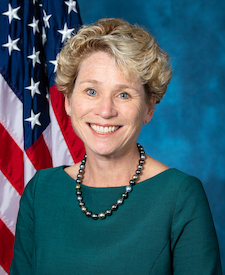
Chrissy Houlahan
Chrissy Houlahan House · District 6
D
Strong +
86% 22
Kim Schrier
Kim Schrier House · District 8
D
Strong +
86% 22
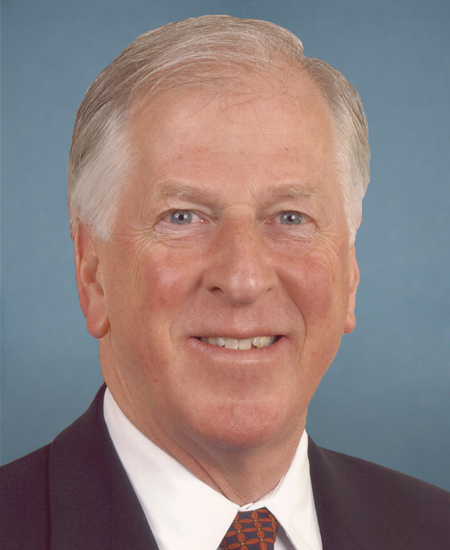
Mike Thompson
Mike Thompson House · District 4
D
Strong +
86% 22
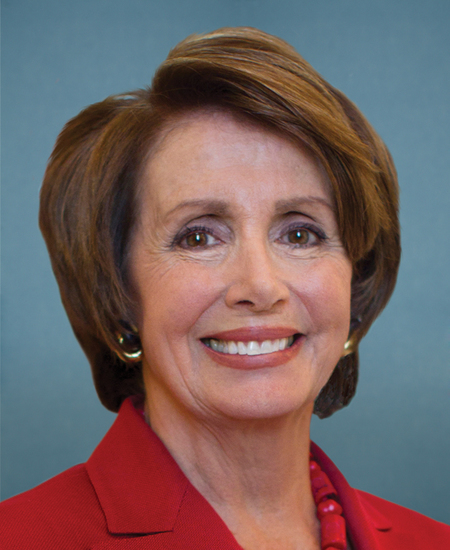
Nancy Pelosi
Nancy Pelosi House · District 11
D
Strong +
86% 22
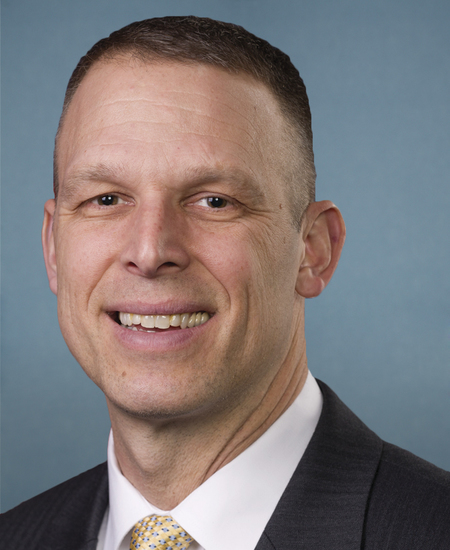
Scott Perry
Scott Perry House · District 10
R
Strong −
14% 21
AA
Alan Armstrong Senate
R
Strong −
17% 29
Rand Paul
Rand Paul Senate
R
Strong −
17% 46
Josh Hawley
Josh Hawley Senate
R
Strong −
18% 45
Andy Harris
Andy Harris House · District 1
R
Strong −
18% 22
Showing 451–460 of 1,661 bills

All technology bills

in committee · United States · Senate Apr 13, 2026

S 4281: Multilateral Alignment of Technology Controls on Hardware (MATCH) Act

The Multilateral Alignment of Technology Controls on Hardware (MATCH) Act seeks to prevent countries of concern, such as China, from obtaining advanced semiconductor manufacturing equipment. It directs U.S. agencies to identify critical semiconductor manufacturing technology and facilities in these countries and immediately engage allied nations to adopt equivalent export controls, including denying licenses for exports and servicing to targeted facilities. The bill mandates the U.S. to implement its own countrywide controls on relevant U.S.-produced equipment and comprehensive restrictions on identified foreign facilities within 150 days. If an allied country fails to implement comparable controls after diplomatic efforts are exhausted, the U.S. will extend its jurisdiction to control the export and servicing of covered equipment originating from that allied nation. This legislation primarily affects U.S. and allied semiconductor manufacturing equipment producers, as well as specific foreign entities and facilities in countries of concern.
in committee · United States · House Apr 20, 2026

HR 8369: No ICE in Schools Act

The "No ICE in Schools Act" proposes to prevent educational agencies and institutions from releasing student records or other personal information for immigration enforcement purposes. It directly affects schools and colleges receiving federal funds, as well as students whose data might be sought by immigration enforcement. The bill amends existing law to prohibit federal funds from being provided to any educational entity that releases such information without specific written consent from the student's parents. This parental consent must detail the records, reasons for release, and recipient, with a copy provided to the parents.
in committee · United States · Senate Mar 25, 2026

S 4203: Voter Empowerment Act of 2026

The Voter Empowerment Act of 2026 seeks to modernize federal elections by expanding voter access, strengthening election integrity, and enhancing security, directly affecting all eligible voters, states, and election officials. Key provisions include mandating online, automatic, and same-day voter registration, as well as pre-registration for 16 and 17-year-olds, while also setting stricter rules for
Tags Elections
in committee · United States · House Apr 16, 2026

HR 8327: Communications, Video, and Technology Accessibility Act of 2026

This bill, the Communications, Video, and Technology Accessibility Act of 2026, aims to significantly enhance accessibility for individuals with disabilities across various communication and video services and related equipment. It expands requirements for closed captioning and audio description to include online video programming and consumer-generated media, and mandates that sign language interpretation be consistently visible on screen when provided. The bill also requires video playback devices to have easily accessible accessibility features and mandates that video conferencing services and customer support offer features like voice recognition, visual interpretation, and direct video calling for sign language users. Additionally, it strengthens telecommunications relay services for DeafBlind individuals and sign language users, increases funding for equipment distribution for the DeafBlind, and directs the FCC to assess and regulate the accessibility of emerging technologies.
Sub-Topics Telecommunications Tags People with Disabilities
in committee · United States · House Apr 15, 2026

HR 8306: SCALE Act

The SCALE Act aims to limit the ability of foreign adversaries, such as China and Russia, to acquire advanced artificial intelligence (AI) hardware. It requires the U.S. government to establish metrics for assessing the AI hardware capabilities of these countries and their associated entities. Based on these assessments, the Commerce Department must set annual export limits for AI hardware, generally denying licenses that exceed these thresholds or would allow adversaries to accumulate more than 5% of the U.S.'s total AI hardware capacity. The bill also imposes strict conditions on any approved exports, including independent verification of hardware capabilities and prohibitions against military or unauthorized remote access.
in committee · United States · House Apr 23, 2026

HR 8470: Surveillance Accountability Act

The Surveillance Accountability Act aims to strengthen Fourth Amendment protections against warrantless government searches, directly affecting federal employees involved in surveillance and individuals whose data or privacy is subject to government access. It generally mandates that government entities obtain a warrant based on probable cause for most searches, explicitly requiring one to access data held by third-party companies like internet providers or financial institutions. While outlining exceptions for situations like plain view or publicly available information, the bill specifically prohibits the warrantless collection or analysis of biometric data (e.g., facial recognition) or license plate reader data from public places without informed consent. Additionally, it creates a new legal avenue for individuals to sue federal employees who violate their Fourth Amendment rights, allowing for redress and attorney's fees.
in committee · United States · House Apr 21, 2026

HR 8382: To prohibit the manufacture and conveyance of certain products for children that incorporate an artificial intelligence chatbot, and for other purposes.

This bill proposes to prohibit the manufacture, import, sale, or distribution of children's toys and child care articles that incorporate an artificial intelligence (AI) chatbot. This prohibition would apply to manufacturers, importers, sellers, and distributors, taking effect 180 days after the bill's enactment. A "chatbot" is defined as technology using AI or machine learning to engage in interactive conversations, and "child care articles" include items like those used for a child's sleep, feeding, or hygiene. Violations of this prohibition would be treated as violations under the existing Consumer Product Safety Act.
passed · United States · Senate Apr 16, 2026

SRES 679: A resolution recognizing April 14, 2026, as "World Quantum Day", and commemorating and supporting the goals of World Quantum Day.

This Senate Resolution recognizes April 14, 2026, as "World Quantum Day." It supports the day's goals of celebrating the role of quantum physics in daily life and encourages schools and educators to observe it with activities that teach students about quantum physics and engage them in STEM fields.
Sub-Topics Emerging Technology
in committee · United States · House Apr 21, 2026

HR 8396: ACCESS Act of 2026.

The ACCESS Act of 2026 aims to improve compliance with the Americans with Disabilities Act (ADA) for public accommodations, affecting individuals with disabilities, business owners, and website/app developers. It directs the Department of Justice to create an education program on accessibility strategies for property and website owners. A key provision requires individuals to provide written notice of an architectural or technological access barrier and a 60-day period for the owner to address it before a civil lawsuit can be filed. Additionally, the bill mandates a study on various website accessibility standards and directs the Judicial Conference to develop a model mediation program for architectural barrier claims.
Tags People with Disabilities
in committee · United States · House Apr 16, 2026

HR 8323: SOUL Act of 2026

The SOUL Act of 2026 establishes a new federal intellectual property right for U.S. citizens over their "unique likeness," broadly defined to include their name, image, voice, biometric data, and AI-generated digital replicas. This bill grants individuals exclusive control over the reproduction, distribution, and creation of derivative works based on their likeness for their lifetime plus 50 years after death. Owners can seek civil remedies in federal court, including injunctions, content takedown orders, and statutory damages, with harm presumed, while platforms can be held liable for failing to remove unauthorized content after notification. The act includes exceptions for fair use, government activities, and First Amendment protections, and it preempts similar state laws to create a uniform national standard.
Showing 451 to 460 of 1,661 bills
Previous 1 … 45 46 47 … 167 Next