Issue · Technology

Technology

Every technology bill, vote, and legislator stance in United States, automatically classified by Maddy, our AI policy reader.

Total bills
1,431
119th Congress
Top supporter
Suzan K. DelBene
86% support rate
Top opponent
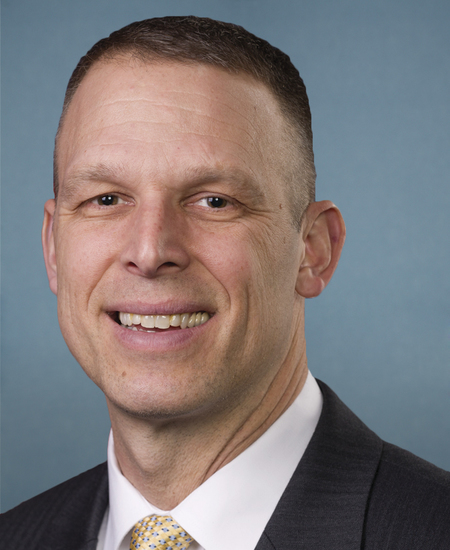
Scott Perry
14% support rate
Ranked legislators
10
5 support · 5 oppose
Key legislators

Who's moving technology in United States

Legislators moving technology in United States
Legislator Party Stance Support rate Votes
Suzan K. DelBene
Suzan K. DelBene House · District 1
D
Strong +
86% 259
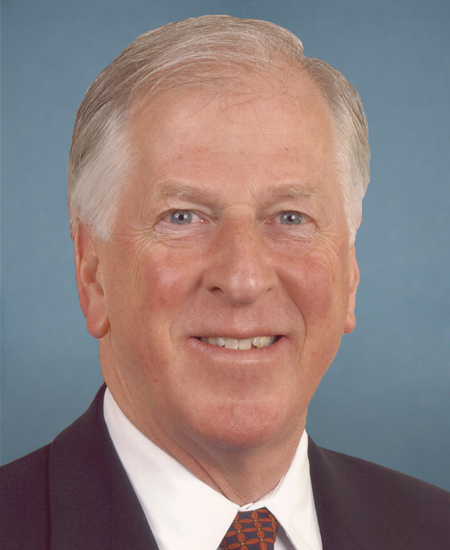
Mike Thompson
Mike Thompson House · District 4
D
Strong +
86% 261
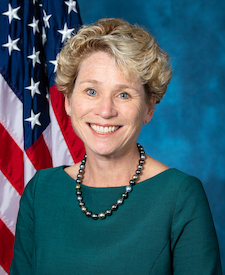
Chrissy Houlahan
Chrissy Houlahan House · District 6
D
Strong +
86% 259
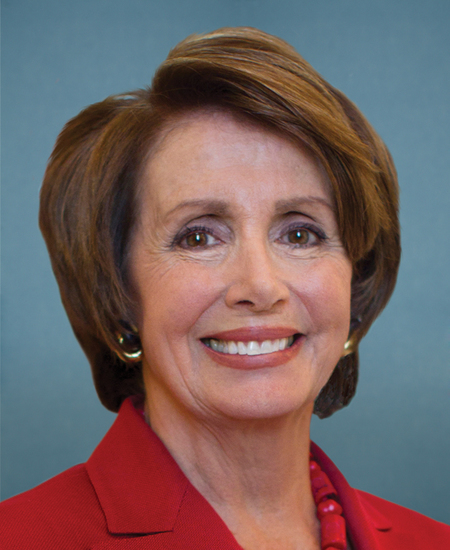
Nancy Pelosi
Nancy Pelosi House · District 11
D
Strong +
86% 246
Kim Schrier
Kim Schrier House · District 8
D
Strong +
86% 261
Scott Perry
Scott Perry House · District 10
R
Strong −
14% 252
AA
Alan Armstrong Senate
R
Strong −
14% 46
Rand Paul
Rand Paul Senate
R
Strong −
16% 223
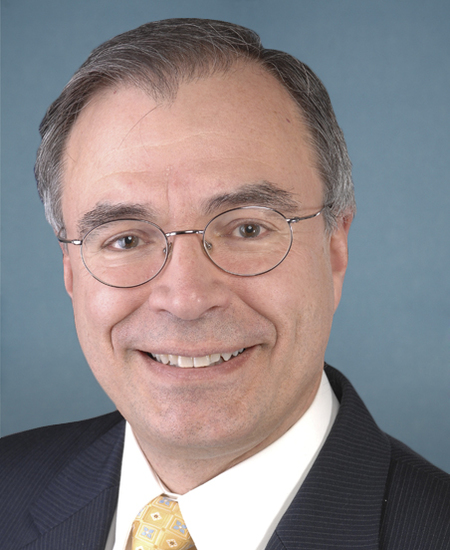
Andy Harris
Andy Harris House · District 1
R
Strong −
18% 257
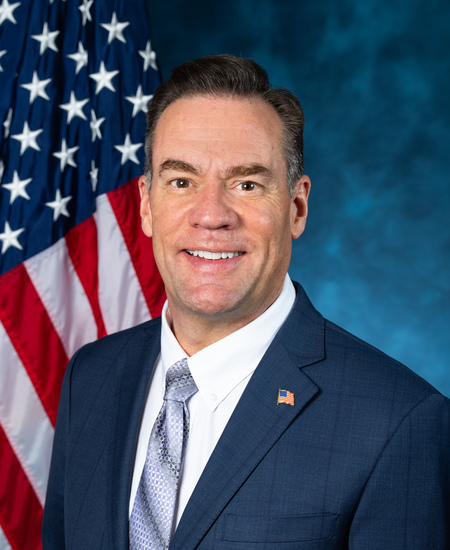
Russ Fulcher
Russ Fulcher House · District 1
R
Strong −
18% 262
Showing 31–40 of 1,431 bills

All technology bills

in committee · United States · Senate Aug 5, 2026

S 5252: BLADE Act

The BLADE Act directs the Department of Commerce to identify foreign entities, particularly those from China and Russia, that are conducting unauthorized "model extraction attacks" to steal capabilities from U.S. closed-source artificial intelligence models. The bill requires the government to publish a public list of these attackers and mandates their addition to the Entity List, which restricts their access to certain technologies and exports. Additionally, it authorizes the President to impose financial sanctions on identified individuals and entities, with specific exceptions for humanitarian assistance and national security activities.
in committee · United States · Senate Aug 6, 2026

S 5317: INSPIRES Act

The INSPIRES Act authorizes the Department of Education to provide funding for the modernization, renovation, or construction of science, technology, engineering, and mathematics (STEM) facilities in public schools and career and technical education institutions. The bill establishes two primary grant programs: one that allocates funds to states to subgrant to local agencies for upgrading rural and Native American-serving schools, and another that offers direct grants, loan guarantees, or interest payments to eligible entities for broader STEM and vocational facility improvements. To receive these federal funds, states must contribute a 25 percent non-federal match, while local agencies receiving subgrants are required to provide a 10 percent match, with priority given to applicants who form public-private partnerships. The legislation authorizes at least $25 million annually for each program starting in fiscal year 2027 and requires the Secretary of Education to report biennially on how these facility upgrades impact student academic achievement.
in committee · United States · Senate Aug 6, 2026

S 5313: Quantum-GUARD Act of 2026

The Quantum-GUARD Act of 2026 requires the Federal Energy Regulatory Commission to evaluate cybersecurity risks posed by quantum computers and the potential use of post-quantum cryptography when reviewing reliability standards for the bulk-power system. The bill directs the Department of Energy to establish a "PQC sandbox" within one year, bringing together grid operators, technology vendors, and government agencies to test and develop post-quantum security solutions for both information and operational technology systems. Additionally, the Secretary of Energy must conduct a study on the specific vulnerabilities of critical grid infrastructure to quantum threats and submit a report with recommendations to Congress within one year of enactment.
in committee · United States · Senate Aug 6, 2026

S 5291: Small Business Cybersecurity Assistance Evaluation Act of 2026

The Small Business Cybersecurity Assistance Evaluation Act of 2026 directs the Government Accountability Office to conduct a comprehensive study of existing federal cybersecurity initiatives, tools, and services designed to support small businesses. The investigation will assess how effectively these resources help owners identify cyber risks, prepare for threats, recover from attacks, and secure funding for security measures. Additionally, the study will evaluate the level of awareness among small business owners regarding these programs and examine how well different federal efforts are coordinated with one another. Upon completion, the findings and recommendations for improving these services will be submitted to the relevant congressional committees without authorizing any new spending.
Sub-Topics Cybersecurity Tags Small Business
in committee · United States · Senate Aug 3, 2026

S 5217: RECOVER PII Act

The RECOVER PII Act expands identity protection coverage for individuals affected by federal agency data breaches, extending the duration of protection for the remainder of their lives and increasing the minimum insurance amount to $5 million. Additionally, the bill allows federal agencies to use appropriated funds to reimburse employees or their contractors for up to 100 percent of the costs associated with privacy-enhancing services, such as software or hardware designed to mitigate data risks. These provisions aim to provide long-term financial support and resources to victims of data breaches while ensuring that reimbursement claims are supported by necessary documentation.
in committee · United States · House Jul 23, 2026

HR 9925: FRONTIER Act

The FRONTIER Act establishes a regulatory framework for the largest artificial intelligence developers to manage and disclose risks associated with their most powerful models, known as "frontier models." It requires companies meeting specific revenue and spending thresholds to create public safety frameworks, undergo independent third-party audits, and report incidents or potential harms to the Department of Commerce. The bill also creates a system where the Secretary of Commerce can issue emergency orders to suspend or restrict model development if an imminent catastrophic risk is identified. Additionally, the legislation preempts state laws that impose new obligations on AI developers regarding risk transparency, auditing, and incident reporting to ensure a uniform national approach.
in committee · United States · Senate Aug 5, 2026

S 5171: Children's Artificial Intelligence Toy Safety Act of 2026

The Children's Artificial Intelligence Toy Safety Act of 2026 directs the National Academies of Sciences, Engineering, and Medicine to conduct a comprehensive study on the safety, educational impact, and marketing ethics of AI-enabled toys for children under 14. This study will specifically examine risks of physical and psychological harm, the effectiveness of parental controls, and whether a temporary sales ban is necessary. Following the study, the Federal Trade Commission and the Consumer Product Safety Commission must create a joint action plan within two years that includes recommendations for new regulations, disclosure requirements, and public education initiatives. The bill defines AI-enabled toys as products capable of two-way interaction and applies these rules to developers and manufacturers of such items.
in committee · United States · House Aug 4, 2026

HR 10040: No TSA Data for ICE Act

This bill, titled the No TSA Data for ICE Act, prohibits the Transportation Security Administration from sharing passenger data with U.S. Customs and Border Protection or U.S. Immigration and Customs Enforcement. It specifically bars these agencies from using TSA information or data from private brokers to perform immigration enforcement functions. Additionally, the legislation prevents the denial, suspension, or early termination of Trusted Traveler programs like PreCheck and Global Entry if an individual's participation in First Amendment-protected activities is the reason. The law defines the restricted data as personally identifiable information about flight passengers obtained from the TSA or private sector entities.
in committee · United States · Senate Jul 30, 2026

S 5187: PHD Talent Act of 2026

The PHD Talent Act of 2026 establishes a five-year pilot program to help universities create accelerated doctoral programs in critical fields like artificial intelligence, quantum computing, and biotechnology. These programs aim to train U.S. citizens and permanent residents by shortening the time to earn a doctorate, integrating undergraduate and graduate coursework, and providing funding that covers at least three years of doctoral study. The Department of Energy will award grants to universities that partner with national laboratories and industry to offer these tracks, which also include structured mentorship and research rotations to build dual expertise in a specific science and computational methods. The legislation authorizes $250 million for the program between 2028 and 2032 and requires the Department of Energy to submit annual reports to Congress on the initiative's progress and student outcomes.
in committee · United States · House Jul 22, 2026

HR 9858: STRATA Act of 2026

The STRATA Act of 2026 establishes a new program within the Department of State to foster international partnerships focused on advancing critical minerals technologies, aiming to strengthen U.S. supply chains and national security. This initiative allows the Secretary of State to form alliances with allied and partner nations, universities, and private companies while explicitly prohibiting collaborations with designated countries of concern such as China and Russia. Key provisions include the creation of International Centers of Excellence for research and training, the development of a digital platform to connect stakeholders with funding opportunities, and the establishment of clear guidelines for intellectual property and data security within these partnerships. The program authorizes the use of specific funding sources to support joint projects in extraction, recycling, and manufacturing, with a requirement that all activities conclude within ten years of the bill's enactment.
Showing 31 to 40 of 1,431 bills
Previous 1 3 4 5 144 Next