Issue · Technology

Technology

Every technology bill, vote, and legislator stance in United States, automatically classified by Maddy, our AI policy reader.

Total bills
1,661
119th Congress
Top supporter
Ami Bera
86% support rate
Top opponent
Scott Perry
14% support rate
Ranked legislators
10
5 support · 5 oppose
Key legislators

Who's moving technology in United States

Legislators moving technology in United States
Legislator Party Stance Support rate Decisive votes
Ami Bera
Ami Bera House · District 6
D
Strong +
86% 22
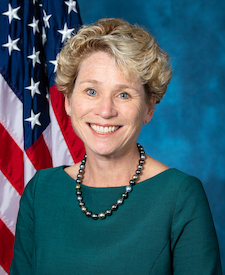
Chrissy Houlahan
Chrissy Houlahan House · District 6
D
Strong +
86% 22
Kim Schrier
Kim Schrier House · District 8
D
Strong +
86% 22
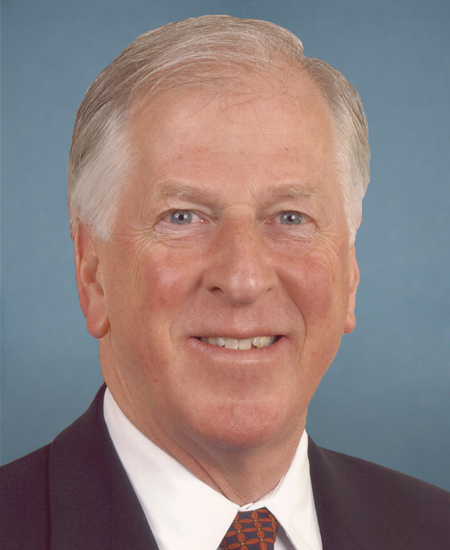
Mike Thompson
Mike Thompson House · District 4
D
Strong +
86% 22
Nancy Pelosi
Nancy Pelosi House · District 11
D
Strong +
86% 22
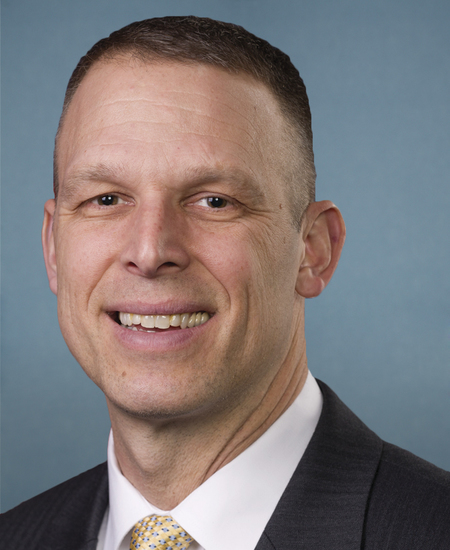
Scott Perry
Scott Perry House · District 10
R
Strong −
14% 21
AA
Alan Armstrong Senate
R
Strong −
17% 29
Rand Paul
Rand Paul Senate
R
Strong −
17% 46
Josh Hawley
Josh Hawley Senate
R
Strong −
18% 45
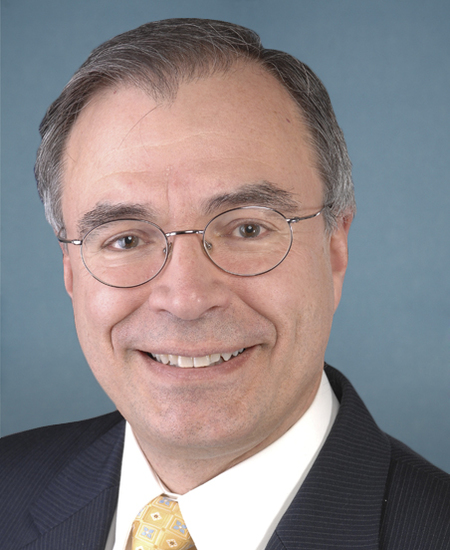
Andy Harris
Andy Harris House · District 1
R
Strong −
18% 22
Showing 321–330 of 1,661 bills

All technology bills

in committee · United States · Senate May 21, 2026

S 4633: Unmanned and Autonomous Systems Strategy Act of 2026

The Unmanned and Autonomous Systems Strategy Act of 2026 requires the Secretary of Defense to create a comprehensive plan for deploying unmanned and autonomous systems in the Indo-Pacific and Western Hemisphere regions. This strategy must involve coordination with military commanders, the Coast Guard, and other government officials, covering areas such as artificial intelligence integration, supply chain security, and partnerships with allies like Japan, Australia, and Ukraine. The bill mandates that the Defense Department submit this strategy to Congress within 180 days and provide annual updates through 2030 on implementation progress and changes in enemy capabilities.
in committee · United States · House Jun 2, 2026

HR 9112: CREATOR Act

The CREATOR Act establishes a new federal intellectual property right that allows visual artists to control the commercial use of their distinctive visual style. This right applies specifically to works created using artificial intelligence that are intentionally designed to imitate an artist's style and marketed in a way that could mislead viewers about the work's origin. The law protects this right for the artist's lifetime and for up to 50 years after their death, while explicitly excluding general artistic influence, parody, and the mere capability of AI systems to produce similar outputs. Online platforms are granted safe harbors from liability if they remove flagged content promptly upon receiving valid notices, and the Act includes provisions to prevent abuse through penalties for false claims.
in committee · United States · House May 20, 2026

HR 8915: NO FAKES Act of 2026

The NO FAKES Act of 2026 grants individuals and their heirs a new property right to control the creation and use of digital replicas of their voice or visual likeness, preventing unauthorized use in computer-generated media. This right lasts for the individual's lifetime plus 10 years after death, with potential extensions for continued commercial use, and applies to both living and deceased people. Online platforms and companies distributing such content must register with the Copyright Office, remove unauthorized replicas upon receiving valid notices, and face civil penalties of up to $750,000 per work if they fail to comply or knowingly distribute unauthorized replicas. The law also preempts most existing state laws protecting voice and likeness rights, though it preserves protections for sexually explicit content and election-related uses.
in committee · United States · Senate May 21, 2026

S 4627: FARM AI Act of 2026

The FARM AI Act of 2026 directs the U.S. Department of Agriculture to integrate artificial intelligence into its research, education, and extension programs to help farmers improve productivity and resource management. This legislation mandates that federal funding for agricultural sciences include specific projects focused on AI adoption, workforce training, and the development of precision farming tools. To coordinate these efforts, the bill creates a new position called the Artificial Intelligence Agriculture Advisor, who will work with other agencies to promote AI use and establish national standards for the sector. Ultimately, the law aims to support small and family-run farms by providing technical assistance and ensuring access to modern digital technologies.
Sub-Topics Workforce Development Artificial Intelligence Tags Agriculture
in committee · United States · House Jun 4, 2026

HR 9151: Advancing American Wi-Fi Against Foreign Adversaries Act

This bill directs the U.S. government to create a strategy for maintaining global leadership in Wi-Fi and unlicensed wireless technologies, specifically in preparation for a major international conference in Shanghai in 2027. It requires the Secretary of Commerce to develop a public plan within 180 days that outlines how the United States will advocate for specific spectrum allocations and counter efforts by foreign adversaries to undermine these technologies. The plan must include strategies to coordinate with allies and address actions taken by the Chinese government, with a final report on progress due after the conference concludes.
in committee · United States · Senate May 20, 2026

S 4592: Digital Opportunity Foundation Act of 2026

The Digital Opportunity Foundation Act of 2026 establishes a new nonprofit organization called the Foundation for Digital Opportunity to help communities with low broadband adoption rates gain access to technology and digital skills. This foundation will be funded by raising money from private donors, philanthropic groups, and government entities rather than using direct federal appropriations. It will operate with a diverse board of directors and an executive team to distribute grants, run training programs, and support startups focused on digital inclusion. The bill also allows the foundation to create for-profit subsidiaries to attract investment and requires regular public reporting on its activities and financial status.
in committee · United States · House Jun 2, 2026

HR 9091: Defense Industrial Base Advanced Manufacturing Enhancement Act

This bill, titled the Defense Industrial Base Advanced Manufacturing Enhancement Act, directs the Department of Defense to create a plan for using advanced manufacturing to speed up the production of critical military supplies. It requires the Under Secretary of Defense for Acquisition and Sustainment to submit this plan to relevant defense forums and committees within 180 days of the bill's enactment. Following the plan's submission, a working group must be formed to identify specific manufacturing solutions that can increase production within 24 months. Additionally, the Defense Logistics Agency will update its No Bid Solicitation List to highlight items identified as critical readiness supplies and define related terms like "covered system."
in committee · United States · House Jun 8, 2026

HR 9173: Charitable Deductions for Digital Asset Donations Act

The Charitable Deductions for Digital Asset Donations Act allows taxpayers to deduct the fair market value of widely traded digital assets when donated to qualified charities, removing the current requirement to obtain a formal appraisal for these contributions. To qualify, a digital asset must be fungible, have readily available market quotations, a market capitalization exceeding $500 million, and not be owned by more than 10% of the taxpayer or related parties. The bill also establishes specific definitions for wrapped and tokenized assets while giving the IRS authority to exclude assets lacking reliable price discovery or at risk of manipulation. These changes will take effect for taxable years beginning after December 31, 2026, with the $500 million threshold subject to inflation adjustments in subsequent years.
in committee · United States · House May 19, 2026

HR 8899: Digital Asset PARITY Act

This bill, known as the Digital Asset PARITY Act, updates U.S. tax laws to clarify how digital assets are treated for income, capital gains, and charitable contributions. It primarily affects individuals and businesses that buy, sell, or hold cryptocurrencies and other digital tokens by establishing specific rules for stablecoins, mining, and staking activities. Key provisions include exempting regulated payment stablecoins from immediate gain recognition when traded at a price near $1, expanding the definition of "specified assets" to include digital assets for wash-sale rules, and allowing taxpayers to defer income on newly created assets earned through validation activities like mining or staking. The legislation also introduces stricter reporting requirements for charitable donations of digital assets and directs the Treasury Department to study ways to reduce compliance burdens for small, personal consumer transactions.
in committee · United States · House May 7, 2026

HR 8689: Strategic Export Controls and Border Security Enhancement Act

This bill establishes a new Office of Export Controls and Border Security within the U.S. Department of State to help partner countries prevent the spread of weapons of mass destruction. The Office will train foreign nations on how to better regulate the export of sensitive technologies and goods that could be misused for military purposes. It also requires the Secretary of State to create a coordinated strategy using advanced analytics to identify risks and strengthen global supply chain security. Additionally, the legislation mandates that different parts of the State Department work together to avoid duplicating efforts in border security assistance.
Showing 321 to 330 of 1,661 bills
Previous 1 32 33 34 167 Next