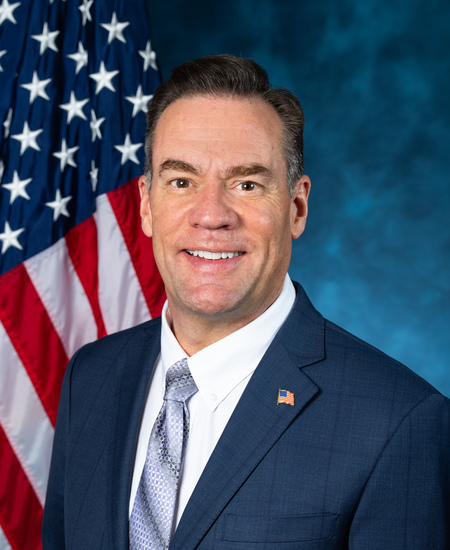
This bill, the Remote Control Locomotives Safety Improvement Act of 2026, prohibits railroads from operating trains on main lines or outside rail yards using remote control locomotives without a human engineer physically present in the lead locomotive's cab. It mandates that any train moving on a main line must be led by a certified engineer inside the cab and explicitly excludes remote control operators from performing these duties. To enforce these rules, the Federal Railroad Administration must conduct mandatory audits of Class I railroads within 180 days and perform unscheduled inspections of other carriers within a year, while violations can result in civil penalties of up to one percent of annual income or $1 million per day.
The Health and Location Data Protection Act of 2026 prohibits data brokers from buying, selling, or sharing specific types of personal information, including an individual's health data and location history. This ban applies to any entity that resells data it did not collect directly from the person, though it allows exceptions for actions compliant with existing HIPAA rules, newsworthy reporting, and disclosures where the individual has given valid consent. The Federal Trade Commission is tasked with defining exactly what counts as "data" and issuing final rules within 180 days of the law's enactment. Violations of these restrictions can lead to enforcement actions by the FTC, state attorneys general, or private individuals, potentially resulting in civil penalties of up to 15 percent of the violator's annual revenue. The legislation also includes a funding provision that appropriates $1 billion to the FTC for fiscal year 2027 to support its work under this act.
This bill establishes a pilot program under the National Institute of Standards and Technology to test voluntary methods for disclosing when content is generated or manipulated by artificial intelligence. The program requires the NIST Director to work with private companies, civil society, and academia to evaluate how users can be informed about AI interactions and to develop guidelines for such disclosures. Upon completion, the NIST Director must submit a report to Congress detailing the program's findings and offering recommendations for future action. The legislation defines key terms like artificial intelligence and content provenance to ensure clarity in the pilot's scope. Ultimately, the bill aims to explore voluntary industry standards rather than mandating immediate legal requirements for AI labeling.
The State and Local Election Security Act of 2026 establishes a new federal grant program to assist states and local governments in improving election administration and security. Under this program, eligible states receive funding based on their voting age population to modernize election infrastructure and prepare for security threats, with a requirement that states pass at least 50% of the funds to local election officials. The legislation also authorizes $5 billion in total funding over three years and directs $150 million to the Cybersecurity and Infrastructure Security Agency to support the Elections Infrastructure Information Sharing and Analysis Center. Additionally, the bill expands the definition of eligible territories for election funding to include the Northern Mariana Islands and other territories with congressional delegates.
The AI Security and Innovation Act establishes a new Center for AI Security and Innovation within the National Institute of Standards and Technology to assess risks and improve the security of artificial intelligence systems. This center will evaluate threats such as data leaks and model tampering, develop voluntary safety standards, and conduct research on advanced AI capabilities developed by both U.S. and foreign entities. The bill defines key terms like "artificial intelligence model" and "covered frontier system," and authorizes $20 million annually from 2027 to 2032 to fund the center's activities. While the center director will consult with various federal agencies and AI developers, the legislation explicitly prohibits the center from having regulatory or enforcement powers. The center is authorized to operate for five years before its provisions expire.
The American Innovation and Choice Online Act targets large online platforms that dominate the U.S. market by prohibiting them from unfairly favoring their own products, restricting competitors' access to platform features, or using competitor data to compete against them. Specifically, the bill defines "systemically important platforms" as those with over $175 billion in annual revenue and at least 34 percent of U.S. users or households, placing them under strict rules against practices like tying services, manipulating search rankings, or forcing users to stay on the platform. The Federal Trade Commission and the Department of Justice are authorized to enforce these rules through civil penalties and injunctions, with a requirement that legal cases against these major platforms be resolved within one year. Additionally, the law includes specific exemptions to protect national security interests and intellectual property rights, ensuring that platforms are not required to share trade secrets or assist foreign adversaries.
The Precision Agriculture Cybersecurity Act directs federal agencies to assess cybersecurity risks facing modern farming technologies, such as sensors and data management systems. Specifically, it requires the Secretaries of Agriculture and Homeland Security to produce a public report within a year that evaluates current cyber threats, identifies planning gaps, and reviews existing funding and staff resources. The bill also mandates a study by the Government Accountability Office to examine how well different federal departments are coordinating their cybersecurity efforts in this sector. These reports will be shared with relevant congressional committees to inform future policy decisions regarding the protection of agricultural technology.
The American Drone Manufacturing Dominance Act of 2026 requires law enforcement agencies receiving federal grants to certify that they will stop buying drones from designated foreign countries by 2027 and phase out existing foreign-made drones by 2031. To support this transition, the bill establishes a buyback program that pays agencies to surrender foreign drones and offers grants to help them purchase secure, domestically produced alternatives. Additionally, the legislation provides funding to private companies to build or expand drone manufacturing facilities in the United States, with a requirement that these systems be adaptable for defense use. Non-compliant agencies face penalties including the loss of future funding and the requirement to repay previous grants, while the bill also authorizes $1.5 billion in funds derived from trade duties to finance these initiatives.
The Responsible Artificial Intelligence Defense Act of 2026 establishes a new framework for the U.S. Department of Defense to develop and deploy autonomous weapon systems and artificial intelligence capabilities. It requires the Secretary of Defense to maintain continuous human oversight, ensuring that operators can intervene to stop systems acting illegally or unexpectedly. The bill mandates rigorous testing, cybersecurity reviews, and legal assessments before these technologies are prototyped or fielded, while also creating a working group to advise on safety standards. Specific prohibitions prevent the use of AI for nuclear launch decisions or warrantless surveillance of individuals within the United States. Additionally, the act defines different risk levels for these systems and requires annual reports to Congress on their administration.
The Farmers' Market Local Revitalization Act of 2026 increases funding and modernizes two federal nutrition programs that provide benefits at farmers' markets for seniors and low-income women, infants, and children. For seniors, the bill raises the minimum benefit to $35, removes spending caps, and allows funds to be used for electronic payment systems and delivery services, while also reserving a portion of funds for states that previously did not participate. The program for women, infants, and children similarly increases benefit amounts and permits up to 10 percent of funds to be used for technology upgrades and administrative costs. The legislation also authorizes new funding levels for these programs starting in fiscal year 2027 and requires the Secretary of Agriculture to conduct a study on integrating these nutrition programs to reduce administrative burdens.