Issue · Technology

Technology

Every technology bill, vote, and legislator stance in United States, automatically classified by Maddy, our AI policy reader.

Total bills
1,641
119th Congress
Top supporter
Suzan K. DelBene
86% support rate
Top opponent
Scott Perry
14% support rate
Ranked legislators
10
5 support · 5 oppose
Key legislators

Who's moving technology in United States

Legislators moving technology in United States
Legislator Party Stance Support rate Votes
Suzan K. DelBene
Suzan K. DelBene House · District 1
D
Strong +
86% 259
Mike Thompson
Mike Thompson House · District 4
D
Strong +
86% 261
Chrissy Houlahan
Chrissy Houlahan House · District 6
D
Strong +
86% 259
Nancy Pelosi
Nancy Pelosi House · District 11
D
Strong +
86% 246
Kim Schrier
Kim Schrier House · District 8
D
Strong +
86% 261
Scott Perry
Scott Perry House · District 10
R
Strong −
14% 252
AA
Alan Armstrong Senate
R
Strong −
14% 46
Rand Paul
Rand Paul Senate
R
Strong −
16% 223
Andy Harris
Andy Harris House · District 1
R
Strong −
18% 257
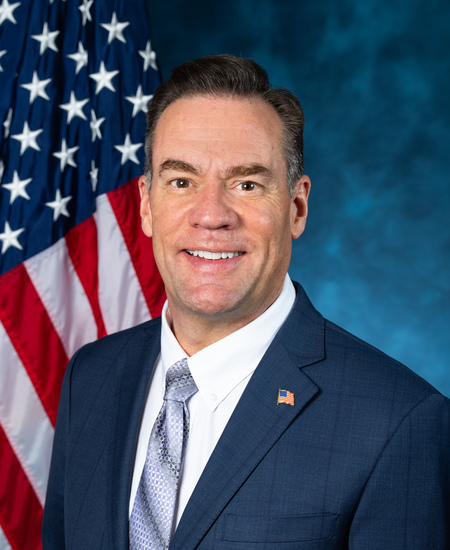
Russ Fulcher
Russ Fulcher House · District 1
R
Strong −
18% 262
Showing 11–20 of 1,641 bills

All technology bills

in committee · United States · House Jul 22, 2026

HR 9857: Protecting Americans from Doxing and Political Violence Act

The Protecting Americans from Doxing and Political Violence Act requires government agencies to remove the personal contact details, home addresses, and financial information of Members of Congress, their family members, and designated staff from public records within 72 hours of a written request. The bill also prohibits data brokers from knowingly selling or trading this private information for any individual in the United States and mandates that other online platforms take down such data if the affected person submits a takedown notice. While these protections apply broadly to prevent doxing, the law includes exceptions that allow the continued publication of information related to news stories, matters of public concern, or records required by federal election laws.
in committee · United States · House Aug 27, 2026

HR 10162: STORMWATER Act

The STORMWATER Act extends the funding period for stormwater control infrastructure technology centers from fiscal years 2022-2026 to 2027-2031. It mandates that exactly five of these centers be established, rather than a range of three to five as previously allowed. Additionally, the bill requires that one of the designated centers be located in and focused on the Great Lakes region.
Sub-Topics Water Quality
in committee · United States · House Sep 1, 2026

HR 10163: American Quantum Competitiveness Act

The American Quantum Competitiveness Act designates the Secretary of Commerce as the primary advisor to the President on policies regarding the commercial development and supply chains for quantum technology. The bill directs the Department of Commerce to promote U.S. leadership in this field by encouraging private sector investment, entering agreements with trusted suppliers and foreign partners, and identifying barriers to investment. It requires the Secretary to establish methods for assessing risks associated with critical components sourced from specific "covered nations" and to coordinate with allies to maintain resilient supply chains. Additionally, the legislation mandates that the Secretary publish a comprehensive strategy report every three years, starting two years after enactment, which includes recommendations for further government or private sector actions to strengthen U.S. economic competitiveness in quantum technology.
Sub-Topics Emerging Technology
in committee · United States · House Aug 31, 2026

HR 10199: Sell Your Stocks or Step Down Act

The Sell Your Stocks or Step Down Act would prohibit high-ranking federal officials, including the President, Vice President, Members of Congress, senior executive branch employees, and federal judges, from directly or indirectly owning or trading most stocks, commodities, futures, and digital assets. To comply with these rules, covered individuals must sell their existing eligible investments at fair market value within 30 days of taking office or the bill's enactment, though they may keep diversified mutual funds, government bonds, and certain other specific holdings. The legislation establishes strict penalties for non-compliance, including daily fees that can reach up to 50 percent of the value of the remaining portfolio and mandatory disgorgement of any profits made from illegal trades. These fines must be paid out of personal funds rather than government resources, with all collected penalties deposited into the Treasury specifically for deficit reduction.
in committee · United States · House Aug 20, 2026

HR 10130: Army Quantum Readiness Act

The Army Quantum Readiness Act requires the Secretary of the Army to establish a new initiative focused on integrating quantum computing and advanced technologies into military operations, intelligence, and logistics. This initiative aims to identify practical applications for these technologies, assess necessary infrastructure upgrades such as power and cybersecurity, and develop strategies for training the required workforce. The bill also authorizes the creation of pilot projects and demonstration activities to test quantum-enabled tools, including artificial intelligence and secure networking. Finally, it mandates that the Secretary submit a detailed report to Congress within 270 days outlining readiness requirements, recommended investments, and necessary legislative changes to accelerate this transition.
in committee · United States · House Aug 24, 2026

HRES 1489: Honoring the crew of the Artemis II mission for their historic lunar flyby.

This House resolution honors the four astronauts who completed the Artemis II mission, a ten-day lunar flyby that marked humanity's return to the Moon's vicinity for the first time in over fifty years. The bill details the crew members' backgrounds and highlights their achievement of traveling 252,756 miles from Earth, which is the farthest distance humans have ever ventured. It expresses the House's support for designating National Artemis II Mission Day to commemorate the event and congratulates the crew on paving the way for future lunar surface landings.
in committee · United States · House Sep 2, 2026

HR 10238: Cybersecurity for Small Businesses Act of 2026

The Cybersecurity for Small Businesses Act of 2026 directs the Small Business Administration, in partnership with federal cybersecurity agencies, to create and distribute resources that help small businesses improve their digital security practices. The bill specifically requires the administration to provide guidance on federal cybersecurity compliance standards to small companies seeking government contracts or subcontracting opportunities. This information must be made available through small business development centers, district offices, and the agency's website. Additionally, the Office of Advocacy is required to submit an annual report to Congress detailing how many small businesses have contacted them regarding cybersecurity issues.
Sub-Topics Consumer Data Protection Cybersecurity Tags Small Business
in committee · United States · House Aug 24, 2026

HR 10146: AI Advertising Disclosure Act

The AI Advertising Disclosure Act requires companies operating AI chatbots and generative search features with over 50,000 monthly users to clearly disclose when their responses are influenced by paid partnerships or commercial arrangements. These disclosures must be visible without scrolling, use plain language, and identify the specific nature of the sponsorship, while also prohibiting AI systems from denying they are artificial or hiding sponsored content behind organic-looking answers. The bill grants the Federal Trade Commission authority to enforce these rules and allows state attorneys general and private individuals to sue for violations, with potential penalties including triple damages for willful misconduct.
in committee · United States · House Sep 3, 2026

HR 10284: Smart Meter Data Privacy Protection Act

The Smart Meter Data Privacy Protection Act prohibits state-regulated electric utilities that are not wholly owned by U.S. persons from selling or commercially monetizing personal consumption data collected via smart meters, restricting such use to specific operational needs like billing and grid reliability. The bill requires these utilities to submit annual reports to the Federal Trade Commission detailing what data was collected, how it was used, and with whom it was shared. If a utility violates these privacy rules, the FTC can order the company to credit affected customers an amount equal to three times the revenue generated from that unauthorized use. State attorneys general are also granted the authority to sue on behalf of residents to enforce compliance or seek damages, while the FTC is tasked with establishing security standards for data retention.
in committee · United States · House Sep 3, 2026

HR 10263: Halt Abusive Internet Lawsuits Act of 2026

The Halt Abusive Internet Lawsuits Act of 2026 prohibits federal and state legal claims related to wiretapping or eavesdropping when information is collected for commercial digital activities. This applies to practices such as using cookies, pixels, chatbots, and analytics tools to facilitate sales, marketing, or customer interactions. The bill directly affects businesses and service providers that use these standard digital commerce tools by shielding them from specific privacy-related lawsuits. Additionally, any existing legal actions based on these grounds would be required to stop once the law is enacted.
Showing 11 to 20 of 1,641 bills