

Issue · Technology
Technology
Every technology bill, vote, and legislator stance in United States, automatically classified by Maddy, our AI policy reader.
Total bills
1,641
119th Congress
Top supporter
Suzan K. DelBene
86% support rate
Top opponent
Scott Perry
14% support rate
Ranked legislators
10
5 support · 5 oppose
Key legislators
Who's moving technology in United States
| Legislator | Party | Stance | Support rate | Votes |
|---|---|---|---|---|

Suzan K. DelBene
House · District 1
|
D |
Strong +
|
86% | 259 |

Mike Thompson
House · District 4
|
D |
Strong +
|
86% | 261 |

Chrissy Houlahan
House · District 6
|
D |
Strong +
|
86% | 259 |

Nancy Pelosi
House · District 11
|
D |
Strong +
|
86% | 246 |

Kim Schrier
House · District 8
|
D |
Strong +
|
86% | 261 |

Scott Perry
House · District 10
|
R |
Strong −
|
14% | 252 |
|
AA
Alan Armstrong
Senate
|
R |
Strong −
|
14% | 46 |

Rand Paul
Senate
|
R |
Strong −
|
16% | 223 |

Andy Harris
House · District 1
|
R |
Strong −
|
18% | 257 |
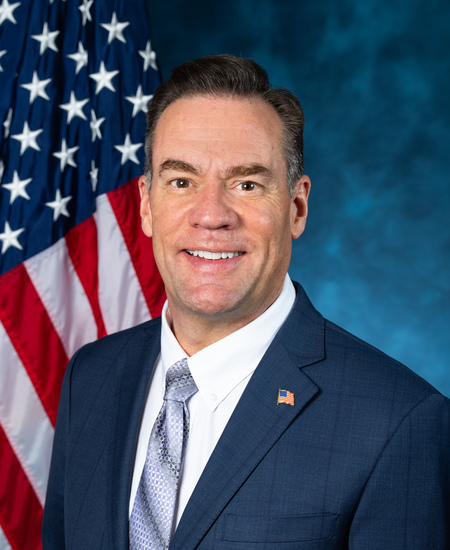
Russ Fulcher
House · District 1
|
R |
Strong −
|
18% | 262 |
Showing 151–160 of 1,641
bills
All technology bills
HR 9621: Northwest Endangered Salmon Predation Prevention Act of 2026
Topics
✓ EnvironmentSupports EnvironmentBill aims to protect endangered salmon and steelhead by controlling predation and funding habitat protection technology.
✓ TechnologySupports TechnologyBill explicitly funds and develops technology to block marine mammals, directly advancing the use of protective tech.
HR 9655: FAIR Data Act
Topics
✓ EnergySupports EnergyBill prevents utilities from passing large data center costs to residential/small business customers, protecting consumers and promoting equitable energy access.
✓ EnvironmentSupports EnvironmentBill prevents utilities from passing data center costs to residential customers, potentially reducing energy demand and associated emissions from large facilities.
✓ TechnologySupports TechnologyBill prevents utilities from passing data center costs to consumers, protecting residential and small business rates from tech infrastructure burdens.
Sub-Topics
Electric Grid
S 4822: Saving the OOI Act of 2026
Topics
✓ EnvironmentSupports EnvironmentBill prevents defunding of ocean monitoring systems, which are critical for environmental data collection and conservation efforts.
✓ TechnologySupports TechnologyBill protects critical ocean monitoring technology infrastructure by preventing defunding and mandating continued operation.
Sub-Topics
Coastal & Flood Protection
S 4946: Health and Location Data Protection Act of 2026
Topics
✓ HealthcareSupports HealthcareBill protects patient privacy by restricting data brokers from selling health information, thereby safeguarding patient rights and data security.
✓ TechnologySupports TechnologyBill protects consumer data privacy by restricting data broker sales of location and health info.
Sub-Topics
Data Privacy
HR 9698: Advanced Coursework Equity Act
Topics
✓ EducationSupports EducationBill creates a federal grant program to expand access to advanced STEM courses for under-resourced schools and underrepresented groups.
✓ TechnologySupports TechnologyBill funds advanced STEM courses and mandates open enrollment or universal screening to improve digital equity and access for underrepresented groups.
HR 9640: Earth MRI Reauthorization Act of 2026
Topics
✓ Budget & TaxesSupports Budget & TaxesBill explicitly allocates $84 million to extend funding for a critical government program, directly advancing fiscal management and appropriations.
✓ EnergySupports EnergyBill funds mapping of geothermal resources and critical minerals, advancing energy infrastructure development.
✓ EnvironmentSupports EnvironmentBill funds Earth Mapping Resources Initiative to map critical minerals and geothermal resources, advancing environmental data collection and conservation.
✓ TechnologySupports TechnologyBill allocates funding to advance advanced technologies like modern sensing and digital geochemistry for resource mapping.
S 4948: SBA IT Modernization Reporting Act
Tags
Small Business
HR 9679: REDACT Act
Topics
✓ HealthcareSupports HealthcareBill protects patient privacy rights by allowing lawsuits against the government for improper medical data disclosure, aligning with indicators for supporting patient rights.
✓ TechnologySupports TechnologyBill strengthens data privacy by allowing lawsuits against the government for improper disclosure of personal information.
HR 9646: Quantum-Enhanced Critical Minerals Mapping Act of 2026
Topics
✓ EnergySupports EnergyBill promotes critical minerals mapping to enable mining investment, supporting energy infrastructure and production.
✓ TechnologySupports TechnologyBill explicitly directs the USGS to launch a program using advanced quantum technology to map critical minerals, thereby advancing and funding this emerging tech area.
Sub-Topics
Emerging Technology