Issue · Technology

Technology

Every technology bill, vote, and legislator stance in United States, automatically classified by Maddy, our AI policy reader.

Total bills
1,641
119th Congress
Top supporter
Suzan K. DelBene
86% support rate
Top opponent
Scott Perry
14% support rate
Ranked legislators
10
5 support · 5 oppose
Key legislators

Who's moving technology in United States

Legislators moving technology in United States
Legislator Party Stance Support rate Votes
Suzan K. DelBene
Suzan K. DelBene House · District 1
D
Strong +
86% 259
Mike Thompson
Mike Thompson House · District 4
D
Strong +
86% 261
Chrissy Houlahan
Chrissy Houlahan House · District 6
D
Strong +
86% 259
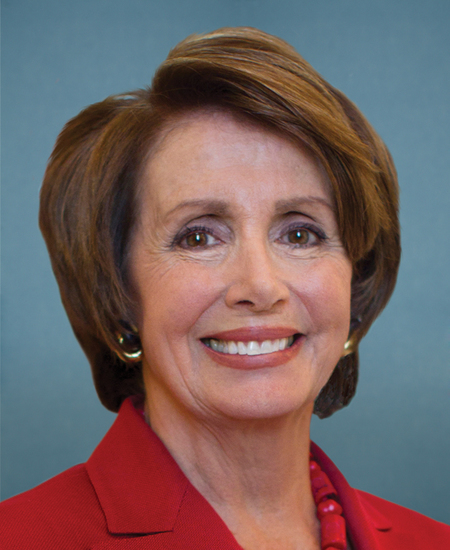
Nancy Pelosi
Nancy Pelosi House · District 11
D
Strong +
86% 246
Kim Schrier
Kim Schrier House · District 8
D
Strong +
86% 261
Scott Perry
Scott Perry House · District 10
R
Strong −
14% 252
AA
Alan Armstrong Senate
R
Strong −
14% 46
Rand Paul
Rand Paul Senate
R
Strong −
16% 223
Andy Harris
Andy Harris House · District 1
R
Strong −
18% 257
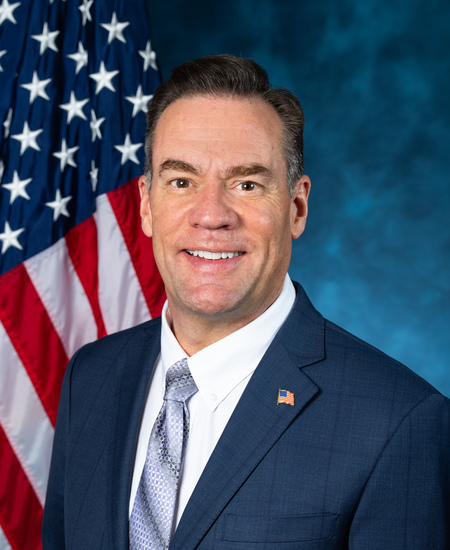
Russ Fulcher
Russ Fulcher House · District 1
R
Strong −
18% 262
Showing 1,531–1,540 of 1,641 bills

All technology bills

in committee · United States · House Feb 3, 2026

HR 7323: Defense Technology Hubs Act of 2026

The Defense Technology Hubs Act of 2026 requires the Secretary of Defense to establish a program creating regional hubs focused on advancing defense-related technologies like AI, quantum, and cybersecurity. These hubs - designated from applications by eligible consortia (including universities, defense contractors, and local governments) - will accelerate research, foster partnerships with military installations, and build workforce pipelines. The program authorizes $375 million (2026-2030) to fund hubs, with federal grants covering up to 50% of costs, while mandating strict security protocols to protect sensitive research. It aims to distribute at least 10 hubs across diverse U.S. regions within three years, prioritizing areas near existing defense facilities.
in committee · United States · House Jan 30, 2026

HR 7302: Digital Literacy and Equity Act of 2026

The Digital Literacy and Equity Act of 2026 establishes a federal commission to study digital literacy and equity in the United States, with specific focus on low-income and disadvantaged communities as defined in the bill. The commission will examine current federal, state, and local programs; review international initiatives; and identify best practices to improve digital literacy skills, particularly through early education and community outreach. Within two years, the commission must submit a report to Congress with findings and recommendations, including strategies to expand digital literacy access in underserved areas and a proposed national measurement method for digital literacy. This bill creates a study framework but does not mandate immediate policy changes or funding.
Sub-Topics Broadband Access
in committee · United States · House May 6, 2025

HR 3210: Artificial Intelligence Literacy and Inclusion Act

The Artificial Intelligence Literacy and Inclusion Act authorizes the National Science Foundation to fund local AI literacy programs targeting underserved communities, including people of color, low-income residents, rural populations, seniors, and people with disabilities. These programs must cover AI basics, ethics, applications, and societal impacts, with grantees required to submit annual reports on participant demographics and program effectiveness. Federal agencies like Labor, Commerce, and Education must also submit reports to Congress within one year on integrating AI literacy into workforce training, small business support, and school curricula, including how to adapt existing grant programs. The bill mandates public availability of all agency reports and emphasizes community-driven education to build broader public understanding of AI. This legislation aims to expand equitable access to AI education without specifying outcomes or advocating for particular policies.
in committee · United States · House Feb 27, 2025

HR 1694: AI Accountability Act

HR 1694, the AI Accountability Act, directs the Commerce Department's Assistant Secretary for Communications and Information to study accountability measures for AI systems used in communications networks (like social media and telecom) and spectrum sharing. The study will examine how these measures can help close the digital divide, reduce cybersecurity risks, and clarify terms like "trustworthy" AI, while consulting with industry, academia, and consumers. It requires two reports within 18 months: one detailing the study findings and stakeholder feedback, and another recommending how to make AI system information accessible to the public. The bill does not impose new regulations but focuses on gathering data to inform future policy.
signed · United States · Senate May 9, 2025

SJRES 28: A joint resolution disapproving the rule submitted by the Bureau of Consumer Financial Protection relating to "Defining Larger Participants of a Market for General-Use Digital Consumer Payment Applications".

This bill (SJRES 28) is a congressional resolution that blocks a rule proposed by the Bureau of Consumer Financial Protection (CFPB). The rule aimed to define which digital payment companies (like Apple Pay or Google Pay) would be classified as "larger participants" in the market, subject to stricter regulations. By disapproving this rule, Congress ensures it has no legal effect, meaning the CFPB cannot enforce these specific oversight requirements on major digital payment platforms. This directly affects the CFPB’s regulatory authority and digital payment companies that would have been subject to the rule.
in committee · United States · Senate Jul 27, 2026

S 3900: Iran Human Rights, Internet Freedom, and Accountability Act of 2026

The Iran Human Rights, Internet Freedom, and Accountability Act of 2026 aims to support Iranian citizens' access to information and human rights by expanding U.S. government efforts to promote internet freedom in Iran. The bill requires the State Department to coordinate internet freedom initiatives, develop technologies to circumvent internet blackouts (including satellite internet and mesh networks), and increase funding for programs that provide Iranians with tools to access open internet services. It also establishes procedures for identifying and sanctioning individuals who support the Iranian regime's human rights abuses. The legislation directly affects U.S. government agencies, Iranian citizens seeking to access information, and organizations working to support internet freedom in Iran.
in committee · United States · House Jul 15, 2025

HR 4402: DASHBOARD Act of 2025

This bill requires large online platforms (with over 100 million monthly U.S. users) to disclose the economic value of individual user data to users every 90 days and provide simple deletion tools. It mandates public companies that rely on user data for revenue to report the aggregate value of that data in SEC filings, including collection methods and revenue streams. The law applies to entities generating significant revenue from user data, such as major social media or ad-driven services. Enforcement of user transparency falls to the FTC, while the SEC oversees the financial disclosures.
Sub-Topics Consumer Data Protection Data Privacy Social Media Tags Data Reporting
in committee · United States · House Apr 4, 2025

HR 2109: Cybersecurity for Rural Water Systems Act

HR 2109, the Cybersecurity for Rural Water Systems Act, requires the federal rural water assistance program to provide cybersecurity help to small water systems serving under 10,000 people. It adds specific provisions for these systems to assess their cyber threat protections and implement security plans, procedures, and technologies. The bill increases annual funding for the program from $25 million to $32.5 million (2026-2030), with $7.5 million specifically allocated each year for this cybersecurity assistance. This directly affects rural water providers who lack resources to address growing cyber risks to their infrastructure.
Sub-Topics Cybersecurity Tags Rural Communities
in committee · United States · House Mar 5, 2025

HR 1870: SPEED for BEAD Act

The SPEED for BEAD Act (HR 1870) amends the federal broadband deployment program (BEAD) to accelerate network expansion. It defines "gigabit-level broadband" as 1,000 Mbps download speeds, requires unused funds to be returned to the Treasury instead of reallocated, and allows states to remove high-cost locations from project areas. The bill prohibits grant conditions related to labor practices (e.g., union requirements), diversity initiatives, climate policies, or network management rules, while ensuring all broadband technologies meeting speed standards are eligible. It also explicitly bans government regulation of broadband pricing, directly affecting states administering BEAD funds and the internet providers they fund.
passed · United States · Senate May 9, 2025

SJRES 7: A joint resolution providing for congressional disapproval under chapter 8 of title 5, United States Code, of the rule submitted by the Federal Communications Commission relating to "Addressing the Homework Gap Through the E-Rate Program".

This joint resolution seeks to block a Federal Communications Commission (FCC) rule that aimed to expand internet access for schools through the E-Rate program, specifically addressing the "homework gap" by increasing funding for student connectivity. The rule, published in the Federal Register on August 20, 2024, would have modified how schools and libraries access broadband under the E-Rate program. If passed, the resolution would cancel this rule, preventing it from taking effect under federal disapproval procedures. This is a procedural action targeting a specific FCC regulatory change, not a new policy.
Showing 1,531 to 1,540 of 1,641 bills