

Issue · Technology
Technology
Every technology bill, vote, and legislator stance in United States, automatically classified by Maddy, our AI policy reader.
Total bills
1,641
119th Congress
Top supporter
Suzan K. DelBene
86% support rate
Top opponent
Scott Perry
14% support rate
Ranked legislators
10
5 support · 5 oppose
Key legislators
Who's moving technology in United States
| Legislator | Party | Stance | Support rate | Votes |
|---|---|---|---|---|

Suzan K. DelBene
House · District 1
|
D |
Strong +
|
86% | 259 |

Mike Thompson
House · District 4
|
D |
Strong +
|
86% | 261 |

Chrissy Houlahan
House · District 6
|
D |
Strong +
|
86% | 259 |

Nancy Pelosi
House · District 11
|
D |
Strong +
|
86% | 246 |

Kim Schrier
House · District 8
|
D |
Strong +
|
86% | 261 |

Scott Perry
House · District 10
|
R |
Strong −
|
14% | 252 |
|
AA
Alan Armstrong
Senate
|
R |
Strong −
|
14% | 46 |

Rand Paul
Senate
|
R |
Strong −
|
16% | 223 |

Andy Harris
House · District 1
|
R |
Strong −
|
18% | 257 |
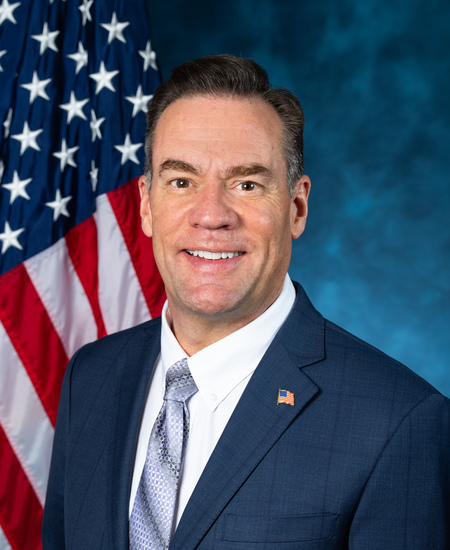
Russ Fulcher
House · District 1
|
R |
Strong −
|
18% | 262 |
Showing 1,411–1,420 of 1,641
bills
All technology bills
HR 2787: Warrant for Metadata Act
Topics
✓ Criminal JusticeSupports Criminal JusticeRequires warrants for law enforcement metadata access, protecting civil rights (privacy) in digital communications, a key aspect of criminal justice reform.
✓ TechnologySupports TechnologyRequires warrants for metadata access, strengthening data privacy protections by eliminating the 180-day exception for government data requests.
Sub-Topics
Law Enforcement
HRES 286: Of inquiry requesting the President to transmit certain documents relating to the dangerous, unaccountable use of AI by the United States DOGE Service to jeopardize the private information and essential services of the American people.
Sub-Topics
Artificial Intelligence
S 1346: Defense Quantum Acceleration Act of 2025
Topics
✓ Budget & TaxesSupports Budget & TaxesBill allocates $20M annually for DoD quantum center, directly increasing defense appropriations under government spending.
✓ TechnologySupports TechnologyFunds quantum R&D ($20M/year), mandates accelerated adoption of quantum tech for defense, and establishes strategic planning for military applications - directly advancing technology through investment and prioritization.
Sub-Topics
Emerging Technology
HR 3026: Protecting America’s Cybersecurity Act
Topics
✓ Labor & EmploymentSupports Labor & EmploymentReinstates CISA employees with backpay and prohibits involuntary removals, directly protecting specific federal workers' employment rights and job security.
✓ TechnologySupports TechnologyReinstates CISA staff and prohibits removals without authorization, directly strengthening cybersecurity agency operations per bill title and summary.
Sub-Topics
Cybersecurity
S 3663: NDO Fairness Act of 2026
Topics
✓ Criminal JusticeSupports Criminal JusticeBill mandates judicial oversight and time limits on delaying notification for electronic data access, protecting civil rights and enhancing law enforcement accountability in criminal investigations.
✓ TechnologySupports TechnologyLimits law enforcement notice delays in data access, requiring judicial oversight and time limits to protect privacy, aligning with data privacy protections.
S 3231: Respite CARE Act
Topics
✓ HealthcareSupports HealthcareBill creates grant program to fund respite care services for caregivers, improving access to healthcare support through integrated services and accessibility requirements.
✓ TechnologySupports TechnologyMandates assistive technology and accessibility formats (e.g., ASL) for services, promoting digital equity and inclusive tech use as required by bill language.
S 1918: Access Technology Affordability Act of 2025
Topics
✓ Budget & TaxesSupports Budget & TaxesCreates federal tax credit for blind individuals' access technology, providing targeted tax relief for a specific group.
✓ EducationSupports EducationBill provides tax credits for assistive technology for blind individuals, enhancing educational access and inclusion for students with disabilities in K-12 and higher education settings.
✓ TechnologySupports TechnologyBill provides tax credit for accessible tech, promoting digital equity for blind individuals through subsidized access to conversion tools and IT solutions.
Sub-Topics
Tax Credits
S 1213: Protect Elections from Deceptive AI Act
Sub-Topics
Artificial Intelligence
HR 1142: To amend the Public Health Service Act to direct the Secretary of Health and Human Services to establish drug adherence guidelines, and for other purposes.
Topics
✓ HealthcareSupports HealthcareBill mandates HHS to create drug adherence guidelines targeting 90% medication adherence for Medicare beneficiaries, prioritizes generic/biosimilar drugs, and uses AI/ML to improve outcomes - directly strengthening patient access and medication ef...
✓ TechnologySupports TechnologyMandates use of AI/ML for drug adherence guidelines, directly advancing technology application in healthcare policy