Issue · Technology

Technology

Every technology bill, vote, and legislator stance in United States, automatically classified by Maddy, our AI policy reader.

Total bills
1,431
119th Congress
Top supporter
Suzan K. DelBene
86% support rate
Top opponent
Scott Perry
14% support rate
Ranked legislators
10
5 support · 5 oppose
Key legislators

Who's moving technology in United States

Legislators moving technology in United States
Legislator Party Stance Support rate Votes
Suzan K. DelBene
Suzan K. DelBene House · District 1
D
Strong +
86% 259
Mike Thompson
Mike Thompson House · District 4
D
Strong +
86% 261
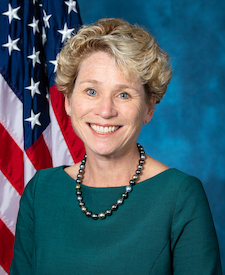
Chrissy Houlahan
Chrissy Houlahan House · District 6
D
Strong +
86% 259
Nancy Pelosi
Nancy Pelosi House · District 11
D
Strong +
86% 246
Kim Schrier
Kim Schrier House · District 8
D
Strong +
86% 261
Scott Perry
Scott Perry House · District 10
R
Strong −
14% 252
AA
Alan Armstrong Senate
R
Strong −
14% 46
Rand Paul
Rand Paul Senate
R
Strong −
16% 223
Andy Harris
Andy Harris House · District 1
R
Strong −
18% 257
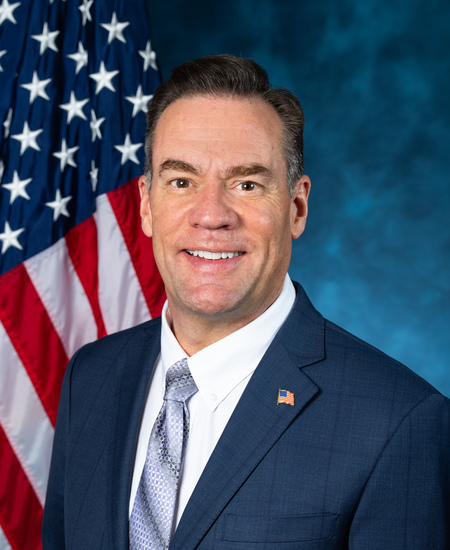
Russ Fulcher
Russ Fulcher House · District 1
R
Strong −
18% 262
Showing 1,361–1,370 of 1,431 bills

All technology bills

in committee · United States · Senate Feb 11, 2025

S 507: Promoting Precision Agriculture Act of 2025

This bill directs the Secretary of Agriculture to develop voluntary, industry-led technical standards for precision agriculture equipment within two years, coordinating with NIST and the FCC. It requires these standards to address connectivity needs, cybersecurity, and compatibility across devices like GPS systems, soil sensors, and data management tools used by farmers. The bill also mandates a GAO assessment every two years for eight years to evaluate whether the standards are truly voluntary, developed with industry input, and successfully encourage wider adoption of precision agriculture. The policy affects farmers, ag-tech companies, and equipment manufacturers by creating common technical rules to reduce adoption barriers, without imposing new regulations or costs.
Sub-Topics Broadband Access Cybersecurity Telecommunications Tags Agriculture
in committee · United States · House Feb 21, 2025

HR 1495: Digital Economy Cybersecurity Advisory Act of 2025

HR 1495, the Digital Economy Cybersecurity Advisory Act of 2025, establishes a new advisory board within the National Telecommunications and Information Administration (NTIA) to provide recommendations on cybersecurity policies. The board, made up of 5-25 members with cybersecurity or supply chain expertise from government, private industry, and network operators, will advise the NTIA on securing internet networks while promoting economic growth and innovation. Key areas of focus include best practices for critical internet protocols like Border Gateway Protocol, secure supply chains, and removing barriers to trust and commercialization in digital networks. The board will operate for four years, with members serving without pay and reporting exclusively to the NTIA.
in committee · United States · House Mar 25, 2025

HRES 248: Emphasizing the importance and power of distributed ledger technologies (DLT) to support democratic governance, human rights, internet freedom, and transparency.

HRES 248 is a non-binding resolution passed by the U.S. House of Representatives urging federal agencies to explore distributed ledger technologies (DLT), such as blockchain, for specific government applications. It directs agencies like the State Department and USAID to investigate how DLT could strengthen democratic governance, enhance transparency in aid delivery, combat misinformation, and protect human rights - without creating new laws or funding. The resolution emphasizes DLT's potential for secure land registration, reducing aid intermediaries, and enabling decentralized platforms that support internet freedom. It calls for policy development to ensure responsible DLT use while promoting U.S. leadership in ethical technology frameworks.
Sub-Topics Emerging Technology
in committee · United States · Senate Jun 5, 2025

S 1978: Defense Technology Hubs Act of 2025

This bill establishes the Defense Technology Hubs Program, requiring the Secretary of Defense to create 10 regional hubs by 2028. These hubs - formed by partnerships of universities, defense contractors, small businesses, and state/local governments - will focus on accelerating development of defense technologies like AI, quantum computing, and hypersonics. The program authorizes $375 million (2026-2030) for grants, with hubs using funds for research, prototyping, and workforce training while complying with security rules like export controls (ITAR/EAR) and cybersecurity standards. It prioritizes geographic diversity and aims to strengthen collaboration between defense agencies, industry, and academic institutions to boost national security innovation.
in committee · United States · Senate Mar 31, 2025

S 1208: Privacy Act Modernization Act of 2025

This bill modernizes the 1974 Privacy Act by updating definitions of key terms like "personally identifiable information" and "system of records" to better reflect current data practices. It strengthens protections by requiring agencies to use only the minimum necessary personal data for disclosures, disclose legal authorities for data uses, and prohibit adverse actions based on automated matching. The bill adds civil remedies including minimum $1,000 damages for violations and increases criminal penalties for misuse (e.g., up to $250,000 fines or 10 years imprisonment for commercial misuse). These changes directly affect federal agencies handling personal data and apply to all data collection, use, and disclosure activities governed by the Privacy Act.
Sub-Topics Consumer Data Protection Data Privacy Tags Privacy
in committee · United States · House Jan 7, 2025

HR 238: Healthy Technology Act of 2025

This bill amends the Federal Food, Drug, and Cosmetic Act to allow artificial intelligence (AI) and machine learning technologies to legally prescribe drugs under specific conditions. It requires AI systems to be both authorized by state law and approved by the FDA under sections 510(k), 513, 515, or 564. The law directly affects healthcare AI developers, providers, and patients by establishing a regulatory framework for AI-driven drug prescriptions. Key provisions define AI as a "practitioner" for prescription purposes only when meeting these two federal and state requirements. This creates a clear pathway for AI to legally prescribe drugs within existing FDA and state oversight.
in committee · United States · House Nov 25, 2025

HR 6304: AI for America Act

HR 6304, the "AI for America Act," requires federal agencies to develop an action plan by July 2027 focused on AI leadership, security risks, and bias mitigation, along with biennial updates. It mandates identifying regulatory barriers to AI adoption in healthcare, scientific research, and transportation within one year of enactment. Additionally, the bill directs the National Institute of Standards and Technology (NIST) to submit a report within one year on methods to detect security risks and ideological bias in AI systems, including third-party audits and public disclosure protocols. The bill primarily affects federal agencies like OSTP and NIST, setting procedural deadlines without creating new funding or direct regulatory changes for AI developers.
in committee · United States · Senate Apr 10, 2025

SRES 169: A resolution expressing support for the staff of public, school, academic, and special libraries in the United States and the essential services those libraries provide to communities, recognizing the need for funding commensurate with the broad scope of social service and community supports provided by libraries, preserving the right of all citizens of the United States to freely access information and resources in their communities, supporting a strong union voice for library workers, and defending the civil rights of library staff.

S.Res. 169 is a Senate resolution expressing support for library staff and the essential services provided by public, school, academic, and special libraries across the United States. It recognizes libraries as critical community resources - offering internet access, job training, crisis support, and safe spaces - while highlighting challenges like funding shortages, book bans, and threats to staff safety. The resolution calls for full federal, state, and local funding to sustain library services, reaffirms citizens' right to free information access, and supports library workers' rights to unionize and speak out against censorship or intimidation. It specifically addresses recent pressures, including the elimination of the Institute of Museum and Library Services and rising book-banning efforts, to protect libraries' role in democracy and community well-being.
in committee · United States · House Jun 17, 2025

HR 4046: Cybersecurity in Agriculture Act of 2025

The Cybersecurity in Agriculture Act of 2025 establishes five regional centers to strengthen cybersecurity for the agriculture sector, directly benefiting farmers, food producers, and supply chain businesses. Funded with $25 million annually from 2026-2030, the centers will research and develop sector-specific tools like threat-monitoring systems, intrusion detection, and secure network protocols. They will create testing environments for cybersecurity solutions, conduct training for agricultural workers, and coordinate with industry partners to address digital threats. This program aims to improve the sector’s resilience against cyberattacks without advocating for specific policy outcomes.
Sub-Topics Cybersecurity
in committee · United States · House Dec 11, 2025

HR 6621: Workforce of the Future Act of 2025

The Workforce of the Future Act of 2025 requires federal agencies to produce reports analyzing artificial intelligence's impact on the workforce, including data on affected industries, demographic impacts, and necessary skills. It authorizes $160 million in Department of Education grants to expand emerging and advanced technology education in schools, with a focus on underserved communities and students from low-income backgrounds. The bill also allocates $90 million in Department of Labor grants to support workforce training for workers most affected by AI, particularly those in high-impact industries. Both programs require detailed reporting on demographic data and will be evaluated for effectiveness. The legislation aims to prepare workers and students for an AI-driven economy through education, training, and equitable access to technology skills.
Showing 1,361 to 1,370 of 1,431 bills