Issue · Technology

Technology

Every technology bill, vote, and legislator stance in United States, automatically classified by Maddy, our AI policy reader.

Total bills
1,431
119th Congress
Top supporter
Suzan K. DelBene
86% support rate
Top opponent
Scott Perry
14% support rate
Ranked legislators
10
5 support · 5 oppose
Key legislators

Who's moving technology in United States

Legislators moving technology in United States
Legislator Party Stance Support rate Votes
Suzan K. DelBene
Suzan K. DelBene House · District 1
D
Strong +
86% 259
Mike Thompson
Mike Thompson House · District 4
D
Strong +
86% 261
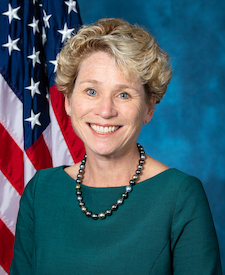
Chrissy Houlahan
Chrissy Houlahan House · District 6
D
Strong +
86% 259
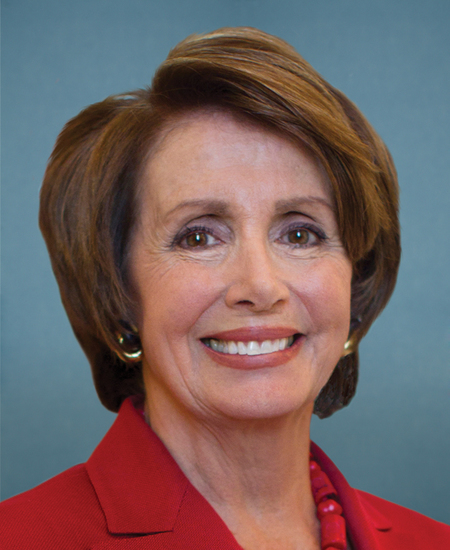
Nancy Pelosi
Nancy Pelosi House · District 11
D
Strong +
86% 246
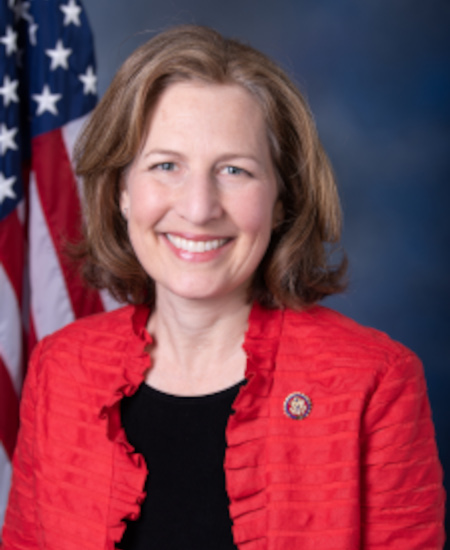
Kim Schrier
Kim Schrier House · District 8
D
Strong +
86% 261
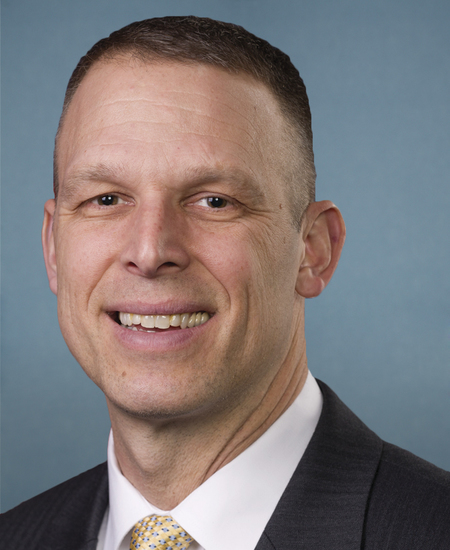
Scott Perry
Scott Perry House · District 10
R
Strong −
14% 252
AA
Alan Armstrong Senate
R
Strong −
14% 46
Rand Paul
Rand Paul Senate
R
Strong −
16% 223
Andy Harris
Andy Harris House · District 1
R
Strong −
18% 257
Russ Fulcher
Russ Fulcher House · District 1
R
Strong −
18% 262
Showing 1,321–1,330 of 1,431 bills

All technology bills

in committee · United States · Senate Feb 10, 2026

S 3249: Strategic Subsea Cables Act of 2026

The Strategic Subsea Cables Act of 2026 aims to protect critical subsea fiber-optic cables that form the backbone of global internet infrastructure. It requires the U.S. government to increase engagement in international bodies like the International Cable Protection Committee, establish an interagency committee for coordination, and impose sanctions on foreign entities damaging cables. The bill mandates annual reports on Chinese and Russian cable activities, strengthens information sharing between government and private cable owners, and creates new reporting requirements for U.S. agencies. These provisions directly affect U.S. government agencies, private cable companies, and foreign entities that might threaten cable security. The act focuses on enhancing the security, resilience, and protection of subsea cable networks that are vital for global communications.
Sub-Topics Broadband Access
in committee · United States · Senate Jul 30, 2025

S 2558: The National Quantum Cybersecurity Migration Strategy Act of 2025.

This bill requires the federal government to develop a strategy for migrating to post-quantum cryptography (PQC), which is encryption designed to withstand attacks from future quantum computers. Within 180 days, a federal subcommittee must create a national strategy defining when quantum computers pose a threat, assessing risks for each agency, and setting performance measures for four migration stages (preparation, inventory, implementation, and monitoring). It also mandates a pilot program where sector risk management agencies must upgrade at least one high-impact federal system to PQC by January 2027. The bill directs cost surveys for agencies and annual progress reports from the Comptroller General to track implementation across federal systems.
in committee · United States · Senate Feb 27, 2025

S 763: Telehealth Expansion Act of 2025

This bill amends IRS rules to require health insurance plans to cover telehealth services without applying deductibles, preventing plans from being disqualified as high-deductible health plans (HDHPs) solely because they waive deductibles for telehealth. It directly affects health insurance plans and employers offering HDHPs by changing how telehealth services are treated under IRS regulations. Key provisions include creating a specific exemption for telehealth services in the Internal Revenue Code and clarifying that such coverage does not disqualify plans from HDHP status. The changes take effect for plan years starting after December 31, 2024.
in committee · United States · House Mar 20, 2026

HR 7734: Land Grant Research Prioritization Act of 2026

HR 7734, the Land Grant Research Prioritization Act of 2026, directs existing federal research grant programs to prioritize four specific agricultural research areas. It adds new funding priorities for mechanized harvesting technologies (especially for specialty crops), artificial intelligence applications in farming (focusing on specialty crop production), invasive species management, and sustainable aquaculture methods. These grants will be awarded to land-grant colleges and universities, as defined by federal law, to develop and test these specific technologies and approaches. The bill does not create new funding but shifts emphasis within current programs toward these targeted research goals.
Sub-Topics Artificial Intelligence Tags Agriculture
in committee · United States · House Mar 5, 2025

HR 1873: Broadband Grant Tax Treatment Act

HR 1873, the Broadband Grant Tax Treatment Act, excludes certain federal broadband grants from taxable income for recipients. It directly affects entities (like internet providers or local governments) receiving qualifying grants under specific programs, including the Broadband Equity, Access, and Deployment Program and State Digital Equity Capacity Grants established by the Infrastructure Investment and Jobs Act. The bill prevents double tax benefits by disallowing deductions for expenses covered by these excluded grants and reduces the adjusted basis of related property. This change applies to grants received in taxable years ending after March 11, 2023.
in committee · United States · House Dec 11, 2025

HR 6291: Children and Teens’ Online Privacy Protection Act

This bill amends the Children's Online Privacy Protection Act (COPPA) to extend protections to teens aged 12-17 in addition to children under 13. It requires operators of websites, online services, applications, and mobile apps to obtain verifiable consent from parents for children's personal information and from teens themselves for teens' personal information. The bill prohibits operators from using children's or teens' personal information for individual-specific advertising without consent, mandates clear privacy notices, and requires data deletion upon request. It also establishes new reporting requirements for the Federal Trade Commission regarding high-impact social media companies that affect children or teens.
in committee · United States · Senate Dec 8, 2025

S 3387: One Fair Price Act of 2025

The One Fair Price Act of 2025 prohibits businesses from charging different prices for the same product or service based on surveillance data (such as tracking online behavior or personal information). It specifically bans price discrimination using this data, while allowing price differences for legitimate reasons like cost-based pricing, broad group discounts (e.g., for teachers or veterans), or loyalty programs with clear disclosure. The Federal Trade Commission enforces the law, and states or individuals can sue for violations, seeking damages or injunctions. The bill also requires a joint study on its impact on small businesses within one year of enactment.
in committee · United States · Senate Dec 4, 2025

S 3355: National Strategy for Combating Scams Act of 2025

This bill directs the FBI to lead a working group of 18 federal agencies - including the FTC, CFPB, and Department of Homeland Security - to develop a National Strategy for Combating Scams within two years. The strategy must establish a common scam definition, coordinate federal efforts, and incorporate input from scam survivors, older adults, businesses, and law enforcement. It requires agencies to improve data sharing, prevent scams through evidence-based methods, and update the strategy every five years. The FBI, FTC, and CFPB must adopt the agreed-upon scam definition within one year of the strategy's publication.
Sub-Topics Consumer Data Protection Tags Consumer Protection
in committee · United States · Senate Jul 29, 2025

S 2528: Unleashing AI Innovation in Financial Services Act

The Unleashing AI Innovation in Financial Services Act creates a new pathway for financial institutions to test AI-powered financial products with regulatory flexibility. Financial institutions can apply to their regulatory agency for an "alternative compliance strategy" that would temporarily waive or modify certain regulations for a limited time, provided they demonstrate how the AI test project serves the public interest, improves consumer access, and manages risks. Regulatory agencies must review applications within 120 days and report annually to Congress on outcomes of these AI test projects without disclosing proprietary information. This law directly affects banks, brokerages, investment firms, and other financial institutions regulated by agencies like the SEC, CFPB, and FDIC.
in committee · United States · Senate Feb 12, 2026

S 3877: Investing in Tomorrow's Workforce Act of 2026

The Investing in Tomorrow's Workforce Act of 2026 provides federal grants to support training programs for workers at risk of losing jobs due to automation, with priority given to women, people of color, and lower-wage workers (those earning less than $40,000 annually). The bill authorizes funding for eligible partnerships to develop demonstration projects that help dislocated workers transition into in-demand technology sectors through skills training, job placement assistance, and employer partnerships. It expands existing workforce training programs under the Workforce Innovation and Opportunity Act to specifically address automation-related job displacement and requires grantees to report on outcomes including job placements, earnings data, and demographic breakdowns. The legislation is authorized for fiscal years 2026 through 2030 with funding for both new demonstration projects and expanded existing training services.
Showing 1,321 to 1,330 of 1,431 bills