Issue · Technology

Technology

Every technology bill, vote, and legislator stance in United States, automatically classified by Maddy, our AI policy reader.

Total bills
1,661
119th Congress
Top supporter
Ami Bera
86% support rate
Top opponent
Scott Perry
14% support rate
Ranked legislators
10
5 support · 5 oppose
Key legislators

Who's moving technology in United States

Legislators moving technology in United States
Legislator Party Stance Support rate Decisive votes
Ami Bera
Ami Bera House · District 6
D
Strong +
86% 22
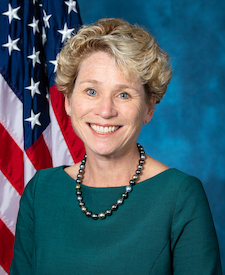
Chrissy Houlahan
Chrissy Houlahan House · District 6
D
Strong +
86% 22
Kim Schrier
Kim Schrier House · District 8
D
Strong +
86% 22
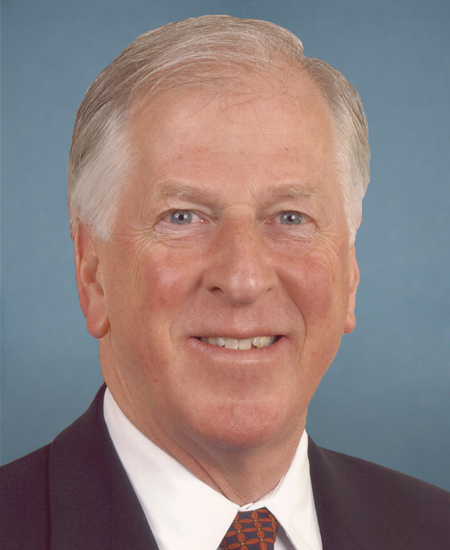
Mike Thompson
Mike Thompson House · District 4
D
Strong +
86% 22
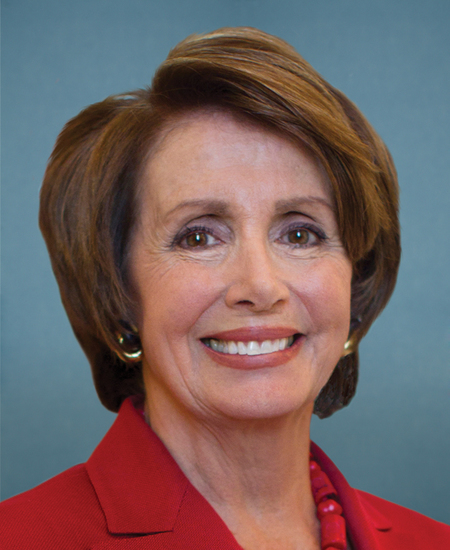
Nancy Pelosi
Nancy Pelosi House · District 11
D
Strong +
86% 22
Scott Perry
Scott Perry House · District 10
R
Strong −
14% 21
AA
Alan Armstrong Senate
R
Strong −
17% 29
Rand Paul
Rand Paul Senate
R
Strong −
17% 46
Josh Hawley
Josh Hawley Senate
R
Strong −
18% 45
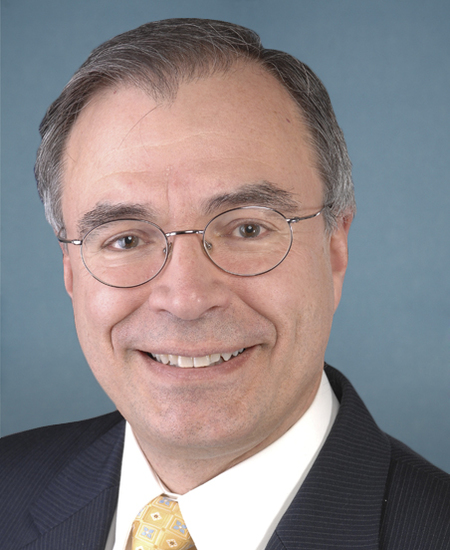
Andy Harris
Andy Harris House · District 1
R
Strong −
18% 22
Showing 1,251–1,260 of 1,661 bills

All technology bills

in committee · United States · House Aug 22, 2025

HR 5022: No Advanced Chips for the CCP Act of 2025.

This bill would require U.S. companies to obtain both Commerce Department approval and a specific congressional joint resolution before exporting advanced AI semiconductors to China. The Commerce Secretary must first conduct an interagency review assessing national security risks, military applications, human rights concerns, and economic impacts. Congress would then need to pass a dedicated resolution approving each export, effectively giving lawmakers a veto over such transactions. The bill defines "advanced AI semiconductors" by technical thresholds (e.g., 2,400+ processing performance) and applies to all exports targeting China, including Hong Kong and Macau.
in committee · United States · House Jun 5, 2025

HR 3782: To prohibit the Federal Government from using facial recognition technology as a means of identity verification, and for other purposes.

This bill prohibits all federal agencies from using facial recognition technology to verify someone's identity, directly affecting government operations like border security or benefit applications. It defines facial recognition technology as systems that automatically identify individuals from digital images or video. The key provision bans this specific use across federal departments, though it doesn't restrict other government applications like law enforcement investigations. The law focuses solely on identity verification processes, leaving other uses of the technology unaffected.
in committee · United States · House May 6, 2025

HR 3209: App Store Freedom Act

HR 3209, the App Store Freedom Act, would require major app store owners (like Apple and Google) with over 100 million US users to allow users to choose third-party app stores, install apps from outside their official stores, and hide pre-installed apps. The bill prohibits these companies from forcing developers to use their payment systems, restricting pricing options, or using nonpublic developer information to compete with their apps. The Federal Trade Commission would enforce these rules with civil penalties up to $1 million per violation, while states could also bring enforcement actions in certain cases. This legislation aims to increase competition in app distribution and development by preventing anti-competitive practices by dominant app store platforms.
in committee · United States · Senate Sep 3, 2025

S 2695: Synthetic Biology Advancement Act of 2025

The Synthetic Biology Advancement Act of 2025 establishes a National Synthetic Biology Center within the U.S. Department of Agriculture to award competitive grants to eligible land-grant universities (1862, 1890, and 1994 institutions). The center funds research focused on synthetic biology applications in agriculture, including gene editing, microbiomes, AI-driven modeling, and sustainable food production systems. Grants require partnerships with entities like National Laboratories or nonprofits and must address specific priorities like climate-resilient crops or new protein sources. The bill authorizes $5 million annually for grants and $1 million annually for center operations from 2026-2030, with mandatory progress reports to Congress.
in committee · United States · House Mar 10, 2025

HR 1975: BEAD FEE Act of 2025

HR 1975, the BEAD FEE Act of 2025, sets new rules for fees charged by local governments or entities receiving federal broadband grant funds (BEAD Program). It prohibits these entities from charging fees for broadband infrastructure placement, construction, or modification unless fees are competitively neutral, publicly disclosed, based solely on actual costs (like review processing or repairs), and clearly categorized as recurring or nonrecurring. The bill directly affects local governments and political subdivisions managing rights-of-way when they receive BEAD grant funds. It aims to prevent arbitrary fees and ensure transparency in cost calculations for broadband deployment projects.
in committee · United States · Senate Jun 12, 2025

S 2081: RISE Act of 2025

The RISE Act of 2025 establishes a conditional liability shield for AI developers who provide clear transparency about their tools. It requires developers to publicly share "model cards" (technical summaries of AI capabilities and risks) and "model specifications" (system instructions) before deployment, plus clear usage guidelines for professionals. Developers gain immunity from civil lawsuits for AI errors when used by licensed professionals (like doctors or lawyers) in client services, provided they update these materials within 30 days of new versions or discovered flaws. The law takes effect December 1, 2025, and applies only to errors not caused by developer recklessness or fraud.
in committee · United States · House Dec 4, 2025

HR 6419: New Essential Education Discoveries Act of 2025

This bill establishes a National Center for Advanced Development in Education within the Institute to advance teaching and learning through research on effective practices, technology, and community-informed approaches. The Center will focus on developing innovative teaching methods, addressing achievement gaps, and promoting research on learning and development across all education levels from early childhood through adult education. It authorizes $500 million annually for 2026-2030 to support research, development, and improved statewide longitudinal data systems that connect educational data from early childhood through workforce outcomes while protecting student privacy. The bill also requires states to enhance their data systems to better track student progress and outcomes, with the goal of improving educational opportunities and closing achievement gaps.
Sub-Topics Early Childhood
in committee · United States · House Dec 4, 2025

HR 6469: FREEDOM Act

This bill (HR 6469) requires the U.S. State Department, in coordination with the FCC and Treasury, to submit a report within 120 days of enactment assessing internet access options in Iran. The report must evaluate the feasibility of using direct-to-cell wireless technology to expand internet access there, including technical, security, and regulatory considerations. It also analyzes how drone-based systems and signal jamming could affect such technology, surveys Iranian telecom providers (including state ownership and foreign investment), and examines broader implications for communications freedom. The bill does not enact new policy but mandates a government review of potential technological solutions.
in committee · United States · House Sep 11, 2025

HR 5311: CABLE Expansion Act

This bill requires local governments to approve cable infrastructure requests within 90 days (for pole attachments) or 150 days (for other public rights-of-way) or deny them with written justification. It directly affects cable companies seeking permits and local governments managing public rights-of-way for cable service. Key provisions include prohibiting delays via moratoriums, mandating evidence-based denials, and requiring public release of denial records. The law aims to streamline permitting for cable service expansion without altering service content or funding.
passed · United States · House Sep 3, 2025

HR 2503: Undersea Cable Control Act

HR 2503, the Undersea Cable Control Act, requires the President to develop a strategy restricting foreign adversaries' access to items needed for undersea cable construction, maintenance, and operation. The strategy must identify critical equipment, coordinate with allies on unified export controls, and detail efforts to limit adversary access through international standards bodies. It mandates annual congressional reports and actions to evaluate adding such items to U.S. export control lists, with the goal of preventing adversaries from obtaining cable-support technology. The bill directly affects U.S. export policy and international coordination, targeting specific items under current export regulations without altering existing infrastructure.
Showing 1,251 to 1,260 of 1,661 bills