Issue · Technology

Technology

Every technology bill, vote, and legislator stance in United States, automatically classified by Maddy, our AI policy reader.

Total bills
1,435
119th Congress
Top supporter
Ami Bera
86% support rate
Top opponent
Alan Armstrong
14% support rate
Ranked legislators
10
5 support · 5 oppose
Key legislators

Who's moving technology in United States

Legislators moving technology in United States
Legislator Party Stance Support rate Decisive votes
Ami Bera
Ami Bera House · District 6
D
Strong +
86% 22
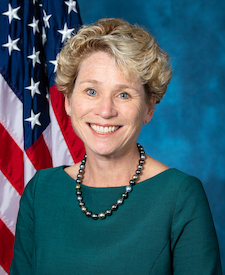
Chrissy Houlahan
Chrissy Houlahan House · District 6
D
Strong +
86% 22
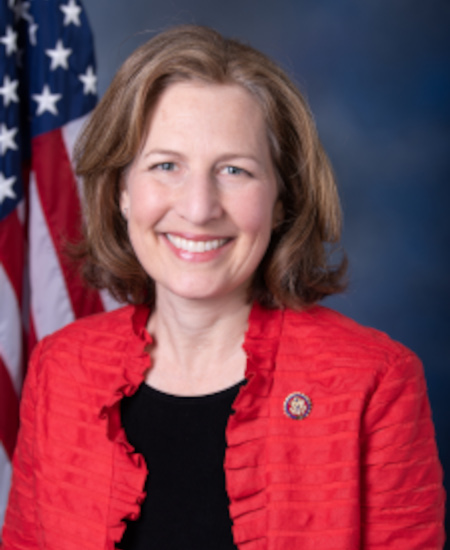
Kim Schrier
Kim Schrier House · District 8
D
Strong +
86% 22
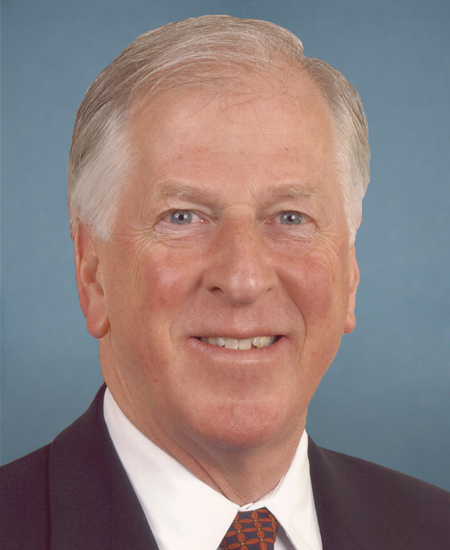
Mike Thompson
Mike Thompson House · District 4
D
Strong +
86% 22
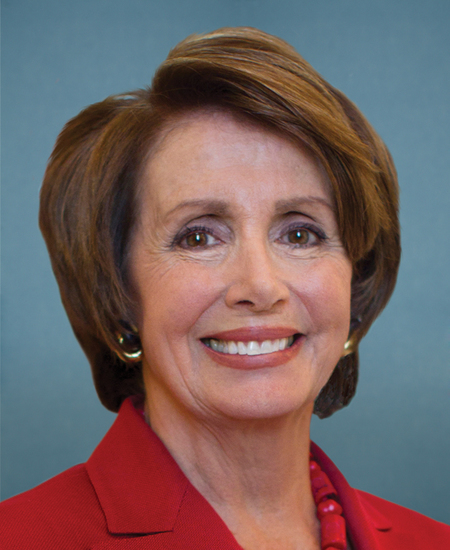
Nancy Pelosi
Nancy Pelosi House · District 11
D
Strong +
86% 22
AA
Alan Armstrong Senate
R
Strong −
14% 28
Scott Perry
Scott Perry House · District 10
R
Strong −
14% 21
Rand Paul
Rand Paul Senate
R
Strong −
16% 45
Josh Hawley
Josh Hawley Senate
R
Strong −
18% 44
Andy Harris
Andy Harris House · District 1
R
Strong −
18% 22
Showing 1,121–1,130 of 1,435 bills

All technology bills

in committee · United States · Senate Apr 28, 2025

S 28: Informing Consumers about Smart Devices Act

This bill requires manufacturers to clearly disclose before purchase whether internet-connected consumer devices (like smart speakers or thermostats) contain a camera or microphone. It excludes devices consumers would expect to have such features, such as smartphones, laptops, or dedicated cameras. The Federal Trade Commission (FTC) will enforce this by treating violations as deceptive practices, allowing penalties under existing FTC rules. The law aims to give consumers transparent information about device capabilities at the point of sale.
in committee · United States · House Dec 10, 2025

HR 6571: REAL Act

The REAL Act (HR 6571) requires federal agencies and officials to clearly label public content created or altered using generative artificial intelligence with a plain-language disclaimer. The label must state that AI was used, explain briefly how the content was generated, and describe the technology, while being visible and easy to understand. Exceptions include minor visual edits (like brightness adjustments), routine drafts reviewed by staff before publication, personal social media posts unrelated to work, and classified content. Agencies must follow OMB guidelines within 180 days and submit annual compliance reports to Congress.
in committee · United States · House Dec 11, 2025

HR 6484: Kids Online Safety Act

HR 6484, the Kids Online Safety Act, requires social media platforms and online services (termed "covered platforms") to implement specific safety measures for minors under 17. The bill mandates default privacy settings that limit communication with other users, default time limits on platform usage, and parental control tools to monitor and restrict children's online activity. Platforms must prevent advertising of harmful products like drugs, alcohol, and gambling to minors and provide clear safety information before minors register or make purchases. The legislation also requires annual independent audits of platforms' compliance with these safety measures and establishes a Kids Online Safety Council to provide recommendations on online safety for minors.
in committee · United States · House Dec 3, 2025

HR 6412: Independence Investment Fund Act

The Independence Investment Fund Act (HR 6412) establishes a Treasury Department fund to invest in U.S. companies developing critical and emerging technologies, prioritizing biotechnology. The fund makes seed-to-mid-stage equity investments (typically $1 million to $10 million per company) to strengthen national security and economic security while aiming for financial self-sustainability through returns. It requires an advisory board to set investment strategy and a supervisory board to approve investments, with annual reporting to Congress on progress toward goals. The bill authorizes $975.5 million for fiscal year 2025 (including $300 million for biotech), directing investments away from foreign entities of concern and toward companies vulnerable to adversarial foreign capital.
passed · United States · House Feb 24, 2026

HR 3679: Small Business Artificial Intelligence Advancement Act

Small Business Artificial Intelligence Advancement Act This bill directs the National Institute of Standards and Technology (NIST) to develop or identify resources for small businesses to address concerns relating to the use of artificial intelligence (AI). Resources must be generally applicable, technology neutral, and based on relevant voluntary international standards, among other requirements.  NIST must coordinate with the Small Business Administration with respect to the distribution of these resources. NIST must also review and update the resources at least biennially.
Sub-Topics Artificial Intelligence Tags Small Business
in committee · United States · Senate Jul 31, 2025

S 2600: A bill to require a Defense Science Board study on optimal organizational structure for digital solutions.

S 2600 requires the Secretary of Defense to direct the Defense Science Board to study and recommend the optimal organizational structure for digital engineering work across the Department of Defense (DoD). The study will assess current digital engineering efforts, evaluate options like creating new agencies or consolidating existing functions, and provide recommendations on structure, staffing, funding, and implementation. It directly affects DoD digital engineering activities, including AI systems, software development, and data platforms managed by military departments and the Office of the Secretary of Defense. The Defense Science Board must submit a final report to the Secretary by February 1, 2027, with a congressional copy following 30 days. This is a procedural study bill with no immediate policy changes.
passed · United States · Senate Jul 29, 2025

S 2480: Telecom Cybersecurity Transparency Act

This bill requires the Secretary of Homeland Security to publicly release the full unclassified report titled "U.S. Telecommunications Insecurity 2022" within 30 days of the bill's enactment. The report was prepared for the Cybersecurity and Infrastructure Security Agency (CISA) under a DHS contract. This mandates transparency about the findings of that specific report, directly affecting DHS and CISA by requiring them to make the document publicly available. The bill focuses solely on the disclosure of the existing report, not on new security measures or policy changes.
in committee · United States · Senate Apr 10, 2025

S 1465: Credit Access and Inclusion Act of 2025

This bill allows utility and telecom companies to report on-time payment history for services like electricity, gas, and internet to credit bureaus, helping consumers build credit who may lack traditional credit history. It specifically permits reporting on lease payments for housing (including HUD-subsidized units) and utility/telecom payments, but only includes payment-related details - not usage data like how much electricity was used. The bill also prohibits companies from reporting late payments for customers in approved payment plans (e.g., deferred payments or debt forgiveness). A government study will later assess the impact of this reporting on consumers.
in committee · United States · House Apr 22, 2026

HR 4920: BIS IT Modernization Act

This bill requires the Bureau of Industry and Security (BIS) to modernize its outdated information technology systems by 2030, focusing on streamlining export license reviews and enhancing national security monitoring. Key provisions include replacing legacy systems with a unified platform for case management, adopting advanced data analytics tools to track military-related trade patterns, and improving data sharing with industry and government partners. It directly affects BIS operations, industry stakeholders using export systems, and federal agencies collaborating on security enforcement. The bill authorizes $25 million annually (2026-2029) for this modernization, aiming to reduce manual processing, strengthen cybersecurity, and improve efficiency in reviewing entities on the Entity List.
Sub-Topics Cybersecurity
in committee · United States · House Jul 24, 2025

HR 4686: LIFT Act of 2025

The LIFT Act of 2025 streamlines regulations for drone and eVTOL (electric air taxi) operations in the U.S. It requires the Transportation Secretary to create new safety rules enabling routine drone flights beyond visual range (BVLOS) within six months and use AI to speed up approval requests for drone waivers. The bill also establishes a 3-year pilot program giving grants to state, local, tribal, and territorial governments to test eVTOL operations - prioritizing projects using U.S.-manufactured drone technology and focusing on applications like medical response and cargo transport. This directly affects drone operators, local governments implementing air mobility projects, and U.S. drone manufacturers by accelerating regulatory approvals and funding for safe integration into national airspace.
Showing 1,121 to 1,130 of 1,435 bills