Issue · Housing

Housing (Affordable Housing)

Every housing bill, vote, and legislator stance in United States, automatically classified by Maddy, our AI policy reader.

Total bills
225
119th Congress
Top supporter
Adam B. Schiff
100% support rate
Top opponent
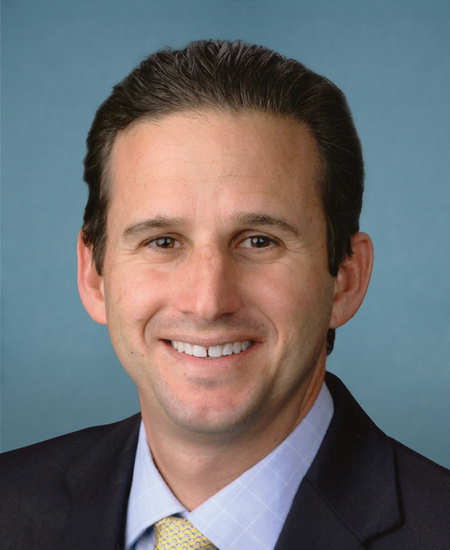
Brian Schatz
0% support rate
Ranked legislators
10
5 support · 5 oppose
Key legislators

Who's moving affordable housing in United States

Legislators moving affordable housing in United States
Legislator Party Stance Support rate Votes
Adam B. Schiff
Adam B. Schiff Senate
D
Strong +
100% 3
Alex Padilla
Alex Padilla Senate
D
Strong +
100% 3
Amy Klobuchar
Amy Klobuchar Senate
D
Strong +
100% 3
Andy Kim
Andy Kim Senate
D
Strong +
100% 3
Angela D. Alsobrooks
Angela D. Alsobrooks Senate
D
Strong +
100% 3
Brian Schatz
Brian Schatz Senate
D
Strong −
0% 3
Mike Lee
Mike Lee Senate
R
Strong −
0% 3
Rand Paul
Rand Paul Senate
R
Strong −
0% 3
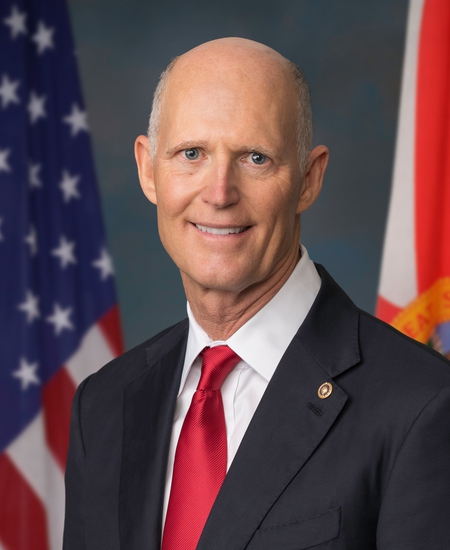
Rick Scott
Rick Scott Senate
R
Strong −
0% 3
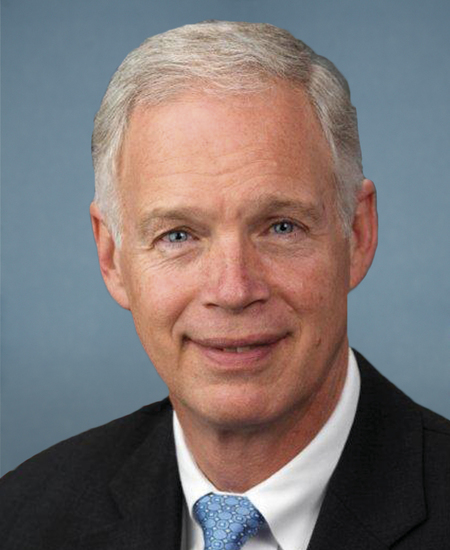
Ron Johnson
Ron Johnson Senate
R
Strong −
0% 3
Showing 61–70 of 225 bills

All housing bills

in committee · United States · Senate Jan 16, 2025

S 120: Disaster Housing Reform for American Families Act

Disaster Housing Reform for American Families Act This bill requires the Federal Emergency Management Agency (FEMA) to establish a five-year pilot program under the Individuals and Households Program (IHP) through which FEMA contracts to provide factory-built housing to serve disaster survivors until the disaster declaration terminates and then be utilized for affordable housing. It also authorizes FEMA to provide IHP grants for closing costs associated with obtaining certain mortgages.  Specifically, FEMA must enter into a contract with a producer or seller of manufactured or modular homes to construct such housing as a type of temporary housing assistance under IHP. The bill requires the housing to meet specified criteria, including that it must be available within 90 days (unless extended to 120 days) after the disaster declaration, have no more than four units, and provide a minimum level of protection from natural hazards. The housing must conform to various specified standards, but the bill authorizes the Department of Housing and Urban Development to waive any such requirement for construction under the pilot program. Also, the bill requires FEMA to establish guidelines for transferring the housing to an affordable housing program after the termination of the relevant disaster declaration. However, the bill also authorizes it to become permanent housing after the declaration terminates. In addition, the bill authorizes FEMA to provide IHP grants to disaster-impacted individuals or households purchasing residential property for closing costs associated with obtaining a mortgage from a federal program providing affordable financing options.
Sub-Topics Affordable Housing Mortgages Property Development Tags Emergency Management
in committee · United States · House Aug 15, 2025

HR 4989: Streamlining Rural Housing Act of 2025

HR 4989, the Streamlining Rural Housing Act of 2025, requires the Departments of Housing and Urban Development (HUD) and Agriculture (USDA) to simplify coordination for rural housing projects funded by both agencies. Within 180 days, they must create a memorandum of understanding to evaluate environmental review processes, designate a lead agency for efficiency, and maintain existing environmental standards. The bill establishes an advisory group with housing stakeholders - including nonprofits, developers, and residents - to guide implementation. It mandates a report within one year with recommendations to improve project efficiency without reducing resident safety, shifting long-term costs, or undermining environmental standards. This bill directly affects rural housing projects funded by HUD or USDA by targeting bureaucratic delays in approvals.
Sub-Topics Affordable Housing Housing Finance Property Development Tags Rural Communities
in committee · United States · Senate Sep 4, 2025

S 2719: LIFT Homebuyers Act of 2025

The LIFT Homebuyers Act of 2025 creates a federal program to help low-income first-time homebuyers purchase single-family homes. It establishes the "LIFT HOME Fund" within HUD and USDA to support eligible mortgages with monthly payments capped at 100-110% of standard rates for comparable loans. The bill directly affects homebuyers with household income under 120% (or 140% in high-cost areas) of local median income who are both first-time buyers and first-generation homebuyers (with no prior home ownership by them or their parents). Key mechanisms include waiving some insurance premium caps, requiring borrower self-attestation for eligibility, and mandating outreach programs to expand participation.
in committee · United States · Senate Apr 3, 2025

S 1299: Housing Supply Frameworks Act

This bill requires the Department of Housing and Urban Development (HUD) to develop guidelines for states and local governments to reform zoning laws that limit housing supply. The guidelines would recommend specific changes like eliminating parking minimums, allowing more housing types (such as duplexes and accessory units), and streamlining approval processes for new projects. It directly affects state and local governments, housing developers, and communities facing housing shortages - addressing a 3.85 million home shortfall cited in the bill. HUD must report to Congress on which states and localities adopt these reforms and their impact on building permits.
passed · United States · House Jan 12, 2026

HR 5184: Affordable HOMES Act

This bill repeals federal energy efficiency standards for manufactured housing that were set to take effect in 2022. It specifically nullifies a Department of Energy rule published in May 2022, removing requirements for energy conservation in manufactured homes. The change directly affects manufacturers and buyers of manufactured housing by eliminating these new efficiency mandates. The bill does not establish new standards but removes existing ones from the Energy Independence and Security Act of 2007.
in committee · United States · House Apr 17, 2025

HR 2941: Historic Tax Credit Growth and Opportunity Act of 2025

This bill increases the federal tax credit for rehabilitating historic buildings. It raises the standard credit rate from 20% to 30% for qualifying small projects (with a $3.75 million expenditure cap) and further increases the cap to $5 million for projects in rural areas. The bill also allows taxpayers to transfer all or part of this credit to another taxpayer, creating a new market for the credit. These changes apply to properties placed in service after the bill's enactment date. The bill directly affects developers and owners of historic properties seeking tax incentives for rehabilitation projects.
in committee · United States · House Apr 10, 2025

HR 2854: Neighborhood Homes Investment Act

The Neighborhood Homes Investment Act creates a new tax credit for developers who build or rehabilitate affordable homes in distressed communities. The credit is calculated as the lesser of (1) the difference between development costs and sale price, (2) 40% of development costs, or (3) 32% of the national median home price. It applies only to homes sold to qualified homeowners with income up to 140% of area median income in designated "qualified census tracts" (areas with high poverty rates, low median home values, and low median family income). Developers must meet quality standards and repay the credit if the home is sold within 5 years of the affordable sale. This credit aims to address the "value gap" that prevents housing development in distressed communities by incentivizing affordable home construction and rehabilitation.
in committee · United States · House Jun 23, 2025

HR 4069: Downpayment Toward Equity Act of 2025

The Downpayment Toward Equity Act of 2025 creates a federal program to provide financial assistance to first-generation homebuyers for down payments, closing costs, and other home purchase expenses. It authorizes $100 billion in funding to be distributed through states and eligible entities, with grants that can cover up to $20,000 or 10% of a home's purchase price (whichever is greater). To qualify, homebuyers must meet income limits (up to 120-140% of median area income), be first-time homebuyers with no prior home ownership by their parents, and complete homebuyer counseling. The program requires recipients to occupy homes as primary residences for at least five years, with repayment required if they sell sooner, and states must report on program demographics to ensure equitable outcomes.
in committee · United States · House Jun 12, 2025

HR 3952: Choice Neighborhoods Initiative Act of 2025

The Choice Neighborhoods Initiative Act of 2025 authorizes $1 billion in federal grants to transform neighborhoods with extreme poverty and severely distressed housing. It provides funding for eligible entities like local governments, public housing agencies, and nonprofits to implement transformation plans that include rehabilitating or replacing distressed housing, ensuring one-for-one replacement of public and assisted housing units, and providing supportive services for residents. The legislation requires grantees to develop long-term affordability plans, maintain resident involvement throughout the process, and provide relocation assistance to displaced residents while complying with fair housing and accessibility requirements. The bill also mandates regular reporting on program implementation and outcomes to ensure accountability for how funds are used to revitalize neighborhoods.
in committee · United States · House Jan 16, 2026

HR 7139: Housing Choice Voucher Fairness Act of 2025

The Housing Choice Voucher Fairness Act of 2025 (HR 7139) requires housing agencies to continue providing tenant-based rental assistance to voucher recipients who move outside their jurisdiction after January 1, 2026, unless the new rent exceeds 10% higher than the previous rent. This directly affects families using housing choice vouchers and the public housing agencies administering the program. The key provision establishes a 10% cost threshold for rent differences, preventing agencies from terminating assistance solely due to relocation outside their area. The bill applies only to moves occurring on or after the 2026 effective date, with no changes to existing rules for prior relocations.
Showing 61 to 70 of 225 bills
Previous 1 6 7 8 23 Next