Issue · Housing

Housing (Homeownership)

Every housing bill, vote, and legislator stance in United States, automatically classified by Maddy, our AI policy reader.

Total bills
157
119th Congress
Top supporter
Adam B. Schiff
100% support rate
Top opponent
Brian Schatz
0% support rate
Ranked legislators
10
5 support · 5 oppose
Key legislators

Who's moving homeownership in United States

Legislators moving homeownership in United States
Legislator Party Stance Support rate Votes
Adam B. Schiff
Adam B. Schiff Senate
D
Strong +
100% 3
Alex Padilla
Alex Padilla Senate
D
Strong +
100% 3
Amy Klobuchar
Amy Klobuchar Senate
D
Strong +
100% 3
Andy Kim
Andy Kim Senate
D
Strong +
100% 3
Angela D. Alsobrooks
Angela D. Alsobrooks Senate
D
Strong +
100% 3
Brian Schatz
Brian Schatz Senate
D
Strong −
0% 3
Mike Lee
Mike Lee Senate
R
Strong −
0% 3
Rand Paul
Rand Paul Senate
R
Strong −
0% 3
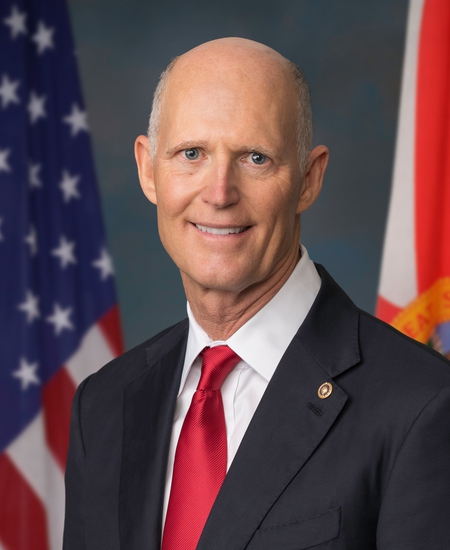
Rick Scott
Rick Scott Senate
R
Strong −
0% 3
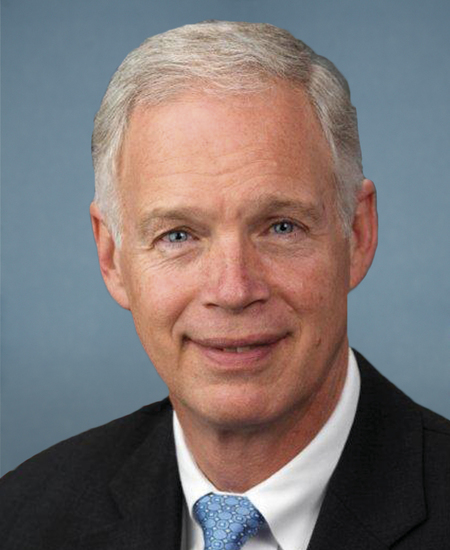
Ron Johnson
Ron Johnson Senate
R
Strong −
0% 3
Showing 151–157 of 157 bills

All housing bills

in committee · United States · House Sep 30, 2025

HR 5651: Affordability and Fairness for Mountain Communities Act of 2025

This bill creates a waiver program allowing counties in mountain communities to calculate housing assistance income limits using ZIP codes or neighboring border counties instead of standard regional formulas. It directly affects 11 federal housing programs administered by HUD and USDA, including Section 8 vouchers, public housing, and Native American housing assistance. The bill also requires HUD to conduct a 2-year study assessing how income calculations impact housing affordability for low-income and seasonal workers in mountain areas, with a focus on high-cost adjustment effects. The study must include recommendations for reforming income calculations to better support affordable housing in these regions.
in committee · United States · House Feb 9, 2026

HR 7414: Affordable Housing Bond Enhancement Act

The Affordable Housing Bond Enhancement Act modifies key provisions related to affordable housing bonds and mortgage credit certificates. It increases the financing limit for qualified home improvement loans from $15,000 to $75,000 (with annual inflation adjustments), eliminates restrictions on refinancing certain mortgages for eligible homeowners, and extends the period for mortgage credit certificates to remain in effect. The bill simplifies reporting requirements by removing lender reporting obligations and shortening public notice periods from 90 to 30 days. These changes primarily affect state and local housing authorities that issue affordable housing bonds and homeowners who qualify for mortgage credit certificates. The legislation aims to make affordable housing financing more accessible and efficient through concrete policy modifications.
in committee · United States · House Dec 4, 2025

HR 6477: Housing to Homes Act of 2025

The Housing to Homes Act of 2025 amends the McKinney-Vento Homeless Assistance Act to allow federal funding through the Continuum of Care Program to cover furniture banks providing household furnishings (including delivery and assembly) to homeless individuals and families transitioning to permanent housing. It defines "furniture poverty" as the inability to access essential household furniture, requiring annual HUD reports on its prevalence and impact. The bill mandates a report on furniture bank payments within three years and specifies that all provided furnishings become the sole property of recipients. This legislation directly affects homeless individuals, families, and qualifying furniture banks, but expires automatically five years after enactment.
in committee · United States · House Mar 18, 2025

HR 2206: Prevent Homelessness Act of 2025

The Prevent Homelessness Act of 2025 creates a $100 million annual Housing Stabilization Fund under HUD to provide short-term financial assistance to extremely and very low-income families facing imminent homelessness. The fund provides grants to "continuums of care" (local homelessness service networks) to cover specific housing-related costs like overdue rent, utilities, repairs, and legal aid, with limits on duration (max 8 months within 12 months) and cost (based on local market rates). To qualify, families must demonstrate financial hardship (e.g., eviction notices, health crises) and programs must coordinate with local homeless prioritization systems. The fund’s allocation prioritizes areas with higher homeless or severely cost-burdened populations, using HUD’s Point-In-Time Homeless Count data.
in committee · United States · House Nov 28, 2025

HR 6328: Main Street Home Builders Act of 2025

HR 6328, the Main Street Home Builders Act of 2025, creates a pilot program (the "505 Pilot Program") allowing the Small Business Administration to provide loans to small housing businesses for building or managing rental properties. The bill removes standard SBA loan requirements like job creation targets and restrictions on leasing, specifically for projects constructing or renovating build-to-rent multifamily housing (housing built solely for renting). It sets annual funding limits of $1 billion for 2026, $2 billion for 2027, and $3 billion each year from 2028-2030, with the program ending after five years. This directly affects small housing developers/managers who build or renovate rental units, requiring them to create at least one new rental unit per project.
Sub-Topics Affordable Housing Homeownership Renters Tags Small Business
in committee · United States · House Jan 20, 2026

HR 7152: Yes in God's Backyard Act

This bill establishes two new programs under the National Affordable Housing Act to increase affordable rental housing on property owned by faith-based organizations and institutions of higher education. It provides $25 million annually (2026-2031) for technical assistance to help these groups remove barriers to developing housing for low-income households, including those at risk of homelessness, veterans, and people with disabilities. Additionally, it creates $50 million annually in competitive challenge grants for local governments and states to adopt policies removing barriers and produce housing for households earning below 60% of area median income, with priority for well-resourced neighborhoods. The programs require public planning and reporting to ensure funds directly support affordable housing development on eligible properties.
in committee · United States · House Nov 7, 2025

HR 5990: Whole-Home Repairs Act of 2025

The Whole-Home Repairs Act of 2025 establishes a federal pilot program to fund home repairs for affordable housing. It provides grants to eligible homeowners (with income at or below 80% of area median income) and forgivable loans to eligible landlords (who own 10 or fewer rental properties with majority affordable units) for repairs addressing accessibility, habitability, energy efficiency, and safety. The program requires landlords to maintain affordability by capping rent increases at 5% annually for three years after repairs and to comply with accessibility standards. The pilot will operate until 2031 with $30 million in funding, administered by local governments or qualified nonprofits, and will track outcomes through annual reporting on units served and demographic data.
Showing 151 to 157 of 157 bills
Previous 1 14 15 16