Issue · Healthcare

Healthcare (Women's Health)

Every healthcare bill, vote, and legislator stance in United States, automatically classified by Maddy, our AI policy reader.

Total bills
223
119th Congress
Top supporter
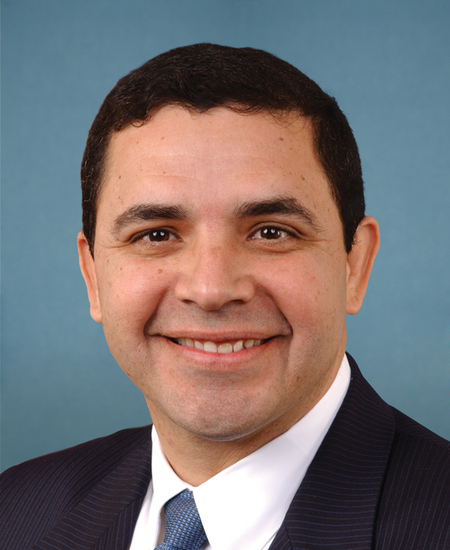
Henry Cuellar
100% support rate
Top opponent
John Garamendi
33% support rate
Ranked legislators
6
5 support · 1 oppose
Key legislators

Who's moving women's health in United States

Legislators moving women's health in United States
Legislator Party Stance Support rate Decisive votes
Henry Cuellar
Henry Cuellar House · District 28
D
Strong +
100% 4
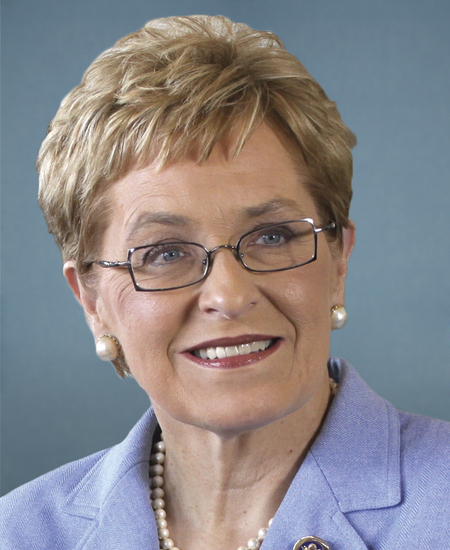
Marcy Kaptur
Marcy Kaptur House · District 9
D
Support
67% 3
Mike Haridopolos
Mike Haridopolos House · District 8
R
Support
67% 3
Aaron Bean
Aaron Bean House · District 4
R
Mixed
50% 4
Abraham J. Hamadeh
Abraham J. Hamadeh House · District 8
R
Mixed
50% 4
John Garamendi
John Garamendi House · District 8
D
Oppose
33% 3
Showing 171–180 of 223 bills

All healthcare bills

in committee · United States · Senate Jan 23, 2025

SRES 32: A resolution designating January 23, 2025, as "Maternal Health Awareness Day".

This resolution designates January 23, 2025, as "Maternal Health Awareness Day" to highlight maternal health challenges in the U.S. It focuses on raising public awareness about maternal mortality (with statistics showing 800 annual pregnancy-related deaths) and disparities (such as Black women facing nearly 3x higher mortality rates than White women). The resolution encourages federal, state, tribal, and local entities to take action on improving maternal care and reducing inequities, though it does not create new laws or funding. As a symbolic designation, it has no binding effect but aims to promote existing efforts like maternal mortality reviews and community-based care models.
Sub-Topics Women's Health
in committee · United States · Senate May 5, 2025

S 1598: BABIES Act

The BABIES Act (S 1598) creates two main programs to expand access to independent birth centers. First, it provides grants of $300,000-$500,000 per year to up to 15 accredited birth centers in underserved areas (e.g., maternity care shortage zones) for facility upgrades, equipment, or accreditation costs ($5 million total over 2026-2030). Second, it launches a Medicaid demonstration program testing new payment models for birth centers serving low-risk pregnant women enrolled in Medicaid, requiring centers to meet strict accreditation, licensure, and care coordination standards. This directly affects birth centers seeking expansion, Medicaid recipients in underserved communities, and states developing payment systems for birth center services.
in committee · United States · Senate May 5, 2025

S 1599: Midwives for MOMS Act of 2025

This bill creates federal grant programs to expand midwifery education and workforce capacity. It allocates $15 million annually (2025-2029) for accredited midwifery schools to support students, expand programs, and increase clinical mentors, with 50% of funds for student support. It also allocates $20 million annually for nurse-midwifery programs in schools of nursing, with similar funding splits and requirements to prioritize underserved areas and racial/ethnic minority representation. The bill specifically excludes midwifery programs within nursing schools from funding and sets clear allocation rules for the grants.
in committee · United States · Senate Jan 16, 2025

S 141: Connected MOM Act

S 141, the Connected MOM Act, requires the U.S. Health and Human Services Secretary to report to Congress within 18 months on Medicaid coverage of remote health monitoring devices (like pulse oximeters and blood pressure cuffs) for pregnant and postpartum women. The report must identify barriers to coverage under state Medicaid programs and assess their impact on maternal and child health outcomes. Six months after the report is submitted, HHS must update state Medicaid resources, such as telehealth toolkits, to align with the report's recommendations. This bill directly affects Medicaid-enrolled pregnant and postpartum women by aiming to improve access to remote health monitoring. It focuses on gathering data and updating state resources, not on direct funding or new coverage mandates.
in committee · United States · Senate Mar 10, 2025

S 916: Stop Shackling and Detaining Pregnant Women Act

S 916 prohibits the detention of pregnant, lactating, or postpartum noncitizens in immigration custody, requiring their immediate release except in rare cases involving credible safety threats. It bans all physical restraints during pregnancy, labor, delivery, and postpartum recovery, with strict limits on exceptions. The bill mandates access to comprehensive reproductive healthcare, including prenatal care, labor services, and postpartum support, while requiring facilities to provide medical consent and maintain detailed reporting on detention practices. These provisions apply directly to noncitizens held by U.S. Immigration and Customs Enforcement (ICE) or U.S. Customs and Border Protection (CBP) facilities.
in committee · United States · House Aug 5, 2025

HR 4888: Reproductive Rights are Human Rights Act of 2025

This bill requires the U.S. Department of State to include specific, detailed reporting on reproductive rights in its Annual Country Reports on Human Rights Practices. It mandates descriptions of each country's policies regarding access to contraception, abortion services, and comprehensive reproductive health care, alongside data on pregnancy-related deaths, discrimination against women and LGBTQI+ individuals, and disparities based on race, disability, or other factors. The bill also directs the State Department to consult with civil society organizations and health experts to ensure thorough reporting on these issues. This change aims to align U.S. reporting with international human rights standards and address past omissions of reproductive rights from these reports.
Sub-Topics Women's Health
in committee · United States · Senate May 6, 2025

S 1630: MOMS Act

The MOMS Act establishes a federal website called pregnancy.gov that will connect pregnant and postpartum women with local resources for healthcare, housing, childcare, and other support services. It creates grant programs for nonprofits that assist women in carrying pregnancies to term, with restrictions prohibiting these organizations from providing or referring for abortion services. The bill also amends child support laws to allow for child support obligations to begin at conception for unborn children, with payment amounts determined by courts based on the best interests of the mother and child. Additionally, it provides grants for telehealth equipment to improve prenatal and postnatal care access in rural and medically underserved areas.
in committee · United States · House Mar 11, 2025

HR 2040: NEWBORN Act

HR 2040, the NEWBORN Act, creates federal grants for local health departments to run infant mortality pilot programs in the 50 highest-risk counties. The $10 million annual funding (2025-2029) requires grantees to develop community-specific plans addressing causes like preterm birth, maternal complications, and infant injuries. Programs must include outreach to at-risk mothers, standardized services (postpartum care, smoking cessation, nutrition counseling), rural health initiatives, and public education campaigns. Grantees must report annually on program outcomes, with funds limited to 10% for evaluation. The bill directly affects communities with high infant mortality rates and at-risk mothers and infants through these targeted, evidence-based interventions.
in committee · United States · Senate Jul 22, 2025

S 2377: EACH Act of 2025

S 2377, the EACH Act of 2025, requires all federal health programs - including Medicaid, Medicare, the Children’s Health Insurance Program (CHIP), and the Indian Health Service - to cover abortion services without restrictions based on income or insurance type. It repeals the Hyde Amendment (Section 1303 of the ACA), which previously barred federal funds from covering most abortions, and prohibits state or private insurance plans from restricting abortion coverage. This directly affects millions enrolled in federal health programs, particularly low-income individuals, women of color, and young people, who face barriers to abortion access under current laws. The bill mandates that all federally funded health programs provide comprehensive abortion coverage as a standard benefit.
in committee · United States · Senate Aug 1, 2025

S 2302: Access to Birth Control Act

The Access to Birth Control Act (S 2302) requires pharmacies to provide contraception without delay when available and to help customers obtain it if out of stock - either by referring to another pharmacy or expediting an order. It prohibits pharmacies from intimidating customers, misrepresenting availability, breaching confidentiality, or refusing to return valid prescriptions for contraception. Exceptions allow pharmacists to decline service only if a prescription is missing, the customer cannot pay, or they use professional clinical judgment. Violations may result in civil penalties of up to $1,000 per day or private lawsuits by affected individuals.
Showing 171 to 180 of 223 bills
Previous 1 … 17 18 19 … 23 Next