Issue · Healthcare

Healthcare (Insurance)

Every healthcare bill, vote, and legislator stance in United States, automatically classified by Maddy, our AI policy reader.

Total bills
250
119th Congress
Top supporter
Adam B. Schiff
90% support rate
Top opponent
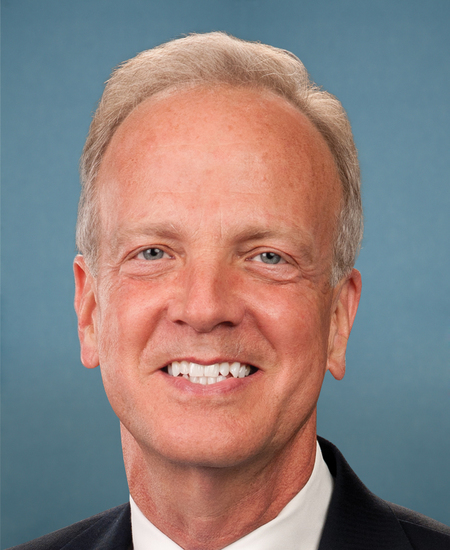
Jerry Moran
0% support rate
Ranked legislators
10
5 support · 5 oppose
Key legislators

Who's moving insurance in United States

Legislators moving insurance in United States
Legislator Party Stance Support rate Decisive votes
Adam B. Schiff
Adam B. Schiff Senate
D
Strong +
90% 10
Alex Padilla
Alex Padilla Senate
D
Strong +
90% 10
Amy Klobuchar
Amy Klobuchar Senate
D
Strong +
90% 10
Andy Kim
Andy Kim Senate
D
Strong +
90% 10
Angela D. Alsobrooks
Angela D. Alsobrooks Senate
D
Strong +
90% 10
Jerry Moran
Jerry Moran Senate
R
Strong −
0% 8
Ashley Moody
Ashley Moody Senate
R
Strong −
10% 10
Bernie Moreno
Bernie Moreno Senate
R
Strong −
10% 10
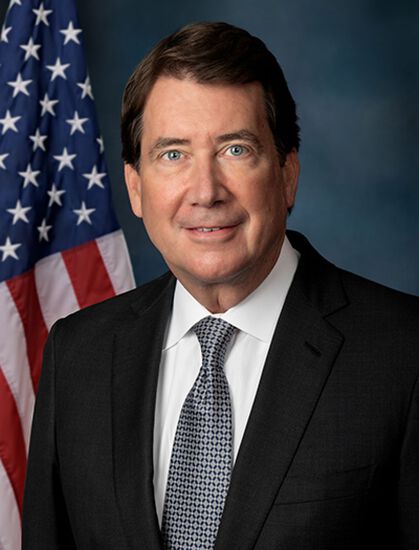
Bill Hagerty
Bill Hagerty Senate
R
Strong −
10% 10
Chuck Grassley
Chuck Grassley Senate
R
Strong −
10% 10
Showing 141–150 of 250 bills

All healthcare bills

in committee · United States · House Dec 15, 2025

HR 2528: Association Health Plans Act

This bill allows groups of small businesses or self-employed individuals to form a single health plan that treats all members as one employer for coverage purposes. It directly affects small business associations and self-employed people who can join such groups to access pooled health coverage, provided they meet specific requirements (e.g., 51+ total employees, 2+ years in existence, no health-based discrimination). Key mechanisms include permitting modified community rating for premiums (based on pooled claims) while prohibiting health status-related discrimination in enrollment, premiums, or pre-existing condition coverage. The plan remains subject to federal ERISA rules, and self-employed members must meet defined criteria to participate as both employers and employees.
Sub-Topics Insurance Tags Small Business
in committee · United States · House Jul 21, 2025

HR 4569: Supporting Premature Infant Nutrition Act of 2025

This bill requires Medicaid, Children's Health Insurance Program (CHIP), and private health plans to cover human milk fortifier - specialized nutritional products made from donor human milk - without cost-sharing for eligible premature infants. It directly affects infants under 1 year with specific medical needs, such as birth at 34 weeks or less, birth weight under 1,800 grams, or certain health conditions requiring this fortifier. Key provisions mandate no deductibles or copays for this coverage starting January 1, 2026, and define eligibility criteria for healthcare providers to determine medical necessity. The law applies broadly across federal health programs and private insurance, ensuring access to this nutrition support for qualifying infants.
in committee · United States · House Jan 9, 2025

HR 267: Health Care PRICE Transparency Act

HR 267, the Health Care PRICE Transparency Act, requires hospitals to publish clear, plain-language pricing information online for 300+ "shoppable services" (like surgeries or imaging) that patients can schedule in advance. This includes showing gross charges, discounted cash prices, and negotiated rates with insurers - without requiring subscriptions or personal data. It also mandates insurers to provide similar transparent cost estimates for covered services through online tools and paper requests, including out-of-network costs and preventive care details. The law applies to all hospitals and health plans, with penalties of up to $300 per day for non-compliance.
in committee · United States · Senate Apr 8, 2025

S 1348: Fairness for Stay-at-Home Parents Act

This bill amends the Family and Medical Leave Act (FMLA) to explicitly include the birth of a child as a qualifying reason for leave, directly affecting employees taking leave for childbirth. It adds "the birth of a son or daughter" to the list of covered events under FMLA and requires employers to notify eligible employees that they cannot recover health insurance premiums paid during leave if the employee does not return after childbirth leave. The key change prevents employers from charging employees for health coverage costs if they choose not to return to work following a birth-related leave. This update clarifies existing FMLA protections without altering leave duration or pay.
in committee · United States · Senate May 12, 2025

S 1719: Primary Care Enhancement Act of 2025

This bill modifies tax rules to treat direct primary care service arrangements as deductible medical expenses. It defines such arrangements as fixed monthly fees paid directly to primary care doctors (excluding surgeries, anesthesia, or certain lab tests), with deductible amounts capped at $150 per month (adjusted annually for inflation). The law affects individuals using this care model and employers offering it, allowing them to count these fees toward medical expense deductions. It also clarifies that these arrangements are not considered health insurance for tax purposes and requires reporting fees on W-2 forms for employment-linked plans. The changes apply to months beginning after December 2025.
Sub-Topics Insurance Primary Care
in committee · United States · House Dec 4, 2025

HR 6423: HELP Copays Act

HR 6423, the HELP Copays Act, requires health insurance plans and coverage to count financial assistance from non-profits or drug manufacturers toward patient cost-sharing limits like deductibles and copayments. This directly affects patients enrolled in health insurance who receive such assistance for prescription drugs, ensuring the help they get reduces their out-of-pocket costs faster. The bill amends key health laws to mandate that these payments are included when calculating whether a patient has met their deductible or copayment threshold. The change applies to all prescription drugs, including specialty drugs and those subject to prior authorization, but does not alter how insurers manage drug access through tools like step therapy. It takes effect for plan years starting in 2026.
in committee · United States · House Mar 3, 2025

HR 1776: New Health Options Act of 2025

The New Health Options Act of 2025 establishes a federal reinsurance program to lower premiums for certain individual health insurance plans. It provides payments to insurers covering "eligible individuals" enrolled in specific off-Exchange plans, with a $110,000 attachment point and 90% coverage up to $300,000 per claim, funded by $50 per member-month (capped at $6 billion annually). The bill also allows insurers to opt out of the standard risk pool (affecting how premiums are calculated) and removes limits on age-based premium variations for some plans, while maintaining a 3:1 age ratio for others. Additionally, it requires insurers to apply out-of-network costs to deductibles and mandates health care providers to disclose price comparisons for covered services.
Sub-Topics Insurance
in committee · United States · House Dec 18, 2025

HR 6897: Thyroid Disease CARE Act of 2025

HR 6897, the Thyroid Disease CARE Act of 2025, directs the U.S. Department of Health and Human Services to fund research and public awareness efforts focused on thyroid disease. It authorizes $30 million annually (2026-2030) to study disparities in diagnosis, treatment, and outcomes - particularly for women and underserved groups like racial minorities, people with disabilities, and those with limited insurance - while developing new diagnostic tools and treatments. The bill also allocates $3 million yearly for a public campaign to educate patients about symptoms, treatment options, and screening, especially during pregnancy, and to train healthcare providers on equitable care. This legislation affects patients with thyroid conditions (including nodules and cancer), healthcare systems, and providers, without altering insurance coverage or creating new benefits.
Sub-Topics Insurance
in committee · United States · Senate Jul 22, 2025

S 2377: EACH Act of 2025

S 2377, the EACH Act of 2025, requires all federal health programs - including Medicaid, Medicare, the Children’s Health Insurance Program (CHIP), and the Indian Health Service - to cover abortion services without restrictions based on income or insurance type. It repeals the Hyde Amendment (Section 1303 of the ACA), which previously barred federal funds from covering most abortions, and prohibits state or private insurance plans from restricting abortion coverage. This directly affects millions enrolled in federal health programs, particularly low-income individuals, women of color, and young people, who face barriers to abortion access under current laws. The bill mandates that all federally funded health programs provide comprehensive abortion coverage as a standard benefit.
introduced · United States · Senate Dec 11, 2025

S 3385: Lower Health Care Costs Act

Lower Health Care Costs Act This bill extends for three years, through 2028, temporary changes enacted by the American Rescue Plan Act of 2021 (ARPA) and the Inflation Reduction Act of 2022 (IRA) that generally expand eligibility for and increase the amount of the premium tax credit.  Currently, eligible taxpayers may be able to claim the premium tax credit, which applies toward the cost of obtaining health insurance through health insurance exchanges. To be eligible for the premium tax credit, a taxpayer’s household income must meet or exceed 100% of the federal poverty level (FPL) and, after 2025, may not exceed 400% of the FPL (maximum income limit). For 2021-2025, the ARPA and IRA eliminated the maximum income limit, which generally expands eligibility for the premium tax credit. Further, under current law, the amount of the premium tax credit is (1) generally the plan premium (conditions apply), minus (2) the taxpayer’s household income multiplied by the applicable percentage. The applicable percentage is a specific percentage that varies depending on which of six income ranges (adjusted for inflation after 2025) the taxpayer’s household income falls within. For 2021-2025, the ARPA and IRA lowered the applicable percentages and eliminated the adjustment of the applicable percentages for inflation, which generally increases the amount of the premium tax credit. The bill extends for three years, through 2028, the elimination of the 400% maximum income limit, the lower applicable percentages, and the elimination of the inflation adjustment for the applicable percentages.
Sub-Topics Tax Credits Insurance
Showing 141 to 150 of 250 bills
Previous 1 … 14 15 16 … 25 Next