Issue · Environment

Environment

Every environment bill, vote, and legislator stance in United States, automatically classified by Maddy, our AI policy reader.

Total bills
2,003
119th Congress
Top supporter
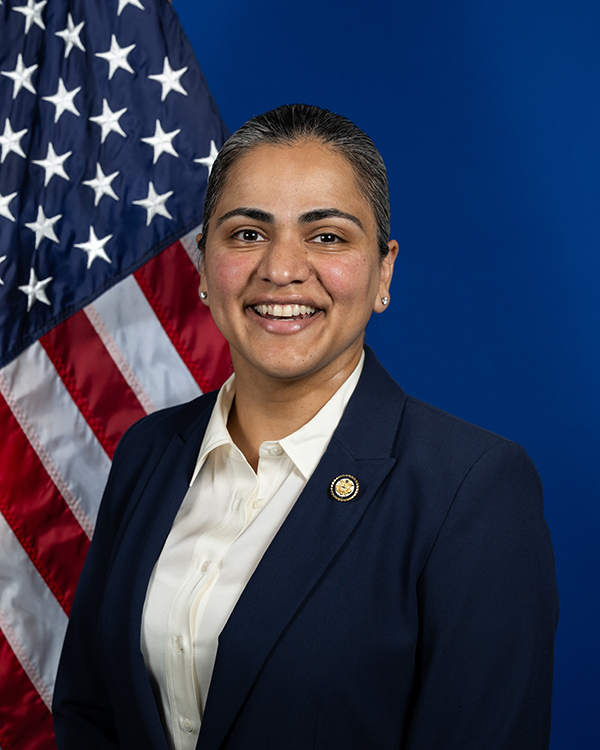
Aisha Wahab
100% support rate
Top opponent
Marsha Blackburn
11% support rate
Ranked legislators
10
5 support · 5 oppose
Key legislators

Who's moving environment in United States

Legislators moving environment in United States
Legislator Party Stance Support rate Decisive votes
Aisha Wahab
Aisha Wahab House · District 14
D
Strong +
100% 7
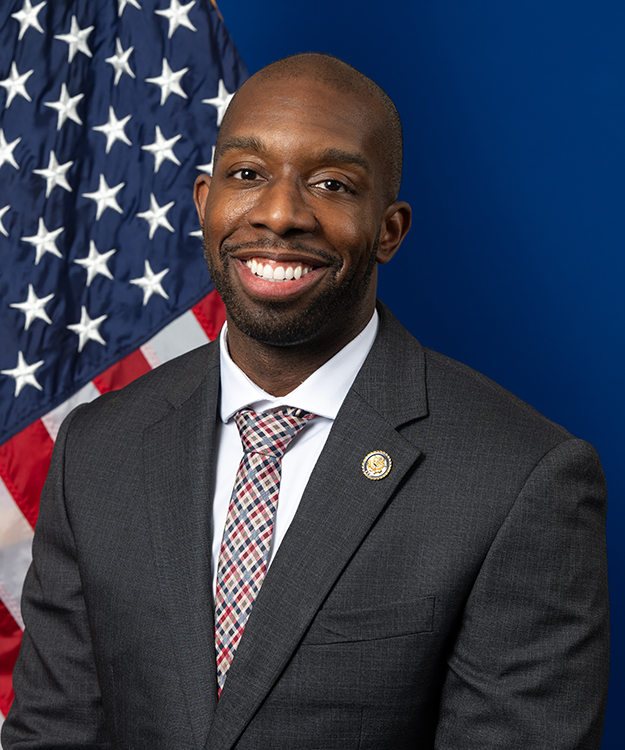
Everton Blair Jr.
Everton Blair Jr. House · District 13
D
Strong +
89% 9
Martin Heinrich
Martin Heinrich Senate
D
Strong +
84% 37
Adam B. Schiff
Adam B. Schiff Senate
D
Support
79% 53
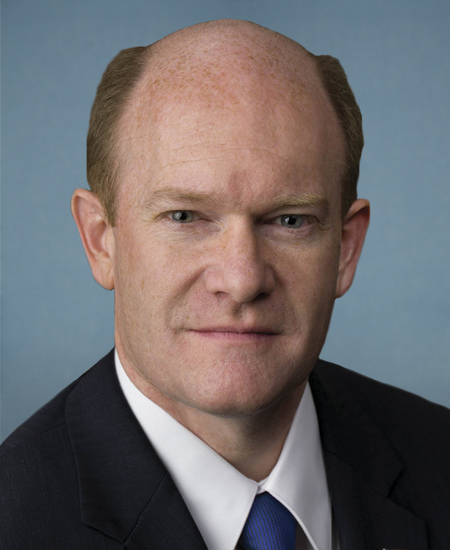
Christopher A. Coons
Christopher A. Coons Senate
D
Support
79% 52
Marsha Blackburn
Marsha Blackburn Senate
R
Strong −
11% 36
Ted Budd
Ted Budd Senate
R
Strong −
20% 40
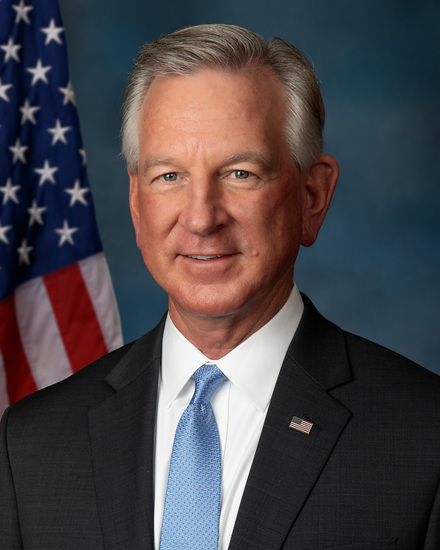
Tommy Tuberville
Tommy Tuberville Senate
R
Oppose
21% 53
Bill Cassidy
Bill Cassidy Senate
R
Oppose
22% 54
Jerry Moran
Jerry Moran Senate
R
Oppose
23% 53
Showing 941–950 of 2,003 bills

All environment bills

passed · United States · House Dec 15, 2025

HR 3898: PERMIT Act

The PERMIT Act (HR 3898) amends the definition of "navigable waters" under the Clean Water Act to exclude specific water features from federal regulation. It explicitly removes waste treatment systems, ephemeral streams (flowing only after rain), prior converted cropland, groundwater, and other features designated by regulators. This change directly affects federal agencies like the EPA and Army Corps of Engineers, reducing their jurisdiction over these excluded water bodies. The bill aims to streamline permitting by clarifying which waters fall under federal Clean Water Act oversight.
Sub-Topics Water Quality
in committee · United States · House May 15, 2025

HR 3465: Civilian Conservation Center Enhancement Act of 2025

This bill establishes new training programs at Civilian Conservation Centers (CCCs) operated by the Interior or Agriculture Departments, focusing on wildfire firefighting, forestry, and conservation skills for underserved youth. It requires the Secretaries to hire 300 annual graduates into wildland firefighting roles, bypass standard hiring rules for qualified graduates, and use covered students (current trainees) for facility renovations and housing projects. Key provisions include specialized curricula like heavy equipment operation, forest restoration, and habitat monitoring, alongside housing pilots to improve federal housing for firefighters using CCC trainees. The bill directly affects CCC participants, federal agencies, and rural communities seeking conservation workforce development.
Sub-Topics Conservation Forestry
passed · United States · House May 20, 2025

HR 1453: Clean Energy Demonstration Transparency Act of 2025

HR 1453, the Clean Energy Demonstration Transparency Act of 2025, requires the Department of Energy to submit detailed, publicly available reports on clean energy demonstration projects funded under the Infrastructure Investment and Jobs Act. It mandates that within six months of enactment and every six months thereafter, the Secretary must provide Congress and the public with copies of initial contracts, status of project milestones, and any major changes to project scope, funding, or partners. These reports apply to all covered projects administered or supported by the program. The bill aims to increase transparency by standardizing reporting requirements and allowing coordination with existing reporting processes.
Sub-Topics Renewable Energy
in committee · United States · Senate Mar 6, 2025

S 896: Co-Location Energy Act

S 896, the Co-Location Energy Act, allows renewable energy projects (solar/wind) to be developed on existing federal oil, gas, coal, and geothermal lease areas. It requires the Secretary of the Interior to obtain leaseholder consent before authorizing evaluations or issuing permits for renewable energy development on those lands. The bill mandates the Secretary to determine within 180 days if such projects qualify for streamlined environmental review under the National Environmental Policy Act. This directly affects federal leaseholders (e.g., oil/gas companies) and renewable energy developers seeking to co-locate projects on currently leased federal lands.
in committee · United States · House Jan 13, 2026

HR 7042: Heroes Home Energy Savings Act

HR 7042, the Heroes Home Energy Savings Act, allocates specific funding to enhance weatherization services for military households under the existing Weatherization Assistance Program (WAP). It authorizes $350 million annually (2026-2030) for general WAP services and sets aside $2.1 million each year specifically for weatherization improvements to homes of active duty and reserve military members. The bill requires that no more than 6% of the general WAP funding can be used for program enhancements, while the dedicated $2.1 million must be spent solely on military households. This directly affects active duty and reserve military personnel and their households by providing targeted energy efficiency upgrades to their homes.
in committee · United States · House Mar 27, 2025

HR 2472: INFANTS Act of 2025

This bill requires food facilities manufacturing or processing infant and toddler food (for children up to 24 months) to conduct quarterly testing for toxic metals like lead, cadmium, mercury, and arsenic in final products. Facilities must maintain detailed records of sampling plans, test results, and lab accreditation for at least two years or the product’s shelf life, whichever is longer. Manufacturers must report confirmed positive pathogen tests (like Cronobacter) to the FDA within 24 hours and implement environmental monitoring for sanitation controls in powdered infant formula production. These requirements apply directly to food facilities producing infant/toddler food, aiming to strengthen safety testing and transparency without specifying enforcement outcomes.
Sub-Topics Children's Health
signed · United States · House Feb 11, 2026

HR 1043: La Paz County Solar Energy and Job Creation Act

La Paz County Solar Energy and Job Creation Act This act directs the Department of the Interior, after receiving a request from La Paz County, Arizona, to convey approximately 3,400 acres of identified land managed by the Bureau of Land Management to the county for fair market value. Interior must exclude from the conveyance any federal land that contains significant cultural, environmental, wildlife, or recreational resources. As a condition of the conveyance, La Paz County and any subsequent owner must make good faith efforts to avoid disturbing tribal artifacts; minimize impacts on tribal artifacts if they are disturbed; coordinate with the Colorado River Indian Tribes Tribal Historic Preservation Office to identify artifacts of cultural and historic significance; and allow tribal representatives to rebury unearthed artifacts at, or near, where they were discovered. The federal land is withdrawn from the operation of U.S. mining and mineral leasing laws, and thus the land is not available for new mining claims, new mineral or geothermal leases, nor sales of mineral materials. The county must pay all costs related to the conveyance.
in committee · United States · House Feb 12, 2025

HR 1253: Fair SHARE Act of 2025

This bill imposes a $550 tax on each heavy battery module (over 1,000 pounds) and a $1,000 tax on each electric vehicle sold by manufacturers or importers. It excludes hybrid vehicles from the tax definition, as they use both internal combustion engines and rechargeable batteries. The collected revenue would be transferred to the Highway Trust Fund, which finances road and highway maintenance. The tax applies to sales after December 31, 2025.
in committee · United States · House Feb 11, 2025

HR 1192: To ensure that Big Cypress National Preserve may not be designated as wilderness or as a component of the National Wilderness Preservation System, and for other purposes.

This bill prohibits the Big Cypress National Preserve in Florida from being designated as wilderness or as a component of the National Wilderness Preservation System. The National Park Service currently manages Big Cypress National Preserve, which is a freshwater swamp ecosystem of 729,000 acres.  In general, development activities, commercial activities, permanent structures, and roads are prohibited in wilderness areas. In contrast, natural preserves typically allow some development activities, such as hunting or oil and gas exploration.
in committee · United States · House Jun 10, 2025

HR 3870: COAL POWER Act

HR 3870, the COAL POWER Act, repeals a specific Environmental Protection Agency (EPA) rule issued on May 7, 2024, which set emission standards for coal- and oil-fired power plants. This bill directly affects coal and oil-fired electric utilities by removing their requirement to comply with that particular EPA regulation (89 Fed. Reg. 38508). The key mechanism is a straightforward repeal, treating the rule as if it never took effect. The bill does not create new rules or alter existing environmental standards beyond this specific EPA action.
Sub-Topics Coal Oil & Gas
Showing 941 to 950 of 2,003 bills
Previous 1 … 94 95 96 … 201 Next