Issue · Environment

Environment (Water Quality)

Every environment bill, vote, and legislator stance in United States, automatically classified by Maddy, our AI policy reader.

Total bills
213
119th Congress
Top supporter
Adam B. Schiff
100% support rate
Top opponent
Alan Armstrong
0% support rate
Ranked legislators
10
5 support · 5 oppose
Key legislators

Who's moving water quality in United States

Legislators moving water quality in United States
Legislator Party Stance Support rate Votes
Adam B. Schiff
Adam B. Schiff Senate
D
Strong +
100% 3
Alex Padilla
Alex Padilla Senate
D
Strong +
100% 3
Amy Klobuchar
Amy Klobuchar Senate
D
Strong +
100% 3
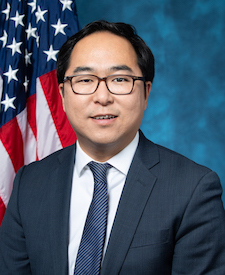
Andy Kim
Andy Kim Senate
D
Strong +
100% 3
Angela D. Alsobrooks
Angela D. Alsobrooks Senate
D
Strong +
100% 3
AA
Alan Armstrong Senate
R
Strong −
0% 3
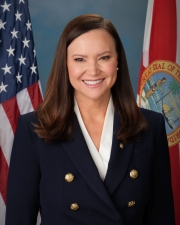
Ashley Moody
Ashley Moody Senate
R
Strong −
0% 3
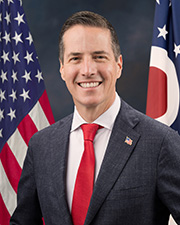
Bernie Moreno
Bernie Moreno Senate
R
Strong −
0% 3
Bill Cassidy
Bill Cassidy Senate
R
Strong −
0% 3
Bill Hagerty
Bill Hagerty Senate
R
Strong −
0% 3
Showing 71–80 of 213 bills

All environment bills

in committee · United States · House Dec 1, 2025

HR 5566: Water Infrastructure Resilience and Sustainability Act

HR 5566, the Water Infrastructure Resilience and Sustainability Act, extends deadlines for three existing federal water infrastructure programs by five years. It amends the Clean Water Act to extend the deadline for the Clean Water Infrastructure Resiliency and Sustainability Program from 2026 to 2031, and updates the Safe Drinking Water Act to extend deadlines for both the general Drinking Water System Infrastructure Program and the Midsize/Large Drinking Water System Program from 2026 to 2031. These changes directly affect state and local governments administering these programs, giving them more time to complete eligible projects. The bill makes no new funding commitments or policy changes - only adjusts the timeline for existing program requirements.
in committee · United States · House Feb 18, 2025

HR 1441: PURE Water Act

The PURE Water Act (HR 1441) creates a federal tax credit for individuals who install qualifying home water filtration systems. It allows a 20% credit on primary residence filtration costs and 10% on secondary residence costs, capped at $2,500 per tax year, with unused portions carryable forward. The credit applies only to systems that remove at least 90% of lead, PFAS, and PFOA from drinking water, excluding maintenance costs. This directly affects individual taxpayers who purchase qualifying filters for their U.S. homes, effective for tax years beginning after December 31, 2024.
in committee · United States · Senate Mar 27, 2025

S 1187: Deerfield River Wild and Scenic River Study Act of 2025

This bill designates the Deerfield River (including all its branches and major tributaries in Massachusetts and Vermont) for a study under the Wild and Scenic Rivers Act. It requires the Secretary of the Interior to complete this study within three years of funding and submit a report to Congress detailing the river's natural, recreational, and scenic value. The study will determine if the river qualifies for formal Wild and Scenic River protection, which would limit development and damming in the area. This bill affects the Deerfield River watershed and its communities but does not change current protections or management.
Sub-Topics Water Quality
in committee · United States · House Dec 11, 2025

HR 6639: Water Agency and Transparency Enhancement Review (WATER) Act

HR 6639, the Water Agency and Transparency Enhancement Review (WATER) Act, requires the Secretaries of the Interior and Commerce to identify major water-supply and storage projects in California subject to the Endangered Species Act or National Environmental Policy Act. The bill mandates they designate federal officials to identify unnecessary regulatory delays or costs ("unduly burdens") on these projects and develop plans to suspend, revise, or rescind such regulations. It directly affects California water projects (including surface/ground storage and aquifer recharge) and the federal agencies managing their environmental reviews. The key mechanism is a streamlined review process to remove regulatory obstacles without compromising legal protections.
passed · United States · House Dec 15, 2025

HR 3898: PERMIT Act

The PERMIT Act (HR 3898) amends the definition of "navigable waters" under the Clean Water Act to exclude specific water features from federal regulation. It explicitly removes waste treatment systems, ephemeral streams (flowing only after rain), prior converted cropland, groundwater, and other features designated by regulators. This change directly affects federal agencies like the EPA and Army Corps of Engineers, reducing their jurisdiction over these excluded water bodies. The bill aims to streamline permitting by clarifying which waters fall under federal Clean Water Act oversight.
Sub-Topics Water Quality
passed · United States · House Jun 4, 2026

HR 2860: Northwest Straits Marine Conservation Initiative Reauthorization Act of 2025

HR 2860 reauthorizes the Northwest Straits Marine Conservation Initiative through 2032, continuing a program focused on protecting Puget Sound's marine ecosystem in Washington State. It maintains the existing Northwest Straits Advisory Commission (composed of local county representatives, Tribal governments, and state officials) and requires it to coordinate habitat restoration, monitor water quality, and collaborate with Tribal nations on conservation efforts. The bill authorizes $10 million annually (2026-2031) for the Commission to carry out its duties, including developing science-based restoration plans and reporting progress on benchmarks like habitat protection and water quality. It emphasizes collaboration with local communities, Tribal governments, and federal agencies like NOAA, without granting regulatory authority.
in committee · United States · Senate Mar 27, 2025

S 1183: Maintaining and Enhancing Hydroelectricity and River Restoration Act of 2025

Maintaining and Enhancing Hydroelectricity and River Restoration Act of 2025 This bill establishes a new investment tax credit in the amount of 30% of the basis of any hydropower improvement property. The bill defines hydropower improvement property as property that adds or improves fish passage at a qualified dam; maintains or improves the quality of the water retained or released by a qualified dam; promotes downstream sediment transport and habitat maintenance; upgrades, repairs, or reconstructs a qualified dam to meet safety and security standards; improves public uses of, and access to, public waterways impacted by a qualified dam; removes an obsolete river obstruction; or places into service an approved remote dam. Further, written approval for hydropower improvement property must be obtained from the Federal Energy Regulatory Commission or state or local officials prior to January 1, 2035. The bill also allows an election to claim the investment tax credit for qualified progress expenses for some types of hydropower improvement property in advance of such property being placed into service. Any investment tax credit amount claimed for qualified progress expenses reduces the amount of the investment tax credit that may be claimed once the hydropower improvement property is placed into service.  The bill authorizes certain entities, including tax-exempt and governmental entities, to treat the investment tax credit for hydropower improvement property as a payment of tax and receive a refund of any overpayment (also known as elective pay).  Finally, the investment tax credit for hydropower improvement property may be transferred (i.e., sold).
in committee · United States · House Jun 13, 2025

HR 3897: Confidence in Clean Water Permits Act

HR 3897, the Confidence in Clean Water Permits Act, clarifies compliance requirements for facilities holding permits under the Clean Water Act. It directly affects industrial and wastewater facilities by expanding what counts as "compliance" with permit conditions, including pollutants not explicitly listed but identified during application or operations. Key provisions require that water quality-based limits in permits must clearly specify the pollutant and describe how compliance is achieved - either through numerical limits or detailed narrative requirements. The bill also includes minor technical corrections to existing permit language. These changes aim to reduce ambiguity in permit enforcement without altering the underlying regulatory framework.
in committee · United States · House Dec 2, 2025

HR 5781: MATCH Act of 2025

The MATCH Act of 2025 creates a new emergency watershed program allowing state, local, or tribal governments to incur costs for urgent cleanup work after natural disasters *before* formally agreeing with the federal government. It requires the Secretary to identify eligible emergency measures and establish a state-level process for sponsors to request reimbursement for these preagreement costs within 180 days. Sponsors assuming these costs bear the financial risk, but if a formal agreement is later signed, those preagreement costs count toward the sponsor’s required contribution. The bill does not obligate the federal government to enter agreements, focusing solely on enabling reimbursement for specific, pre-approved emergency actions.
Sub-Topics Natural Disasters Water Quality Tags Emergency Management
passed · United States · House May 14, 2025

HR 331: To amend the Aquifer Recharge Flexibility Act to clarify a provision relating to conveyances for aquifer recharge purposes.

This bill clarifies how states, tribes, or public entities can use existing water infrastructure (like canals built before 1976) for aquifer recharge without needing new federal permits. It requires 30 days' advance notice to the Bureau of Land Management detailing the infrastructure, intended use, and a written agreement with the rights-holder. Non-profit uses of existing rights are exempt from additional rent, but for-profit operations are not. The bill also exempts these recharge activities from certain environmental laws (Clean Water Act, Endangered Species Act) and allows modifying existing infrastructure. It directly affects water management entities working with federal land rights.
Showing 71 to 80 of 213 bills
Previous 1 7 8 9 22 Next