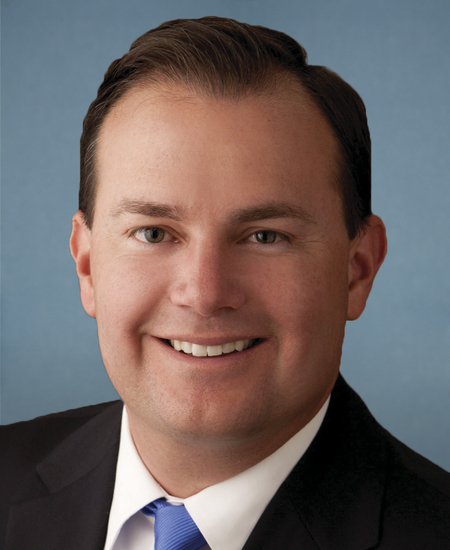
HR 5636, the *Protect Consumers from Reallocation Costs Act of 2025*, prevents the Environmental Protection Agency from shifting renewable fuel obligations from small refineries with extended exemptions to other companies. It directly affects small refineries that have received extended exemptions under the Clean Air Act. The bill requires the EPA to include gasoline or diesel refined by these exempt refineries in the total fuel volume calculations for the year, rather than excluding it or reallocating the obligation. This change ensures small refineries’ production is counted toward overall fuel volume, preventing other entities from bearing their renewable fuel requirements. The law modifies Section 211(o)(9) of the Clean Air Act (42 U.S.C. 7545(o)(9)).
This bill creates federal grants to help communities prepare for wildfire smoke and extreme heat. It provides funding for air pollution agencies to monitor air quality, install air filtration in public buildings, distribute protective equipment like N95 masks, and conduct community outreach in vulnerable areas. The bill also establishes research centers at universities to study health impacts and develop better response strategies, and creates a competitive grant program for states, tribes, and local governments to develop community-specific smoke and heat mitigation plans. These provisions directly affect communities facing wildfire smoke and extreme heat risks, particularly those with limited resources.
The FENCES Act clarifies that states can avoid penalties under the Clean Air Act for failing to meet air quality standards if pollution originates from outside U.S. borders (regardless of human activity). It allows states to demonstrate to the EPA that nonattainment areas (for ozone or particulate matter) would meet standards but for pollution from outside their borders, exceptional events, or mobile sources beyond their control. States must renew this demonstration every five years to maintain the exemption from sanctions or fees. The bill does not change air quality standards but prevents penalties for pollution sources outside a state’s jurisdiction. It applies directly to states and local areas struggling with air quality due to external pollution sources.
HR 6373 modifies the Clean Air Act to create new permitting flexibility for specific facilities. It allows the President to waive certain emission offset requirements for new or modified semiconductor manufacturing facilities or critical mineral facilities (like those processing lithium or cobalt) if deemed necessary for national security. States can also permit these facilities to use alternative offset methods - such as paying an emissions fee capped at 1.5 times local control costs - if all standard offsets are exhausted, with fees required to fund further emissions reductions in the area. The bill directly affects advanced manufacturing and critical mineral operations seeking streamlined permitting.
HR 7000, the Freedom to Fuel Act, amends the Clean Air Act to exclude portable fuel containers (like gas cans) from being classified as "consumer or commercial products" under the law. This change directly affects manufacturers and sellers of these containers, removing them from certain regulatory requirements. The key provision modifies the Clean Air Act's definition to specifically state that portable fuel containers are not subject to product standards for consumer or commercial products. This is a technical regulatory adjustment focused on clarifying which products fall under existing Clean Air Act provisions.
Reducing and Eliminating Duplicative Environmental Regulations Act or the RED Tape Act This bill removes the requirement under the Clean Air Act that the Environmental Protection Agency (EPA) review and comment on newly authorized federal construction projects and other major federal agency actions that already require review under the National Environmental Policy Act (NEPA) and proposed federal regulations.
The FIRE Act amends the Clean Air Act to clarify when air quality monitoring data affected by wildfires or prescribed fire (a state-approved wildfire risk mitigation practice) can be excluded from compliance calculations with air quality standards. It expands the definition of "exceptional events" to include natural wildfires and human activities mimicking natural events (like prescribed burns), while excluding common weather patterns and pollution from noncompliance. The bill requires the EPA to conduct regional analysis for multistate wildfire events and create a public website tracking state petitions for data exclusion. This change primarily affects how states and the EPA handle air quality data during wildfire seasons and when using prescribed fire as a management tool.
The PROTECT Act of 2026 requires the Environmental Protection Agency (EPA) to list all perfluoroalkyl and polyfluoroalkyl substances (PFAS) as hazardous air pollutants under the Clean Air Act within 180 days of the bill becoming law. This would directly affect industries that manufacture or use PFAS, such as producers of non-stick cookware, firefighting foam, and other consumer products containing these chemicals. The EPA must then, within 365 days, update the list of specific industrial sources (including factories and facilities) that emit PFAS to establish regulatory oversight. These steps create the foundational framework for future EPA regulations targeting PFAS emissions, though the bill itself does not set specific emission limits.
HR 7452, titled the "Air Quality Act" (though it addresses weather modification, not air quality), prohibits all weather modification activities in the U.S., including cloud seeding, geoengineering, and stratospheric aerosol injection, for individuals, companies, and federal agencies. It imposes criminal penalties of up to $100,000 or 5 years in prison per violation, plus civil fines of $10,000 per violation, and requires new reporting systems for aircraft involved in such activities and public complaints to the EPA. The bill repeals all existing federal laws, regulations, or executive orders authorizing weather modification and bans all federal research or experimentation on weather modification. It defines "weather modification" broadly to include any atmospheric alteration affecting weather, climate, or sunlight.
This bill establishes the Office of Climate Change and Health Equity within the Department of Health and Human Services to coordinate federal efforts addressing climate change's health impacts. It requires the creation of a National Strategic Action Plan to identify communities most affected by climate-related health threats - including environmental justice communities, medically underserved communities, and Tribal communities - and develop strategies for preparedness and response. The plan must address specific health impacts like extreme heat, air pollution, infectious diseases, and mental health effects, while prioritizing health equity and environmental justice. The bill also creates a Science Advisory Board to provide expert guidance and authorizes funding for these initiatives over several years. These provisions are designed to strengthen the health sector's ability to respond to climate change impacts across the United States.