Issue · Environment

Environment

Every environment bill, vote, and legislator stance in United States, automatically classified by Maddy, our AI policy reader.

Total bills
1,978
119th Congress
Top supporter
Aisha Wahab
100% support rate
Top opponent
Marsha Blackburn
11% support rate
Ranked legislators
10
5 support · 5 oppose
Key legislators

Who's moving environment in United States

Legislators moving environment in United States
Legislator Party Stance Support rate Decisive votes
Aisha Wahab
Aisha Wahab House · District 14
D
Strong +
100% 7
Everton Blair Jr.
Everton Blair Jr. House · District 13
D
Strong +
89% 9
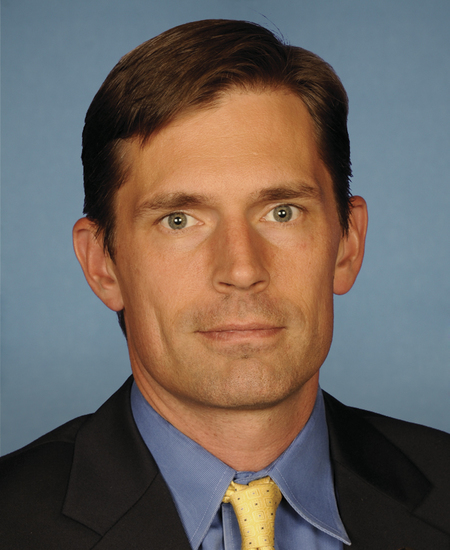
Martin Heinrich
Martin Heinrich Senate
D
Strong +
84% 37
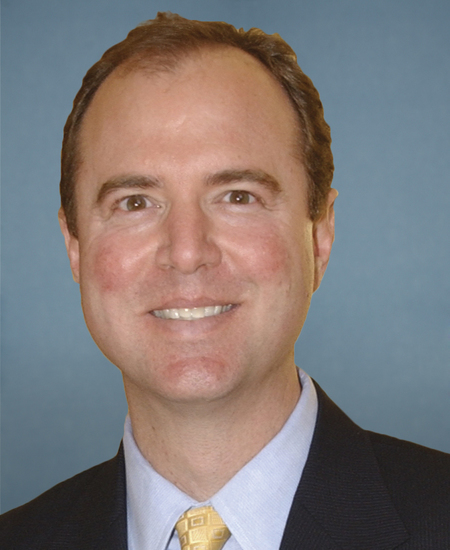
Adam B. Schiff
Adam B. Schiff Senate
D
Support
79% 53
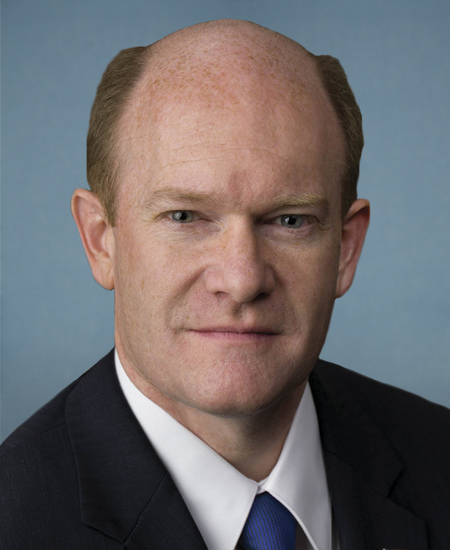
Christopher A. Coons
Christopher A. Coons Senate
D
Support
79% 52
Marsha Blackburn
Marsha Blackburn Senate
R
Strong −
11% 36
Ted Budd
Ted Budd Senate
R
Strong −
20% 40
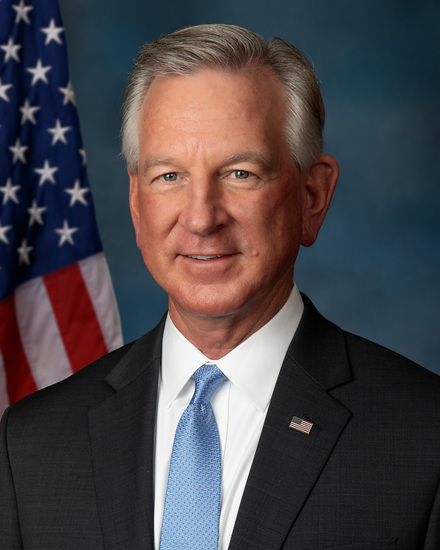
Tommy Tuberville
Tommy Tuberville Senate
R
Oppose
21% 53
Bill Cassidy
Bill Cassidy Senate
R
Oppose
22% 54
Jerry Moran
Jerry Moran Senate
R
Oppose
23% 53
Showing 541–550 of 1,978 bills

All environment bills

passed · United States · House Jun 24, 2025

HR 2269: WIPPES Act

HR 2269, the WIPPES Act, requires manufacturers and retailers to clearly label certain premoistened wipes with "Do Not Flush" text and a specific symbol on packaging. It directly affects baby wipes, disinfecting wipes, and other household/personal care wipes (like feminine hygiene or hand sanitizing wipes) that contain petrochemical fibers and could be flushed. The bill mandates specific visibility requirements for labels - such as minimum size, high contrast, and placement on packaging - while banning any claims that these wipes are flushable. The Federal Trade Commission will enforce these labeling rules as deceptive practices under existing law.
in committee · United States · House Nov 21, 2025

HR 6187: Wojnovich Pipeline Safety Act of 2025

HR 6187, the Wojnovich Pipeline Safety Act of 2025, establishes a $100 million annual grant program to fund safety upgrades for hazardous liquid pipelines owned by municipalities or community-owned utilities. It requires states to mandate real estate disclosures about nearby pipelines in property contracts and creates a new $2.5 million annual penalty for operators failing to report leaks (doubling to $5 million if delayed by 15 days). The bill also mandates localized emergency alerts within one mile of pipelines and creates a community trust fund using penalty payments to reimburse emergency responders for costs related to pipeline incidents. These provisions directly affect pipeline operators, property sellers, and local emergency response agencies.
in committee · United States · House Dec 11, 2025

HR 6619: PROSPER in the Pacific Act

HR 6619, the PROSPER in the Pacific Act, establishes a preferential trade program allowing duty-free access to U.S. markets for eligible goods from 14 Pacific Island nations (including Fiji, Palau, and Samoa). To qualify, these countries must meet specific human rights, environmental, and governance standards - such as protecting worker rights, enforcing environmental laws, and combating corruption - while avoiding U.S. trade sanctions. The bill mandates a U.S. government trade facilitation program to help these nations improve export capabilities and comply with U.S. trade rules, requiring annual reports to Congress until 2036, when the program expires. It directly affects Pacific Island economies by creating new market access opportunities tied to measurable policy criteria.
signed · United States · House May 23, 2025

HJRES 60: Providing for congressional disapproval under chapter 8 of title 5, United States Code, of the rule submitted by the National Park Service relating to "Glen Canyon National Recreation Area: Motor Vehicles".

This joint resolution allows off-road vehicles to be used in certain areas of the Glen Canyon National Recreation Area, which is in northern Arizona and southeastern Utah and contains Lake Powell. Specifically, the joint resolution nullifies the rule issued by the National Park Service (NPS) titled Glen Canyon National Recreation Area; Motor Vehicles  and published on January 13, 2025. Under the rule, the NPS limited the use of off-road vehicles, such as off-highway vehicles and all-terrain vehicles, in certain areas. For instance, the rule prohibited the use of off-road vehicles on an 8-mile segment of the Poison Spring Loop located on Route 633 proceeding north to Route 730 in the Orange Cliffs Special Management Unit. The rule also eliminated the authority of the NPS to open the upper portion of the Flint Trail in that unit to off-road vehicles. Additionally, the rule limited off-road vehicle use from certain roads to the shoreline of the lake.
in committee · United States · House Jul 29, 2025

HR 4809: INSPECT Act of 2025

The INSPECT Act of 2025 requires the Nuclear Regulatory Commission (NRC) to assign a dedicated inspector to each permanently closed commercial nuclear power plant. This inspector will monitor decommissioning work and the transfer of spent nuclear fuel from storage pools to dry storage facilities. The assignment lasts only for the duration needed to complete the fuel transfer process. If a plant has no active decommissioning or fuel transfer work, the NRC may reassign the inspector to other duties.
in committee · United States · House Sep 26, 2025

HR 5614: If You See It, Squish It Act of 2025

HR 5614, the "If You See It, Squish It Act of 2025," directs the Secretary of Agriculture to launch a national public awareness campaign about spotted lanternflies. The campaign requires placing TV, radio, and billboard ads in high-incidence areas to inform the public that spotted lanternflies are invasive pests threatening agriculture and to encourage people to kill any they encounter. It specifically mandates these public service announcements and allows the Secretary to use additional awareness tools. This bill directly affects residents in regions with spotted lanternfly infestations by providing information on identifying and addressing the pest.
in committee · United States · House Sep 11, 2025

HR 5332: Liquid Cooling for AI Act of 2025

This bill (HR 5332) mandates a federal review of liquid cooling technologies for data centers, requiring the Government Accountability Office (GAO) to assess their research needs, costs, benefits, and market adoption within 90 days. The study will evaluate how liquid cooling compares to air cooling for efficiency, safety, and heat reuse, including waste heat capture for secondary uses. It directly affects federal agencies operating data centers (like the Department of Energy) by informing future infrastructure decisions. The GAO report and subsequent Department of Energy assessment will guide potential policy but do not fund or require adoption of liquid cooling.
in committee · United States · Senate Apr 9, 2025

S 1398: Organic Imports Verification Act of 2025

This bill requires the U.S. Department of Agriculture to conduct annual residue testing on imported organic feedstuffs shipped in bulk with a national organic program certificate, and to submit yearly reports to Congress detailing testing methods, results, and corrective actions. It directly affects importers of bulk organic feedstuffs by mandating compliance with new verification standards and prohibiting shipments that test above allowed levels of banned chemicals from being sold or labeled as organic. The Secretary of Agriculture must develop annual risk-based testing protocols (considering factors like shipment frequency and chemical risks) and take mandatory corrective actions when violations occur. The law does not change organic production standards but adds verification steps for specific imported feedstuffs to ensure compliance with existing organic regulations.
in committee · United States · Senate Jul 23, 2026

S 1981: Strategic Grazing to Reduce Risk of Wildfire Act

This bill requires the Secretaries of Agriculture and Interior to develop a strategy within 18 months for using livestock grazing to reduce wildfire risks on federal lands. The strategy must include targeted grazing in high-risk areas (like the wildland-urban interface), controlling invasive grasses such as cheatgrass, and using technologies like virtual fencing to adjust grazing placement. It affects federal land managers, ranchers with grazing permits, and communities in fire-prone regions by integrating grazing into wildfire management plans. The bill does not change existing grazing programs but adds specific provisions for risk reduction during droughts, wildfires, or post-fire recovery. It mandates consultation with states, tribes, firefighting agencies, and local stakeholders to coordinate this approach.
Sub-Topics Forestry Public Lands
in committee · United States · Senate Jan 16, 2025

S 111: Red Snapper Act of 2025

The Red Snapper Act of 2025 (S 111) delays potential area closures for the South Atlantic snapper-grouper fishery until specific scientific data is reviewed. It requires the Secretary of Commerce to wait until the South Atlantic Great Red Snapper Count study is complete and its data is integrated into the next stock assessment before implementing any area or bottom closures. This directly affects recreational and commercial fishermen in the South Atlantic region, particularly in Florida, where red snapper fishing supports billions in economic output and tens of thousands of jobs. The bill aims to ensure management decisions are based on the latest fishery survey data rather than current seasonal restrictions.
Sub-Topics Conservation
Showing 541 to 550 of 1,978 bills
Previous 1 54 55 56 198 Next