Issue · Environment

Environment (Conservation)

Every environment bill, vote, and legislator stance in United States, automatically classified by Maddy, our AI policy reader.

Total bills
304
119th Congress
Top supporter
Adam B. Schiff
100% support rate
Top opponent
Ashley Moody
0% support rate
Ranked legislators
10
5 support · 5 oppose
Key legislators

Who's moving conservation in United States

Legislators moving conservation in United States
Legislator Party Stance Support rate Votes
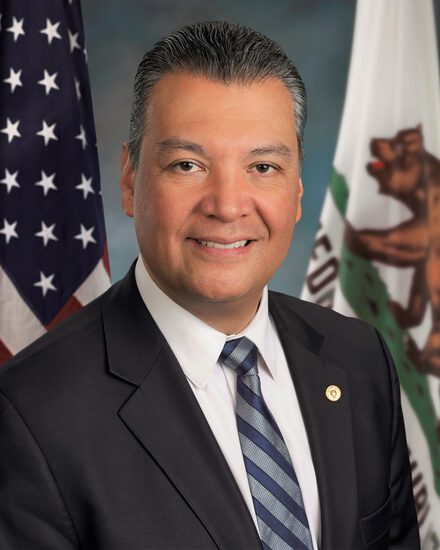
Adam B. Schiff
Adam B. Schiff Senate
D
Strong +
100% 9
Alex Padilla
Alex Padilla Senate
D
Strong +
100% 9
Amy Klobuchar
Amy Klobuchar Senate
D
Strong +
100% 9
Andy Kim
Andy Kim Senate
D
Strong +
100% 9
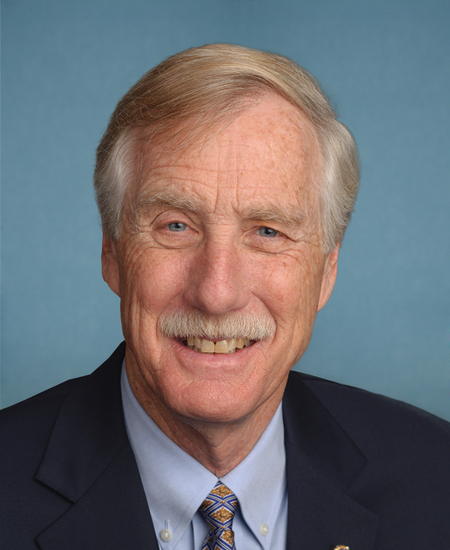
Angus S. King, Jr.
Angus S. King, Jr. Senate
I
Strong +
100% 9
Ashley Moody
Ashley Moody Senate
R
Strong −
0% 9
Bernie Moreno
Bernie Moreno Senate
R
Strong −
0% 9
Bill Cassidy
Bill Cassidy Senate
R
Strong −
0% 9
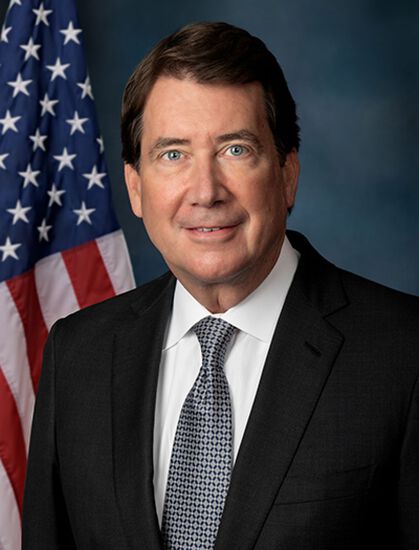
Bill Hagerty
Bill Hagerty Senate
R
Strong −
0% 9
Chuck Grassley
Chuck Grassley Senate
R
Strong −
0% 9
Showing 261–270 of 304 bills

All environment bills

in committee · United States · House Feb 28, 2025

HR 622: To amend the Food Security Act of 1985 to increase funding for the conservation stewardship program, and for other purposes.

This bill increases annual funding for the Conservation Stewardship Program (CSP) to $1.8 billion each year from 2025 through 2031. It also transfers $5.02 billion in unused Inflation Reduction Act funds to the same program. The CSP directly supports farmers and ranchers who adopt conservation practices on their land. The key change is boosting financial resources for existing conservation efforts through both new annual appropriations and redirected existing funds.
Sub-Topics Conservation
in committee · United States · House Mar 21, 2025

HRES 233: Supporting the designation of April 2025 as "National Native Plant Month".

HRES 233 is a non-binding resolution supporting the designation of April 2025 as "National Native Plant Month" in the United States. It recognizes native plants - species naturally adapted to specific U.S. regions - as essential for healthy ecosystems, biodiversity, and environmental resilience, highlighting their role in supporting wildlife and sustainable habitats. The resolution does not create new laws or funding but aims to raise public awareness about the ecological and economic benefits of native plants. It directly affects public awareness and educational efforts, encouraging communities to promote native plant conservation. The resolution was introduced by Representatives Case, Neguse, Joyce, Soto, Moylan, and Tokuda and referred to the Committee on Natural Resources.
Sub-Topics Conservation Wildlife
in committee · United States · House Jul 22, 2025

HR 4591: Habitat Enhancement Now Act

HR 4591, the Habitat Enhancement Now Act, creates two federal grant programs to boost waterfowl populations. It provides $3.5 million annually (2026-2030) for grants to states, tribes, nonprofits, or individuals to install nesting structures (like hen houses) in the Prairie Pothole Region to improve duck nest success, and to establish nesting cover, brood ponds, and incentivize private landowners in California to enhance breeding habitat for mallards and gadwalls. The bill directly affects landowners who participate in the California program and conservation entities implementing both programs. Key mechanisms include competitive grants for specific habitat actions proven to increase nest success, based on scientific findings about declining duck populations. The funding is explicitly allocated for these targeted habitat management activities.
in committee · United States · Senate Feb 12, 2026

S 3860: Office of Small Farms Establishment Act of 2026

This bill creates a new Office of Small Farms within the USDA to better support small farms, ranches, and forest operations (defined as under 180 acres or with under $350,000 annual income). The office will coordinate USDA programs, review policies to remove barriers for small operations, and develop new initiatives like grants up to $25,000 for equipment, land access, or conservation. It requires State coordinators in each state to improve local program delivery and mandates annual reports to Congress on participation progress. The bill authorizes $25 million over five years ($15 million for the office, $10 million for grants and technical assistance).
Sub-Topics Conservation Forestry
in committee · United States · Senate May 14, 2025

S 1769: Farmer to Farmer Education Act of 2025

This bill establishes a new program to support farmer-to-farmer networks that share technical assistance and conservation knowledge. It provides funding through cooperative agreements with eligible groups - including nonprofits, tribes, local governments, and institutions - to help farmers, ranchers, and forest owners adopt science-based conservation practices. The program specifically prioritizes historically underserved farmers (like limited-resource or high-poverty area operators) and requires language access for non-English speakers. Annual reporting ensures accountability, with a 4-year evaluation report to Congress on program outcomes.
Sub-Topics Conservation Forestry Tags Agriculture Tribal Nations
passed · United States · Senate Jun 23, 2025

S 154: Colorado River Basin System Conservation Extension Act

This bill extends the existing Colorado River Basin conservation pilot program by updating its name and adjusting key deadlines. It changes the program's official title to match the new bill and extends its funding period from ending in 2024 to 2026, while shifting the final implementation year from 2025 to 2027. The bill does not alter the program's conservation requirements or directly affect specific groups; it only modifies the timeline for an existing federal pilot program. This is a procedural adjustment to the 2015 law, not a new policy.
Sub-Topics Conservation
passed · United States · House Apr 15, 2026

HR 1011: Emergency Conservation Program Improvement Act of 2025

This bill amends two conservation programs to provide upfront payments for emergency repairs. Agricultural producers can receive up to 50% of fencing repair costs or up to 75% for other farmland rehabilitation work before starting repairs. Forest landowners may get up to 75% of emergency restoration costs before implementing measures, with funds needing to be spent within 180 days or returned. It also clarifies that federally-caused wildfires (if spread by natural causes) qualify for payments under the program.
in committee · United States · Senate Feb 12, 2026

S 3526: PUBLIC Lands Act

The PUBLIC Lands Act designates approximately 1.3 million acres of California public land as wilderness areas, scenic areas, or wild and scenic rivers. It establishes the South Fork Trinity-Mad River Restoration Area (871,414 acres) to improve forest resilience, protect water quality, and reduce wildfire risks through collaborative restoration planning. The bill creates new recreational trails like the Bigfoot National Recreation Trail and designates visitor centers at Trinity Lake and Del Norte County. These designations withdraw the lands from mining, mineral leasing, and other public land disposal while allowing for prescribed fire and limited recreational use.
in committee · United States · Senate Sep 17, 2025

S 2835: Energizing Our Communities Act

The Energizing Our Communities Act establishes a new fund using interest from specific Department of Energy loans for large-scale electric transmission projects (over 999 megawatts). It requires payments to host communities - local governments or tribes where transmission lines are built - within 18 months of project construction start. Funds must be split: 80% for community services like schools, broadband, or infrastructure, and 20% for conservation, recreation, or climate resilience projects. The bill mandates annual reports on fund usage and ensures payments supplement existing "payments in lieu of taxes."
in committee · United States · Senate Mar 31, 2025

S 1209: American Prairie Conservation Act

S 1209, the American Prairie Conservation Act, requires farmers who convert native prairie land (native sod) to cropland to certify this acreage to the USDA before receiving federal crop insurance or disaster assistance benefits. Specifically, producers must submit certified acreage reports using Farm Service Agency forms and maps, and update corrections if changes occur. The USDA must also submit annual reports to Congress starting in 2026, detailing certified tilled native sod acreage by county and state through 2030. This bill directly affects farmers using federal crop insurance or disaster programs who have tilled native prairie land, adding a certification step to benefit eligibility.
Sub-Topics Conservation
Showing 261 to 270 of 304 bills
Previous 1 26 27 28 31 Next