Issue · Environment

Environment (Forestry)

Every environment bill, vote, and legislator stance in United States, automatically classified by Maddy, our AI policy reader.

Total bills
31
119th Congress
Top supporter
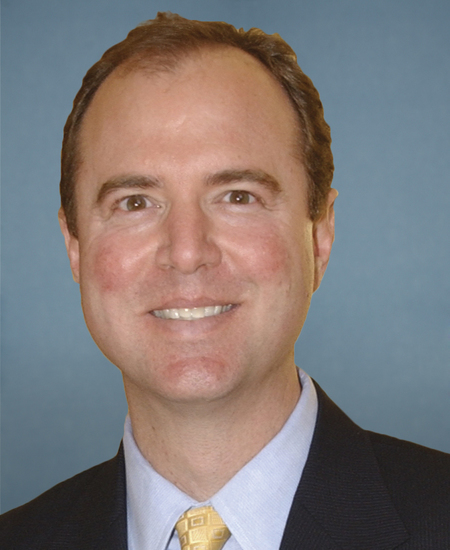
Adam B. Schiff
100% support rate
Top opponent
Alan Armstrong
0% support rate
Ranked legislators
10
5 support · 5 oppose
Key legislators

Who's moving forestry in United States

Legislators moving forestry in United States
Legislator Party Stance Support rate Votes
Adam B. Schiff
Adam B. Schiff Senate
D
Strong +
100% 3
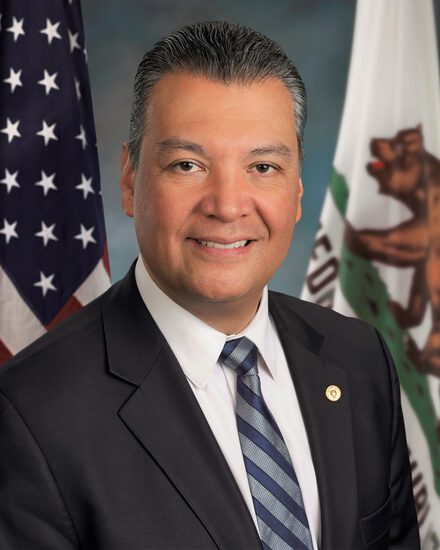
Alex Padilla
Alex Padilla Senate
D
Strong +
100% 3
Amy Klobuchar
Amy Klobuchar Senate
D
Strong +
100% 3
Andy Kim
Andy Kim Senate
D
Strong +
100% 3
Angela D. Alsobrooks
Angela D. Alsobrooks Senate
D
Strong +
100% 3
AA
Alan Armstrong Senate
R
Strong −
0% 3
Ashley Moody
Ashley Moody Senate
R
Strong −
0% 3
Bernie Moreno
Bernie Moreno Senate
R
Strong −
0% 3
Bill Cassidy
Bill Cassidy Senate
R
Strong −
0% 3
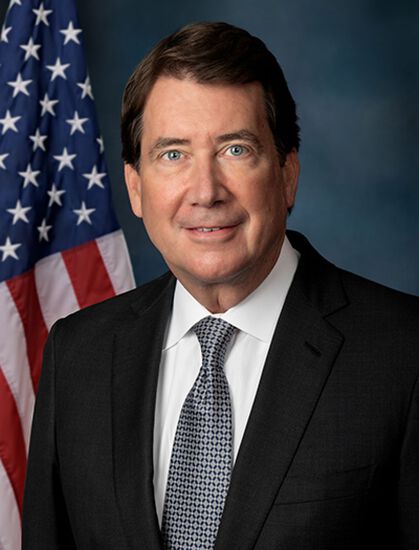
Bill Hagerty
Bill Hagerty Senate
R
Strong −
0% 3
Showing 11–20 of 31 bills

All environment bills

in committee · United States · House Jan 28, 2025

HR 745: Abundant American Resources Act of 2025

HR 745 requires federal agencies to conduct studies on the monetary value of minerals in specific areas. The Bureau of Land Management, Forest Service, and Bureau of Ocean Energy Management must each complete studies within three years to assess the value of oil, gas, and minerals in designated onshore and offshore areas, excluding national parks and certain monuments. These studies will cover areas like national monuments (excluding marine ones), areas under environmental protection, and lands withdrawn from mining or leasing. The bill does not authorize new mining or leasing but mandates data collection for future decision-making.
Sub-Topics Forestry Public Lands
in committee · United States · House Feb 5, 2025

HR 978: Superior National Forest Restoration Act of 2025

This bill rescinds a 2023 federal withdrawal of lands in Minnesota's Superior National Forest, allowing mining operations to resume. It requires the Secretary to complete environmental reviews for mine plans within 18 months (or 6 months for supplements) and reissues canceled mineral leases with 20-year terms plus automatic 10-year renewals. The bill directly affects mining companies operating in the forest, particularly those with canceled leases or rejected applications since 2021. It mandates issuance of new permits for surface use related to mining and prohibits judicial review of these reissued leases.
Sub-Topics Forestry
passed · United States · House Jul 23, 2026

HR 3937: Wabeno Economic Development Act

HR 3937, the Wabeno Economic Development Act, directly transfers approximately 14 acres of National Forest System land in Wisconsin from the federal government to Tony’s Wabeno Redi-Mix, LLC. The bill requires the Secretary of Agriculture to convey the land via quitclaim deed after an appraisal determines its market value, with the company paying that value plus all conveyance costs. It also includes provisions for disclosing hazardous material conditions but exempts the government from remediation responsibilities. Separately, the bill mandates a federal review of permitting processes for stone, sand, and gravel development on public lands, requiring a report on current timelines and recommendations for streamlining. This legislation primarily affects the specific company and federal land management practices, with no broader regulatory changes beyond the review requirement.
passed · United States · House Mar 19, 2026

HR 556: Protecting Access for Hunters and Anglers Act

HR 556, the Protecting Access for Hunters and Anglers Act, prevents federal agencies from banning lead ammunition or tackle on public lands and waters managed for hunting or fishing. It directly affects hunters and anglers using federal lands (like national wildlife refuges, public forests, and BLM lands) by blocking nationwide restrictions on lead products. The bill allows limited exceptions only for specific locations where wildlife decline is directly linked to lead use, and the restriction must align with state law or get approval from the state wildlife agency. This changes how federal land managers can regulate lead, requiring state coordination for any local restrictions.
in committee · United States · House Sep 3, 2025

HR 5085: To exempt Federal actions related to the construction of infill housing from the requirements of the National Environmental Policy Act of 1969, and for other purposes.

HR 5085 exempts federal agencies from conducting environmental reviews under the National Environmental Policy Act (NEPA) for infill housing projects that meet specific criteria. These projects must be located on previously developed urban sites (under 20 acres, with 75% urban adjacency), pass required environmental assessments, and avoid high-risk wildfire/flood zones per FEMA data. The bill also shortens FEMA’s natural hazard risk assessment update cycle from every 5 to every 3 years. This directly affects federal agencies approving housing developments and developers seeking streamlined project approvals.
in committee · United States · Senate Feb 6, 2025

S 449: Expediting Forest Restoration and Recovery Act of 2025

S 449, the Expediting Forest Restoration and Recovery Act of 2025, streamlines forest restoration projects by modifying environmental review rules for the U.S. Forest Service. It directs the Forest Service to use categorical exclusions (avoiding full environmental reviews) for hazardous fuel and insect/disease risk reduction projects in designated "insect and disease treatment areas," provided the areas are suitable for timber production or lack timber harvest prohibitions. The bill also requires states to prioritize wildfire/insect risk reduction in these areas and mandates annual public reporting on treated acreage. This primarily affects Forest Service operations and state agencies managing projects under the "Good Neighbor Authority" program, which allows states to use timber sale revenue for additional restoration work.
Sub-Topics Conservation Forestry
in committee · United States · House May 19, 2025

HR 3487: Shawnee TRAILS Act

The Shawnee TRAILS Act requires the Secretary of Agriculture to designate and maintain at least 20% of trails in Shawnee National Forest for recreational use by e-bikes and off-road vehicles (including ATVs and ORVs). It mandates that these designated trails be monitored to balance recreation access with natural resource protection, while ensuring at least one trail remains open year-round for such use. The bill also explicitly permits covered vehicles on paved roads within the forest. This policy directly affects recreational users of e-bikes and off-road vehicles in Shawnee National Forest, altering how trails are managed for their access.
in committee · United States · House Sep 16, 2025

HR 5393: Southern Arizona Protection Act

HR 5393, the Southern Arizona Protection Act, nullifies a 2000 presidential proclamation that established the Ironwood Forest National Monument in Arizona. It prohibits the future creation or expansion of national monuments within the specific area depicted in the 2000 Ironwood Forest National Monument map, except with explicit approval from Congress. The bill directly affects land management decisions in that Southern Arizona region by restricting the use of the Antiquities Act, which allows presidents to designate national monuments. This changes the process by requiring Congressional action instead of presidential authority for monument designations in the specified area.
Sub-Topics Forestry Public Lands
passed · United States · House May 20, 2026

HR 4684: Star-Spangled Summit Act of 2026

HR 4684, the Star-Spangled Summit Act of 2025, grants a 10-year special use permit for maintaining a U.S. flag at Kyhv Peak Lookout Point in Utah's Uinta National Forest. The permit is first issued to Robert S. Collins of Provo, Utah, or if he declines, to a qualified local resident or nonprofit with experience caring for flagpoles, prioritizing previous permit holders. Key provisions include exemption from land use fees, a process for renewal, and an explicit exemption from environmental review under the National Environmental Policy Act (NEPA). The bill directly affects only the specific location and the designated permit holder(s) at Kyhv Peak, with no broader policy changes.
Sub-Topics Forestry
passed · United States · House Apr 17, 2026

HR 6409: FENCES Act

The FENCES Act clarifies that states can avoid penalties under the Clean Air Act for failing to meet air quality standards if pollution originates from outside U.S. borders (regardless of human activity). It allows states to demonstrate to the EPA that nonattainment areas (for ozone or particulate matter) would meet standards but for pollution from outside their borders, exceptional events, or mobile sources beyond their control. States must renew this demonstration every five years to maintain the exemption from sanctions or fees. The bill does not change air quality standards but prevents penalties for pollution sources outside a state’s jurisdiction. It applies directly to states and local areas struggling with air quality due to external pollution sources.
Sub-Topics Air Quality Forestry
Showing 11 to 20 of 31 bills
Previous 1 2 3 4 Next