Issue · Environment

Environment

Every environment bill, vote, and legislator stance in United States, automatically classified by Maddy, our AI policy reader.

Total bills
2,003
119th Congress
Top supporter
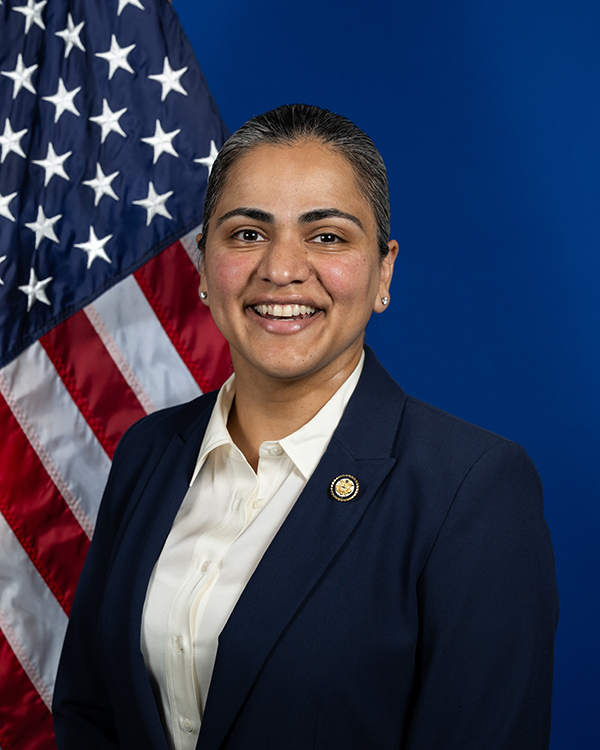
Aisha Wahab
100% support rate
Top opponent
Marsha Blackburn
11% support rate
Ranked legislators
10
5 support · 5 oppose
Key legislators

Who's moving environment in United States

Legislators moving environment in United States
Legislator Party Stance Support rate Decisive votes
Aisha Wahab
Aisha Wahab House · District 14
D
Strong +
100% 7
Everton Blair Jr.
Everton Blair Jr. House · District 13
D
Strong +
89% 9
Martin Heinrich
Martin Heinrich Senate
D
Strong +
84% 37
Adam B. Schiff
Adam B. Schiff Senate
D
Support
79% 53
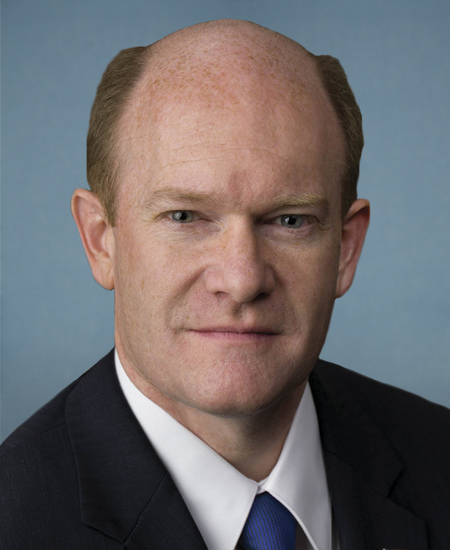
Christopher A. Coons
Christopher A. Coons Senate
D
Support
79% 52
Marsha Blackburn
Marsha Blackburn Senate
R
Strong −
11% 36
Ted Budd
Ted Budd Senate
R
Strong −
20% 40
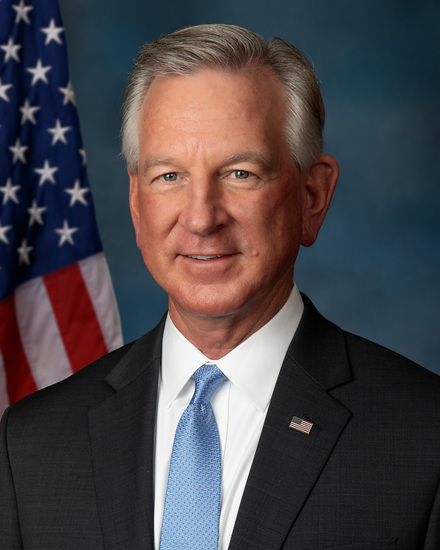
Tommy Tuberville
Tommy Tuberville Senate
R
Oppose
21% 53
Bill Cassidy
Bill Cassidy Senate
R
Oppose
22% 54
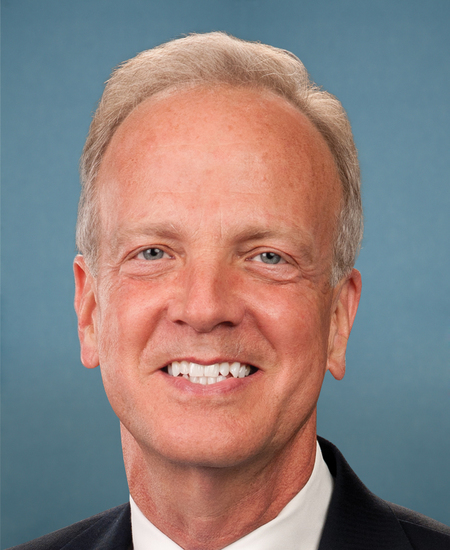
Jerry Moran
Jerry Moran Senate
R
Oppose
23% 53
Showing 1,081–1,090 of 2,003 bills

All environment bills

in committee · United States · House Jan 21, 2025

HR 588: Boundary Waters Wilderness Protection and Pollution Prevention Act

Boundary Waters Wilderness Protection and Pollution Prevention Act This bill protects and preserves approximately 225,504 acres of federal land and waters in a specified area in the Rainy River Watershed of Superior National Forest in Minnesota from certain mining, such as sulfide-ore copper mining. (The area is upstream from the Boundary Waters Canoe Area Wilderness.) Specifically, the bill withdraws those acres from  entry, appropriation, and disposal under the public land laws; location, entry, and patent under the mining laws; and operation of the mineral leasing, mineral materials, and geothermal leasing laws. However, the Forest Service is authorized to permit the removal of sand, granite, iron ore, and taconite from national forest system lands within such area if the removal is not detrimental to the water quality, air quality, and health of forest habitat within the Rainy River Watershed. Land or interest in land within such area that is acquired by the United States must be immediately withdrawn in accordance with this bill.
in committee · United States · House Jan 23, 2025

HR 662: Promoting Domestic Energy Production Act

HR 662 amends the tax code to change how oil and gas companies calculate taxable income related to intangible drilling and development costs. It allows companies to disregard certain depreciation and depletion expenses recorded on their financial statements when computing taxable income, effectively reducing their tax burden on these specific costs. The bill directly affects oil and gas producers who use intangible drilling costs in their operations. The changes apply to taxable years beginning after December 31, 2025. This is a tax code adjustment, not a direct policy change for energy production.
Sub-Topics Oil & Gas
in committee · United States · House Sep 4, 2025

HR 5134: Appalachian Trail Centennial Act

The Appalachian Trail Centennial Act designates the Appalachian Trail Conservancy as the official "Designated Operational Partner" for the Appalachian National Scenic Trail, establishing a formal framework for federal-volunteer partnerships in trail management. It creates processes for developing "land and resource protection priority lists" to guide federal funding decisions for trail conservation, while ensuring volunteer organizations can continue their crucial role in trail maintenance and stewardship. The bill also requires regular economic impact assessments for communities near the trail ("gateway communities") and sets protocols for determining visitor capacity on specific trail segments. This legislation codifies and enhances the longstanding partnership model that has successfully maintained the Appalachian Trail for over a century, with potential application to other national scenic and historic trails.
in committee · United States · House Jan 23, 2025

HR 626: Northwest Energy Security Act

HR 626, the Northwest Energy Security Act, requires federal agencies managing the Federal Columbia River Power System (FCRPS) to operate dams according to the 2020 environmental review (Supplemental Opinion). It allows limited amendments to this operating plan only if agencies determine changes are needed for public safety, grid reliability, or if outdated requirements are no longer valid. The bill explicitly prohibits any new restrictions on hydroelectric generation or navigation on the Snake River without specific new federal law. This directly affects the Secretaries of the Interior, Energy, and Army (through their agencies) in managing FCRPS operations.
in committee · United States · House Feb 11, 2025

HR 1217: Orphan Well Grant Flexibility Act of 2025

HR 1217, the Orphan Well Grant Flexibility Act of 2025, amends federal grant rules for cleaning up orphaned oil and gas wells by removing the requirement for states to measure methane emissions as a condition for receiving funding. It allows states to use estimated data from well plugging projects (without needing to collect new monitoring data) for reporting purposes. The bill also mandates a National Academies study to analyze how well-plugging activities affect local economies, housing, and water quality in communities where many wells are cleaned up, requiring input from all U.S. regions and agencies like HUD. This study must be completed within 18 months after the final grant is awarded, using existing federal funding.
in committee · United States · House Jan 8, 2026

HR 1110: Grazing for Wildfire Risk Reduction Act

HR 1110, the Grazing for Wildfire Risk Reduction Act, directs the USDA Forest Service to develop strategies using livestock grazing to reduce wildfire risks on federal lands. It specifically requires expanding grazing opportunities during droughts or disasters on vacant permits, promoting targeted grazing, issuing temporary permits for fuels reduction, and using grazing for postfire recovery. The bill affects livestock permit holders and federal land managers by modifying how existing grazing authorities are applied for wildfire risk mitigation. It focuses on concrete policy changes to utilize current grazing programs as a proactive fire prevention tool, without altering permanent grazing rules.
Sub-Topics Forestry Public Lands
in committee · United States · House Feb 1, 2025

HR 897: Aviation-Impacted Communities Act

HR 897, the Aviation-Impacted Communities Act, makes communities located near airports but outside the current FAA noise standard (65 DNL) eligible for noise mitigation funding and establishes a process for these communities to formally seek designation. It requires the FAA to partner with the National Academy of Sciences to study aviation impacts at major airports, develop a diagnostic tool for community assessments, and create community boards to represent residents. These boards can request assessments, collaborate on action plans to address noise or emissions, and access grants for solutions like sound insulation, air filtration, or flight path changes. The bill authorizes $750 million for noise mitigation funding over 10 years, targeting residential areas, schools, hospitals, and other facilities affected by aircraft noise and emissions.
Sub-Topics Airports Freight
in committee · United States · House Apr 28, 2026

HR 161: New Source Review Permitting Improvement Act

New Source Review Permitting Improvement Act This bill modifies terminology for purposes of the New Source Review (NSR) permitting program of the Environmental Protection Agency (EPA). In order for a change to a stationary source to be a modification (a change to a stationary source that increases the air pollutant emissions or results in new pollutants) for purposes of the NSR permitting program, the maximum hourly emission rate achievable by such source must be higher than the maximum hourly rate achievable by such source during any hour in the 10-year period preceding the change. A change at a stationary source is not considered to be a modification under the bill if it is designed to (1) reduce the amount of any air pollutant emitted; or (2) restore, maintain, or improve the reliability of operations at, or safety of, the source. However, such changes are not excepted if the EPA determines the increase in the maximum achievable hourly emission rate from such change would cause an adverse effect on human health or the environment. Construction , in connection with a major emitting facility (a type of stationary source), does not include a change at such a facility that does not result in a significant emissions increase or a significant net emissions increase. In relation to major emitting facilities in nonattainment areas, the terms modifications and modified do not include changes at such facilities that do not result in a significant emissions increase or a significant net emissions increase.
in committee · United States · House Apr 8, 2025

HR 2740: To modify the boundaries of the Talladega National Forest, and for other purposes.

HR 2740 modifies the boundaries of Talladega National Forest to include specific land shown on a map dated September 6, 2024. The bill authorizes the Secretary of Agriculture to acquire this land through voluntary means - such as purchase, donation, or exchange - using existing land acquisition authorities like the Weeks Law, and requires funds to be used without undue delay. The newly acquired land must be managed as part of the National Forest System under applicable laws and regulations. This change directly affects the forest's geographic scope and landowners within the designated boundary who may sell or donate property.
Sub-Topics Forestry
in committee · United States · Senate Dec 9, 2025

S 1777: Joshua Tree National Park Expansion Act

This bill expands Joshua Tree National Park by adding approximately 20,149 acres of land to its boundary, as shown on a specific map dated June 2024. It transfers management of this newly added land from the Bureau of Land Management to the National Park Service and allows the Secretary of the Interior to acquire the land through donation, purchase, exchange, or transfer (with state-owned land requiring donation or exchange only). The bill also renames the Cottonwood Visitor Center at the park as the Dianne Feinstein Visitor Center, updating all official references to reflect this change. These provisions directly affect park management, land ownership, and visitor facilities within the expanded area.
Showing 1,081 to 1,090 of 2,003 bills