Issue · Energy

Energy

Every energy bill, vote, and legislator stance in United States, automatically classified by Maddy, our AI policy reader.

Total bills
607
119th Congress
Top supporter
Martin Heinrich
75% support rate
Top opponent
Marsha Blackburn
26% support rate
Ranked legislators
10
5 support · 5 oppose
Key legislators

Who's moving energy in United States

Legislators moving energy in United States
Legislator Party Stance Support rate Decisive votes
Martin Heinrich
Martin Heinrich Senate
D
Support
75% 24
John W. Hickenlooper
John W. Hickenlooper Senate
D
Support
74% 38
Frederica S. Wilson
Frederica S. Wilson House · District 24
D
Support
74% 34
Brendan F. Boyle
Brendan F. Boyle House · District 2
D
Support
73% 49
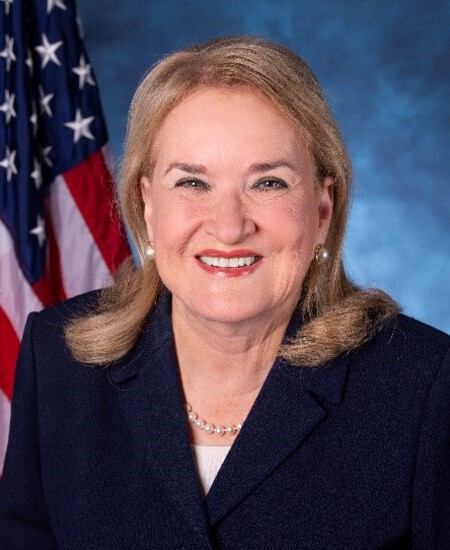
Sylvia R. Garcia
Sylvia R. Garcia House · District 29
D
Support
72% 47
Marsha Blackburn
Marsha Blackburn Senate
R
Oppose
26% 23
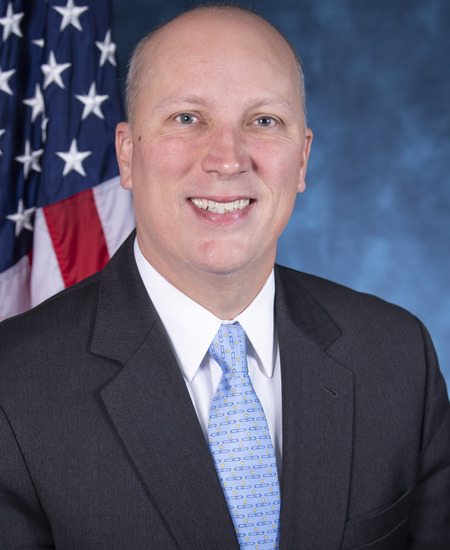
Chip Roy
Chip Roy House · District 21
R
Oppose
27% 52
Ted Budd
Ted Budd Senate
R
Oppose
27% 26
Gregory F. Murphy
Gregory F. Murphy House · District 3
R
Oppose
28% 46
Mike Johnson
Mike Johnson House · District 4
R
Oppose
28% 46
Showing 471–480 of 607 bills

All energy bills

in committee · United States · House Jan 23, 2025

HR 678: Expression of Interest Sensibility Act

This bill amends the Mineral Leasing Act to establish a fee for expressions of interest in oil and gas leasing. It requires the Secretary to charge a fee against the submitter of the first expression of interest if no bid is received at a lease sale, or against the successful bidder if a bid is accepted. Expressions of interest remain valid for at least five years unless a lease sale occurs for that land. The bill directly affects companies seeking to explore or develop oil and gas on federal lands by adding this fee mechanism to the leasing process.
Sub-Topics Oil & Gas
in committee · United States · Senate Sep 4, 2025

S 2713: American Energy Security Act of 2025

This bill creates federal grants to help community and municipal utilities repair or replace aging natural gas pipelines. It directly affects publicly owned gas systems by funding projects to reduce leaks, improve safety, and prepare for alternative energy transport. Grants can cover pipeline repairs, equipment purchases, and must prioritize job creation and benefits for disadvantaged communities. The bill authorizes $200 million annually (2026-2029) from general revenues, with limits on funding per utility and strict requirements for civil rights and environmental compliance.
in committee · United States · Senate Mar 27, 2025

S 1181: Tribal Energy Fairness Act of 2025

The Tribal Energy Fairness Act of 2025 modifies two federal energy programs to better support Indian Tribes. It adds $500,000 in funding for financial/technical assessments for tribal renewable energy and transmission projects seeking Department of Energy loan guarantees, and exempts Tribes from cost-sharing requirements for grants under the Infrastructure Investment and Jobs Act's grid resilience program. The bill specifically ensures Tribes can apply for these grants without needing to match federal funds and simplifies application plans for tribal-led projects. These changes directly affect Tribes seeking to develop energy infrastructure on or near tribal land or manage federal energy grants.
Sub-Topics Energy Resilience Renewable Energy Tags Tribal Nations
in committee · United States · House Jul 10, 2025

HR 4339: Renewable Energy for U.S. Territories Act

HR 4339, the Renewable Energy for U.S. Territories Act, establishes a grant program administered by the Secretary of Agriculture to fund renewable energy projects in U.S. territories (Puerto Rico, Guam, U.S. Virgin Islands, American Samoa, and the Northern Mariana Islands). Eligible non-profits can use grants to develop solar/wind systems, improve energy efficiency, build energy storage, create microgrids (localized power systems that operate independently from the main grid), or train residents in renewable energy. The bill prohibits using funds for fossil fuel or nuclear projects and requires the Department of Energy to provide technical assistance. It also mandates a GAO study on renewable energy potential in territories and annual reports on program outcomes.
in committee · United States · Senate Aug 1, 2025

SRES 364: A resolution recognizing the 20th anniversary of the Renewable Fuel Standard and its foundational role in strengthening American energy security, supporting rural communities, growing the United States economy, and improving environmental performance.

SRES 364 is a Senate resolution recognizing the 20th anniversary of the Renewable Fuel Standard (RFS), a policy established in 2005 and expanded in 2007. It acknowledges the RFS's role in supporting domestic renewable fuel production, strengthening energy security, aiding rural economies, and reducing transportation emissions through mandated renewable fuel targets. The resolution does not create new policy or funding but formally commends the RFS's achievements over two decades, including its contribution to U.S. economic output, job creation, and environmental performance.
Sub-Topics Renewable Energy Tags Rural Communities
in committee · United States · Senate Dec 17, 2025

S 3531: A bill to amend the Internal Revenue Code of 1986 to establish a tax credit for qualified combined heat and power system property, and for other purposes.

This bill creates a 10% federal tax credit for businesses that install qualified combined heat and power (CHP) systems - systems generating both electricity and useful thermal energy (like steam or heating) with at least 60% overall efficiency. It directly affects commercial entities, industrial facilities, and organizations building new CHP systems that meet specific efficiency standards (producing at least 20% thermal energy and 20% electrical power). The credit includes a 10% bonus for systems using domestically manufactured components or located in designated energy communities, and excludes systems exceeding 50 megawatts in capacity. The credit applies to systems placed in service after December 31, 2024, with detailed definitions for qualifying systems in the tax code.
Sub-Topics Tax Credits
in committee · United States · House Nov 7, 2025

HR 5952: Sustainable International Financial Institutions Act of 2025

This bill requires U.S. representatives at 12 major international financial institutions (including the World Bank and regional development banks) to vote against new fossil fuel projects and support clean energy transitions. It mandates that the U.S. reduce its financial contributions to any institution funding new fossil fuel capacity (e.g., oil, gas, coal projects), depositing the withheld funds into an escrow account until the institution stops such funding. The bill defines fossil fuel broadly to include unconventional sources like oil sands and shale gas, and prohibits U.S. foreign assistance for fossil fuel activities or related infrastructure. These changes directly affect how the U.S. engages with international financial institutions and their funding decisions.
in committee · United States · House Feb 10, 2025

HRES 124: Expressing continued support for the people of Puerto Rico, and urging the Federal Government to expedite the rebuilding of Puerto Rico's electrical grid.

HRES 124 is a non-binding House resolution expressing support for Puerto Rico and urging federal agencies to accelerate rebuilding the island's electrical grid. It highlights ongoing power outages, high costs, and slow progress since Hurricane Maria (2017), despite billions in allocated funding. The resolution calls on the President and federal agencies to take immediate action to address the grid crisis, which affects over 3 million residents and hinders economic growth. It does not provide new funding or create legal requirements, but serves as a symbolic call for prioritized federal action on this infrastructure need.
Sub-Topics Energy Resilience
in committee · United States · Senate Jun 26, 2025

S 2182: Community Solar Consumer Choice Act of 2025

The Community Solar Consumer Choice Act of 2025 establishes a federal program to expand access to community solar energy for low- and moderate-income individuals, businesses, nonprofits, and state/local governments, requiring most electric utilities to offer community solar programs with equitable access for all customers. It amends existing law to mandate that non-Tribal utilities provide community solar options allowing all ratepayers - including low-income households - to participate, while Tribal utilities may choose to adopt the program and leverage federal resources. The Department of Energy will provide technical assistance and use National Laboratories to collect data and develop affordable financing models for community solar projects. States must begin reviewing utility programs within one year of enactment and complete implementation within two years to meet these requirements.
Sub-Topics Solar
in committee · United States · House Mar 26, 2026

HR 2504: The U.S.-European Nuclear Energy Cooperation Act of 2025

This bill requires the U.S. Department of State to develop a strategy within 120 days to strengthen nuclear energy cooperation with Europe and reduce Russian influence in the nuclear sector. The strategy must assess reactor types, fuel cycles, and U.S. nuclear technology investments to decrease Russia’s market share in uranium, enrichment, and reactor supply by 2030. It authorizes $30 million annually (2025-2029) for U.S. engagement, including capacity building and countering Russian disinformation, targeting European countries with active nuclear programs. The bill directly affects U.S. foreign policy coordination, European energy security, and the competitiveness of U.S./European nuclear technology against Russian suppliers like Rosatom.
Sub-Topics Nuclear
Showing 471 to 480 of 607 bills
Previous 1 47 48 49 61 Next