Issue · Criminal Justice

Criminal Justice

Every criminal justice bill, vote, and legislator stance in United States, automatically classified by Maddy, our AI policy reader.

Total bills
1,286
119th Congress
Top supporter
Alan Armstrong
86% support rate
Top opponent
Amy Klobuchar
13% support rate
Ranked legislators
10
5 support · 5 oppose
Key legislators

Who's moving criminal justice in United States

Legislators moving criminal justice in United States
Legislator Party Stance Support rate Decisive votes
AA
Alan Armstrong Senate
R
Strong +
86% 28
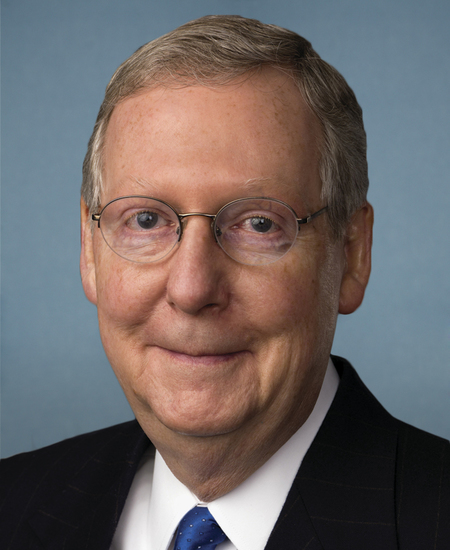
Mitch McConnell
Mitch McConnell Senate
R
Strong +
84% 31
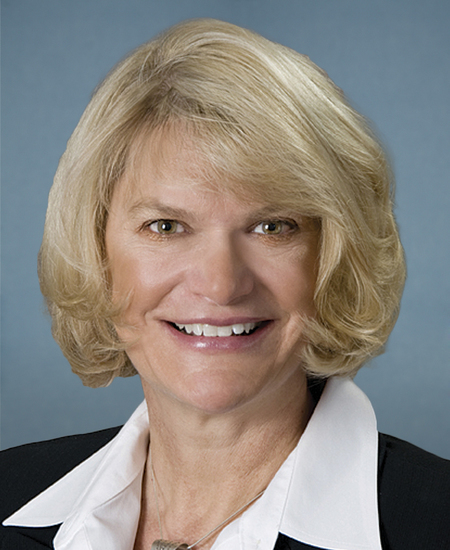
Cynthia M. Lummis
Cynthia M. Lummis Senate
R
Strong +
80% 30
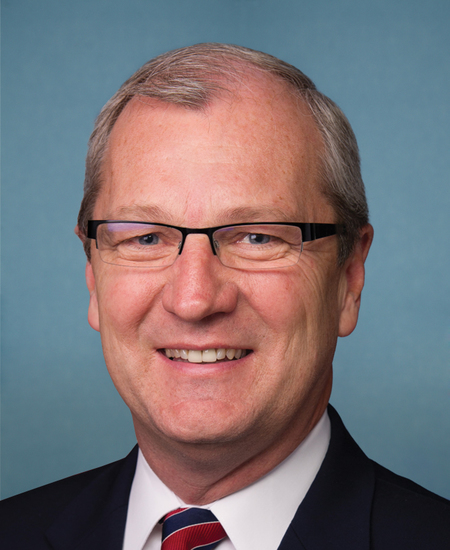
Kevin Cramer
Kevin Cramer Senate
R
Strong +
80% 30
Bernie Moreno
Bernie Moreno Senate
R
Support
77% 31
Amy Klobuchar
Amy Klobuchar Senate
D
Strong −
13% 31
Catherine Cortez Masto
Catherine Cortez Masto Senate
D
Strong −
13% 31
Margaret Wood Hassan
Margaret Wood Hassan Senate
D
Strong −
13% 31
Andy Kim
Andy Kim Senate
D
Strong −
16% 31
Angus S. King, Jr.
Angus S. King, Jr. Senate
I
Strong −
16% 31
Showing 1,111–1,120 of 1,286 bills

All criminal justice bills

passed · United States · House Nov 20, 2025

HR 5214: District of Columbia Cash Bail Reform Act of 2025

This bill revises Washington D.C. law to require cash bail for individuals charged with "public safety or order crimes" (such as failure to appear, obstruction, rioting, or certain burglaries/robberies not involving weapons) and mandates pretrial detention for those charged with "crime of violence" or "dangerous crime" (expanding definitions to include first-degree or weapon-enhanced offenses). It removes exceptions allowing release without cash bail for violent crimes and replaces existing pretrial release procedures with new criteria focusing on public safety risks. The changes apply to offenses committed 30 days after enactment and define key terms like "secured appearance bond" (requiring property or money as collateral). This modifies D.C.'s existing bail framework to increase detention or financial requirements for specific offenses.
in committee · United States · House May 23, 2025

HR 3602: Ending Qualified Immunity Act

This bill amends federal law (Section 1983) to eliminate qualified immunity as a defense in civil rights lawsuits. It would prevent government officials from avoiding liability by claiming they acted in good faith, believed their actions were lawful, or didn't know a right was clearly established at the time. This directly affects individuals who sue police, law enforcement, or other officials for violating constitutional rights. The change would apply to lawsuits filed after the bill's enactment, requiring officials to face liability under the original standard of Section 1983.
Sub-Topics Civil Rights Law Enforcement Policing Tags Civil Liberties
in committee · United States · House May 7, 2025

HR 3242: Punishing Illegal Immigrant Felons Act of 2025

This bill increases mandatory prison sentences for non-citizens convicted of certain crimes after entering the U.S. without authorization or being deported. It raises the minimum sentence from 2 to 5 years for those who improperly enter the U.S. and later commit a crime punishable by over one year in prison. For non-citizens previously deported who commit crimes, it increases the minimum sentence from 2 to 10 years and mandates at least 10 years for offenses including aggravated felonies, state/federal felonies, or crimes punishable by over one year. These changes apply to all non-citizens convicted under these circumstances, regardless of jurisdiction.
in committee · United States · Senate Dec 9, 2025

S 3398: Stop Sextortion Act

Stop Sextortion Act This bill criminalizes threats to distribute child sexual abuse material to intimidate, coerce, extort, or cause substantial emotional distress. This practice is commonly referred to as sextortion . The bill also increases criminal penalties for related offenses that involve the use of child sexual abuse material to intimidate, coerce, extort, or cause substantial emotional distress. Specifically, the bill establishes new federal criminal offenses for threatening to distribute child pornography or a visual depiction of a minor engaging in sexually explicit conduct with intent to intimidate, coerce, extort, or cause substantial emotional distress. An offense, or an attempt or conspiracy to commit the offense, is subject to criminal penalties. Additionally, the bill increases the maximum prison term for various offenses involving the sexual exploitation of children if those offenses involve the use of child pornography or a visual depiction of a minor engaged in sexually explicit conduct with intent to intimidate, coerce, extort, or cause substantial emotional distress.
in committee · United States · House Feb 13, 2026

HR 7569: Punishing Health Care Fraudsters Act

This bill increases penalties for healthcare fraud involving federal programs like Medicare and Medicaid. It raises maximum prison sentences under federal law from 10 to 25 years and 20 to 30 years, and increases fines from $100,000 to $250,000 for violations of the Social Security Act. The law directly affects individuals or entities committing fraud against federal health programs, such as billing for unnecessary services or stealing patient data. Key provisions amend existing criminal penalties and require the U.S. Sentencing Commission to update guidelines to better reflect the severity of these offenses.
in committee · United States · House Jun 17, 2025

HR 4034: Protect the Permian Act of 2025

This bill creates an FBI-led task force to investigate oil theft in the Permian Basin, requiring coordination with state, local, and tribal law enforcement agencies. It increases criminal penalties for oil theft, raising maximum sentences from 3 to 5 years for certain offenses and from 10 to 15 years for others under federal law. The bill also authorizes using federal crime-fighting funds to support oil theft prevention programs and hire dedicated investigators. These changes directly affect law enforcement agencies conducting investigations and individuals committing oil theft crimes involving pipelines, refineries, or related equipment.
in committee · United States · Senate Oct 30, 2025

S 3089: STOP Act

This bill (S 3089, the STOP Act) creates a new federal offense for barricading during arrest evasion. It defines "barricade" as blocking access to a location while refusing to comply with a law enforcement officer's orders during an arrest attempt. The law makes it illegal to barricade oneself in such situations or to assist others in doing so, with penalties of up to 3 years in prison for basic violations and up to 5 years if weapons are involved, serious harm occurs, or others are present. The bill directly affects individuals resisting arrest by blocking access to officers, not the general public.
passed · United States · Senate Jun 15, 2026

S 1890: Carla Walker Act

The Carla Walker Act establishes two competitive grant programs to fund forensic DNA analysis and equipment for public law enforcement and medical examiner offices. It provides $5 million annually (2025-2029) for eligible entities like state police, prosecutors' offices, medical examiners, and coroners to purchase equipment or conduct whole-genome sequencing (testing 100,000+ genetic markers) to solve cold cases or identify unknown remains when standard DNA databases fail. Grants cannot cover staffing, travel, or general equipment but require compliance with DOJ’s 2019 forensic genealogy policy and mandate detailed annual reports on case outcomes. The law aims to improve investigative capabilities through specialized forensic genetic genealogy while maintaining strict oversight and reporting requirements.
in committee · United States · House Oct 3, 2025

HR 5172: Strong Sentences for Safer D.C. Streets Act of 2025

This bill increases mandatory minimum prison sentences for several serious crimes in the District of Columbia. It mandates life imprisonment without parole for first-degree murder, raises the minimum sentence for rape to 25 years (30 years if the offender has a prior violent crime conviction), and sets new minimums of 10 years for second-degree murder, kidnapping, and burglary. Carjacking without a weapon now requires a minimum of 10 years, while armed carjacking requires 20 years. These changes apply to individuals charged on or after the bill's enactment date and affect all D.C. criminal cases involving these offenses.
in committee · United States · House May 13, 2025

HR 3366: EAGLE Act of 2025

The EAGLE Act of 2025 establishes a $10 million federal grant program to help small local law enforcement agencies (under 350 employees) pay for accredited certification. Agencies must apply demonstrating financial need and specify costs for accreditation fees, on-site assessments, or extension fees charged by recognized bodies like CALEA. Grant funds cover only direct costs related to achieving or maintaining accredited status, not general operations. The program requires the Attorney General to set up the grants within 90 days of the bill becoming law.
Sub-Topics Law Enforcement
Showing 1,111 to 1,120 of 1,286 bills