Issue · Budget & Taxes

Budget & Taxes (Tax Credits)

Every budget & taxes bill, vote, and legislator stance in United States, automatically classified by Maddy, our AI policy reader.

Total bills
381
119th Congress
Top supporter
Adam B. Schiff
100% support rate
Top opponent
Ashley Moody
0% support rate
Ranked legislators
10
5 support · 5 oppose
Key legislators

Who's moving tax credits in United States

Legislators moving tax credits in United States
Legislator Party Stance Support rate Decisive votes
Adam B. Schiff
Adam B. Schiff Senate
D
Strong +
100% 10
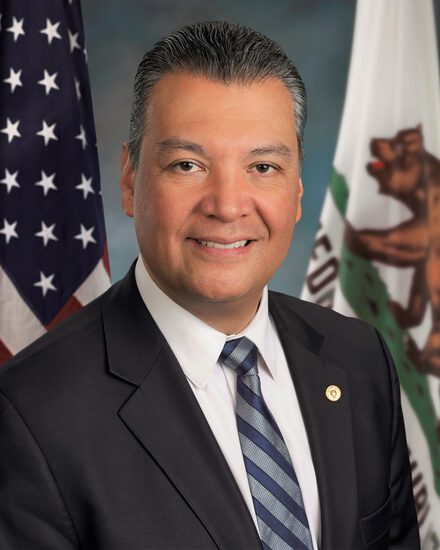
Alex Padilla
Alex Padilla Senate
D
Strong +
100% 10
Amy Klobuchar
Amy Klobuchar Senate
D
Strong +
100% 10
Andy Kim
Andy Kim Senate
D
Strong +
100% 10
Angela D. Alsobrooks
Angela D. Alsobrooks Senate
D
Strong +
100% 10
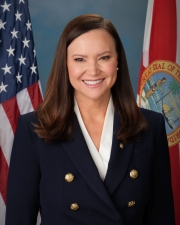
Ashley Moody
Ashley Moody Senate
R
Strong −
0% 10
Bernie Moreno
Bernie Moreno Senate
R
Strong −
0% 10
Bill Hagerty
Bill Hagerty Senate
R
Strong −
0% 10
Chuck Grassley
Chuck Grassley Senate
R
Strong −
0% 10
Cindy Hyde-Smith
Cindy Hyde-Smith Senate
R
Strong −
0% 10
Showing 351–360 of 381 bills

All budget & taxes bills

in committee · United States · House Apr 10, 2025

HR 2852: Expanded Student Saver’s Tax Credit Act

This bill expands eligibility for two tax credits: the Saver's Credit (for retirement savings) and the Saver's Match (for low-income workers). It removes the previous exclusion of full-time students, allowing any dependent student claimed by a parent on their tax return to qualify for these benefits. The change applies to contributions made after the bill's enactment and aligns with existing rules for dependents under Section 151 of the tax code. This directly affects dependent college students who were previously ineligible for these credits, potentially increasing their access to retirement savings incentives.
Sub-Topics Tax Credits
in committee · United States · Senate Jul 30, 2025

S 2538: Working Waterfront Disaster Mitigation Tax Credit Act

This bill creates a 30% tax credit for businesses investing in disaster mitigation projects on "working waterfront" properties, such as those used for commercial fishing, boating, or aquaculture. The credit covers up to $300,000 annually per business for eligible costs like floodproofing, shoreline stabilization, or warning systems designed to prevent damage from natural hazards. To qualify, a business must meet a gross receipts limit of $47 million annually and use the property for water-dependent activities with access to navigable waters. The credit applies to projects completed after 2025 and is limited to one claim per business every 10 years.
in committee · United States · House Apr 1, 2025

HR 2543: Tax-Free Pell Grant Act

This bill makes Federal Pell Grants tax-free for students, removing the tax burden on these federal education awards. It also expands the American Opportunity Tax Credit to cover eligible child care costs (for students enrolled in school) and up to $1,000 for computer equipment or internet access used for education. These changes apply to tax returns filed for 2025 and later. The bill directly affects students receiving Pell Grants and those claiming the American Opportunity Credit for educational expenses.
in committee · United States · Senate Apr 9, 2025

S 1372: Tax Cut for Workers Act of 2025

This bill, the Tax Cut for Workers Act of 2025, expands the Earned Income Credit (EIC) to make it more accessible and generous for low-income workers without children. It lowers the minimum age for the credit from 25 to 19 (with exceptions for students, former foster youth, and homeless youth), removes the maximum age limit, and increases the credit amount and income thresholds. The bill also adjusts these amounts for inflation and allows taxpayers to use their prior year’s earned income if it was higher, applying to taxable years starting after 2025. These changes extend the credit to U.S. territories like Puerto Rico and American Samoa without prior time limits.
in committee · United States · Senate Mar 19, 2026

S 1813: High-Quality Charter Schools Act

This bill creates a 75% federal tax credit for individuals donating cash or securities to approved nonprofit charter school organizations. The credit is limited to 10% of adjusted gross income or $5,000 annually, and applies only to organizations meeting strict criteria (like 501(c)(3) status, performance-based state selection, and annual audits). It requires these organizations to spend 100% of donations on charter school creation/expansion within five years and caps total annual tax credits at $5 billion, allocated by state. The credit is designed to incentivize private funding for charter schools while ensuring accountability through spending rules and oversight.
in committee · United States · House Aug 1, 2025

HR 4861: Working Waterfront Disaster Mitigation Tax Credit Act

The Working Waterfront Disaster Mitigation Tax Credit Act creates a 30% tax credit for businesses that invest in qualifying disaster mitigation projects on "working waterfront" property, such as commercial fishing facilities or boatyards. The credit covers up to $300,000 per year (adjusted for inflation after 2026) for projects designed to prevent flood, erosion, or storm damage using methods like structural elevation, floodproofing, or shoreline stabilization. To qualify, property must be used for water-dependent activities (e.g., commercial fishing or boating) with average annual gross receipts under $47 million and meet specific building code requirements for disaster resilience. The credit is limited to 10 years per business and applies to projects placed in service after 2025.
in committee · United States · Senate Jan 29, 2025

S 292: Educational Choice for Children Act of 2025

This bill establishes tax credits for individuals and corporations who contribute to scholarship granting organizations that provide educational scholarships for eligible students. The individual tax credit is limited to 10% of adjusted gross income or $5,000, while corporate credits are capped at 5% of taxable income. The bill defines "eligible students" as those from households with income not exceeding 300% of the area median gross income, and specifies that scholarships can cover tuition, materials, tutoring, and educational therapies. The bill includes a $10 billion annual cap on tax credits, with a first-come, first-served allocation system, and requires scholarship organizations to meet specific financial and operational standards.
in committee · United States · House Apr 17, 2025

HR 2932: CLEAR Skies Act

HR 2932, the CLEAR Skies Act, creates a tax credit for producing unleaded aviation gasoline in the U.S. The credit provides $1.25 per gallon in 2026, phasing down to $1.05 per gallon by 2030, for fuel that is lead-free, meets aviation standards, and is produced domestically. Producers must register with the IRS and certify compliance with these requirements to claim the credit. The bill also mandates a GAO study to analyze price differences between leaded and unleaded aviation fuel and whether the tax credit benefits end-users. This policy directly affects U.S. aviation fuel producers and aims to accelerate the transition from leaded to unleaded aviation fuel.
Sub-Topics Tax Credits Airports
in committee · United States · House Jun 12, 2025

HR 3964: Affordable Housing Equity Act of 2025

The Affordable Housing Equity Act of 2025 increases tax credits for developers building housing designated for extremely low-income households. It allows developers to claim a 150% increase in the eligible tax credit basis for units where at least 20% of residents earn 30% of local median income or 100% of the federal poverty line. This change directly affects housing developers and low-income renters in qualifying projects by making such developments more financially feasible. The policy modifies existing tax credit rules under Section 42 of the Internal Revenue Code, applying to projects receiving credit allocations after the bill's enactment or with obligations after December 31, 2025.
in committee · United States · House Apr 9, 2025

HR 2800: Boost the Middle Class Act

HR 2800, the "Boost the Middle Class Act," increases the Earned Income Tax Credit (EITC) for low-to-moderate income workers and families. It raises the base credit amounts (e.g., from $6,330 to $13,629 for single filers) and expands the income thresholds where benefits phase out (e.g., from $11,610 to $24,992 for single filers), while adjusting inflation calculations to 2025. These changes directly benefit millions of working households, particularly those with children, by increasing refundable tax credits. The bill takes effect for tax years beginning after December 31, 2025.
Sub-Topics Income Tax Tax Credits
Showing 351 to 360 of 381 bills
Previous 1 … 35 36 37 … 39 Next