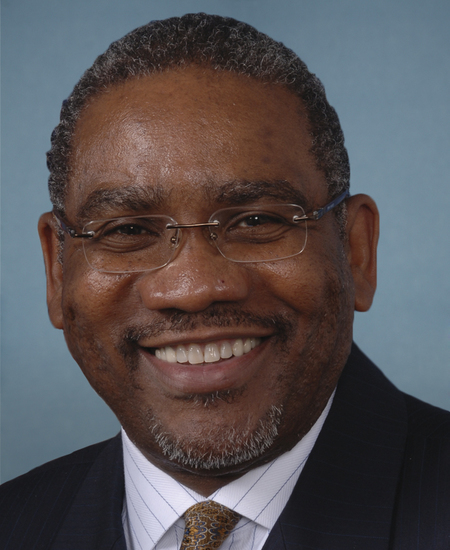
The Alaska National Guard Rural Community Revival Act requires the Secretary of the Army to create a strategy for improving National Guard facilities and readiness in remote areas, including the Arctic. This plan must include an audit of existing armories, a strategy to recruit and retain personnel in isolated regions, and a blueprint for modernizing facilities with upgrades for extreme weather and cyber resilience. The legislation also directs the Army to explore partnerships with private companies to share infrastructure and data while reporting progress to Congress.
The SAVES Act of 2025 establishes a five-year pilot program at the Department of Veterans Affairs (VA) to fund nonprofit organizations that provide service dogs to eligible veterans with specific disabilities, such as blindness, mobility issues, PTSD, or traumatic brain injury. Nonprofits must apply competitively, meet training and animal welfare standards (including ADA compliance), and provide service dogs at no cost to veterans, with the VA covering all program expenses. The VA will also provide ongoing veterinary insurance for the dogs, which continues even after the pilot ends. This program is funded with $10 million annually for five years, targeting veterans as defined by VA medical criteria.
The Save Our Pedestrians Act of 2026 requires states to use 5 percent of their federal highway safety funds to improve safety at high-risk pedestrian crossings. These crossings are defined as locations where local governments and state officials identify a high frequency of injuries or deaths involving pedestrians and vehicles. The law directly affects state transportation agencies and local communities by mandating that these specific funds be spent on projects designed to reduce pedestrian accidents. By setting aside a dedicated portion of the budget, the bill ensures that resources are targeted toward areas with the greatest need for safety improvements.
The Historic Preservation and Land Conservation Certainty Act provides a mechanism for partnerships to settle open tax disputes regarding donations of conservation easements by agreeing to limit their tax deductions and paying a calculated settlement amount. This process allows partners to resolve uncertainties about whether their claimed deductions were too large, effectively closing the issue and waiving the right to contest the settlement in court. Additionally, the bill clarifies tax rules for historic preservation by updating the definition of a "contributing building" to include structures identified as significant in National Register nominations, ensuring consistency in how these properties qualify for tax benefits.
The INVEST Act requires federal agencies to identify and sell their holdings of private company stocks and equity interests within eight years. These assets include common stock, partnership interests, and special shares that grant extra control or voting power. Any money received from these sales must be sent to the Treasury to help reduce the national debt. This law applies to all federal agencies that currently own or acquire such investments in for-profit businesses.
This resolution formally acknowledges the Black Women Best framework, a policy blueprint designed to address historical economic disparities faced by Black women in the United States. It highlights specific strategies such as implementing guaranteed income, expanding tax credits, improving healthcare access, removing police from schools, and prioritizing restorative justice. The measure serves as a non-binding statement of support rather than a law that directly changes federal programs or mandates new actions. By recognizing this framework, the House encourages policymakers to use it as a guide for creating more equitable legislation that centers the lived experiences of Black women.
This bill proposes to exempt qualified religious institutions from a federal excise tax on excess investment income. To qualify for this exemption, an institution must be established after 1776, have at least 25% of its governing body appointed by or required to be members of a recognized religious organization, and maintain a mission statement based on religious beliefs. The changes would take effect for tax years beginning after December 31, 2025, with the Treasury Department required to issue guidance by the end of 2026.
The Water Access Act appropriates $500 million for fiscal year 2027 to the Department of Health and Human Services. These funds are designated to support the Low-Income Household Water Assistance Program, which helps households with limited income pay for their water bills. The legislation directly affects low-income families by providing financial resources to ensure they can afford essential water services. This bill does not create new programs but rather allocates existing funding to continue assistance for eligible households.
The Magnets Value Chain Support Act of 2026 establishes a series of tax credits to encourage the production of magnets and related materials within the United States and to promote their use in critical industries. This legislation directly affects manufacturers of permanent magnets, magnet metals, and rare earth oxides, as well as companies that incorporate these materials into motors, generators, robotics, and defense systems. The bill creates three specific production credits that provide financial incentives based on the percentage of domestic content and the performance level of the magnets produced, while also offering a separate credit for businesses purchasing high-performance magnets made in the United States. To qualify for these benefits, producers must ensure that their materials are not sourced from prohibited foreign entities and must maintain certain domestic production capacities. The act includes strict reporting requirements to track supply chain origins and limits the credits to specific strategic applications, excluding low-power consumer goods.
This bill redesignates the existing National Parks and Public Land Legacy Restoration Fund as the America's Legacy Restoration Fund to address deferred maintenance on federal lands. It directs revenue from recreation fees and a portion of energy development income into the fund, which must be used primarily for repairing critical infrastructure like roads, trails, and buildings managed by agencies such as the National Park Service and the Forest Service. The legislation establishes strict rules requiring that most funds go toward non-transportation projects, mandates transparency through public dashboards tracking project status, and sets aside a small percentage for matching private donations. Additionally, the bill increases entrance fees for foreign visitors to ensure they contribute to the fund, while prohibiting the use of these specific funds for land acquisition or employee bonuses.