

Safe Environment from Countries Under Repression and Emergency Act or the SECURE Act This bill allows qualified nationals of a country that has or had a temporary protected status designation to obtain permanent resident status. Such an alien qualifies for permanent residence if the alien had temporary protected status, qualified for such status on certain dates, or was present in the United States due to having been granted deferred enforced departure status that extended past a certain date; has been continuously present in the United States for three years before applying for adjustment or before being removed after a certain date; is not inadmissible or deportable for certain reasons; and passes applicable background checks. The continuous presence requirement may be waived in certain instances. A spouse, domestic partner, child, or unmarried child of a qualifying alien may also obtain permanent resident status under the bill upon meeting certain requirements. An alien with a pending application shall receive work authorization and be eligible for travel authorization. An alien may not be removed if the alien (1) has a pending application, or (2) is prima facie eligible for permanent resident status under this bill and intends to apply. Information from applications may not be used or shared for immigration enforcement, with limited exceptions such as for identifying fraudulent claims. The Department of Homeland Security must report to Congress when terminating a country's temporary protected status designation with an explanation justifying the termination.
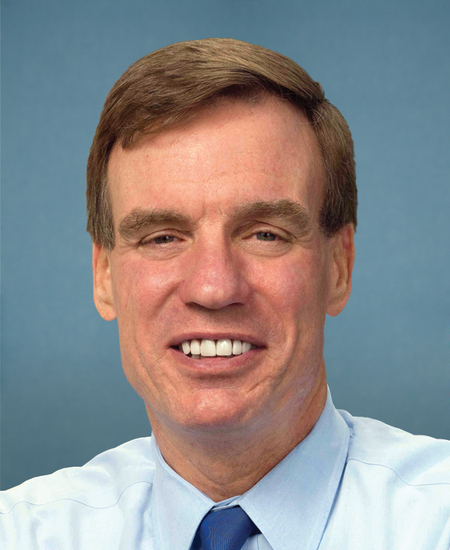
Sen. Mark R. Warner
Sponsored bills
Gun Violence Prevention Research Act of 2021 This bill authorizes the Centers for Disease Control and Prevention to conduct or support research on firearms safety or gun violence prevention.
Safeguarding Against Fraud, Exploitation, Threats, Extremism, and Consumer Harms Act or the SAFE TECH Act This bill limits federal liability protection that applies to a user or provider of an interactive computer service (e.g., a social media company) for claims related to content provided by third parties. Specifically, the bill applies the liability protection to claims arising from third-party speech rather than third-party information. Additionally, the liability protection shall not apply if a user or provider (1) accepts payment to make the speech available, or (2) creates or funds (in whole or in part) the speech. The bill changes legal procedures concerning the liability protection by (1) requiring a defendant in a lawsuit to raise the liability protection as an affirmative defense, and (2) placing the burden of proving that the defense applies on the defendant. Some courts have held that the current liability protection bars claims for civil penalties and injunctive relief. The bill expressly excludes from the liability protection requests for injunctive relief arising from a provider's failure to remove, restrict access to, or prevent dissemination of material likely to cause irreparable harm. However, the bill protects a provider from liability for actions taken to comply with such injunctions. Under current law, the liability protection does not apply to federal criminal law, intellectual property law, and other designated areas of law. The bill further specifies that the liability protection shall not apply to civil rights law; antitrust law; stalking, harassment, or intimidation laws; international human rights law; and civil actions for wrongful death.
This bill provides funds for assistance to homeowners to prevent mortgage defaults, foreclosures, and displacements of individuals and families experiencing financial hardship after January 21, 2020. The Department of the Treasury must disburse the funds to state housing finance agencies, territories, and Indian tribes for the provision of such assistance.
States Achieve Medicaid Expansion Act of 2021 or the SAME Act of 2021 This bill provides an enhanced federal matching rate to every state that expands Medicaid coverage for individuals who are newly eligible under the Patient Protection and Affordable Care Act, regardless of when such expansion takes place. Under current law, the enhanced Federal Medical Assistance Percentage (FMAP) is equivalent to 100% in 2014 through 2016, 95% in 2017, 94% in 2018, 93% in 2019, and 90% thereafter. The bill retains this enhanced FMAP, but bases it on a term of years rather than on specific dates. The bill applies retroactively.
Real Economic Support That Acknowledges Unique Restaurant Assistance Needed To Survive Act of 2021 or the RESTAURANTS Act of 2021 This bill temporarily establishes and provides funding for the Restaurant Revitalization Fund, from which the Department of the Treasury shall make grants to eligible food and beverage purveyors to cover specified costs such as payroll, operational expenses, and paid sick leave. For the grant program's initial period, Treasury must (1) prioritize awarding grants to marginalized and underrepresented communities, and (2) only award grants to eligible food and beverage purveyors with annual revenues of less than $1.5 million in 2019. For tax purposes, grant amounts are excluded from the recipient's gross income. An entity that received a loan under the Paycheck Protection Program established to support small businesses in response to COVID-19 (i.e., coronavirus disease 2019) may not apply for or use a restaurant revitalization grant for the same expenses for which the entity received the paycheck protection loan. Further, a grant applicant may request an additional amount to cover the cost of providing 10 days of paid sick leave to its employees. Treasury must report a list of grant recipients with the amount each recipient received, as well as demographics and other specified information.
Competition and Antitrust Law Enforcement Reform Act of 2021 This bill revises antitrust laws applicable to mergers and anticompetitive conduct. Specifically, the bill applies a stricter standard for permissible mergers by prohibiting mergers that (1) create an appreciable risk of materially lessening competition, or (2) unfairly lower the prices of goods or wages because of a lack of competition among buyers or employers (i.e., a monopsony). Under current law, mergers that substantially lessen competition are prohibited. Additionally, for some large mergers or mergers that concentrate markets beyond a certain threshold, the bill shifts the burden of proof to the merging parties to prove that the merger does not violate the law. The bill also prohibits exclusionary conduct that presents an appreciable risk of harming competition. The bill also establishes monetary penalties for violations, requires annual reporting for certain mergers and acquisitions, establishes within the Federal Trade Commission (FTC) the Office of the Competition Advocate, and sets forth whistleblower protections. The Government Accountability Office must report on (1) the success of merger remedies required by the Department of Justice or the FTC in recent consent decrees; and (2) the impact of mergers and acquisitions on wages, employment, innovation, and new business formation.
Paycheck Fairness Act This bill addresses wage discrimination on the basis of sex. Specifically, it (1) limits an employer's defense that a pay differential is based on a factor other than sex to only bona fide job-related factors in wage discrimination claims, (2) enhances nonretaliation prohibitions, (3) makes it unlawful to require an employee to sign a contract or waiver prohibiting the employee from disclosing information about the employee's wages, and (4) increases civil penalties for violations of equal pay provisions. Additionally, the Equal Employment Opportunity Commission (EEOC) and the Office of Federal Contract Compliance Programs must train EEOC employees and other affected parties on wage discrimination. The bill directs the Department of Labor to (1) establish and carry out a grant program for negotiation skills training for girls and women, (2) conduct studies to eliminate pay disparities between men and women, and (3) make available information on wage discrimination to assist the public in understanding and addressing such discrimination. The bill also establishes the Secretary of Labor's National Award for Pay Equity in the Workplace for an employer who has made a substantial effort to eliminate pay disparities between men and women. Finally, the bill requires the EEOC to issue regulations for collecting from employers compensation and other employment data according to the sex, race, and national origin of employees for use in enforcing laws prohibiting pay discrimination.
Access Technology Affordability Act of 2021 This bill allows a refundable tax credit equal to the amounts paid for qualified access technology for use by a blind individual who is the taxpayer, the taxpayer's spouse, or a dependent of the taxpayer. Qualified access technology is hardware, software, or other information technology with the primary function of converting or adapting information that is visually represented into forms or formats useable by blind individuals. The credit is limited to (1) costs that are not compensated by insurance or otherwise, and (2) an aggregate amount of $2,000 per blind individual in any period of three consecutive taxable years. The credit must be adjusted for inflation after 2022 and terminates after 2026.
Supporting Eating Disorders Recovery Through Vital Expansion Act or the SERVE Act This bill provides for inpatient and outpatient treatment of eating disorders under TRICARE for dependents of members of the uniformed services. Dependents are eligible for such care regardless of their age, except with respect to residential service. The bill also requires the Department of Defense (DOD) and the Department of Homeland Security (with respect to the Coast Guard) to identify, treat, and rehabilitate members of the armed forces who have an eating disorder. Finally, DOD and the Department of Veterans Affairs must jointly develop, publish, and disseminate clinical practice criteria and guidelines on the identification and treatment of eating disorders.