

Maddy summaryThe China Financial Threat Mitigation Act of 2024 (S 5347) mandates a one-year study by the Treasury Secretary, with input from key financial regulators, to assess U.S. financial exposure to China's financial sector. The study must evaluate how China's financial reforms impact U.S. and global financial systems, analyze associated risks to U.S. financial stability, and recommend actions for U.S. government protection. It requires a detailed report to Congress, relevant committees, and international bodies within one year of enactment, with a public version published online. The bill does not create new regulations or funding but focuses solely on gathering analysis to inform future policy decisions. This procedural measure directly affects U.S. financial oversight agencies and international financial cooperation efforts.
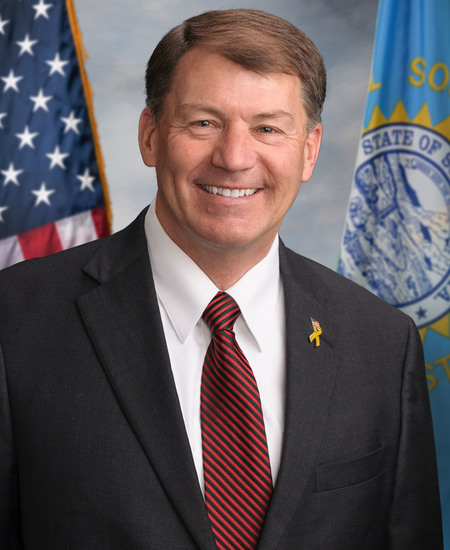
Sen. Mike Rounds
Sponsored bills
Maddy summaryS 5303, the Stand with Israel Act, prohibits U.S. federal funds from being used to support the United Nations or its entities if those entities restrict Israel's full participation as a member state. Specifically, it blocks funding for UN contributions when the UN expels, downgrades, or suspends Israel's membership or limits its ability to engage equally with other member states. This bill directly affects how U.S. taxpayer money is allocated to the UN, requiring the Department of State and other agencies to withhold funds under these circumstances. The law amends the United Nations Participation Act of 1945 to enforce this restriction.
Maddy summaryThe Federal Cyber Workforce Training Act of 2024 establishes a Federal Institute to provide standardized training for federal employees in cybersecurity roles and human resources staff managing cybersecurity personnel. The Institute will develop modular, hands-on training based on the NIST Cybersecurity Workforce Framework (NICE), focusing on new hires, mid-career transitions, and HR functions, with a badging system to verify skills. Within 180 days of enactment, the National Cyber Director must submit a plan to Congress detailing the Institute's structure, curriculum, and how it will leverage existing resources without requiring new funding. This bill directly affects federal agencies by mandating a coordinated training program for their cybersecurity workforce.
Maddy summaryThis bill requires the National Institutes of Health (NIH) Director to submit an annual budget estimate for Alzheimer's research initiatives to the President for transmission to Congress, starting in fiscal year 2024. It specifically mandates including estimates of personnel needs alongside funding projections, based on recommendations from the National Alzheimer's Project Act. The law directly affects NIH operations by establishing a formal, recurring reporting requirement for Alzheimer's-related funding. This is not a new funding measure but a procedural change to improve transparency and accountability in budget planning for these initiatives. The bill amends Section 2 of the National Alzheimer's Project Act to add this annual reporting obligation.
Maddy summaryThe NAPA Reauthorization Act (S 133) extends the National Alzheimer’s Project through 2035, replacing previous 2025 deadlines. It requires annual progress evaluations on research, risk reduction, and health equity, with new provisions to promote healthy aging, address Alzheimer’s risk factors, and expand focus to underserved groups - including people with Down syndrome and historically high-risk populations. The bill mandates updated advisory committee membership, including individuals with Alzheimer’s diagnoses and representatives from underserved communities. These changes directly affect federal health agencies, researchers, and healthcare planning efforts focused on Alzheimer’s prevention and care.
Maddy summarySRES 888 is a ceremonial Senate resolution honoring the late James Ralph Sasser, a former U.S. Senator from Tennessee (served 1976-1993). It formally expresses the Senate’s "profound sorrow" over his death and requests the Secretary of the Senate transmit the resolution to his family. The resolution has no policy impact or direct effect on any individuals or entities - it is solely a commemorative gesture. As a procedural resolution, it does not create new laws or alter existing policies.
Maddy summaryThis bill awards a Congressional Gold Medal to the United States Army Dustoff crews who served during the Vietnam War, recognizing their life-saving medical evacuations. The medal, to be designed by the Secretary of the Treasury in consultation with the Secretary of Defense, will be displayed at the U.S. Army Medical Department Museum. The bill honors the approximately 900,000 wounded personnel these crews transported over the course of the Vietnam War, including U.S., South Vietnamese, and allied forces, who relied on their rapid medical evacuation services.
Maddy summaryThis resolution (SRES 887) is a symbolic Senate expression of support for designating October 7-12, 2024, as "National 4-H Week." It does not create new laws or funding but formally recognizes the 4-H youth development program, which serves nearly 6 million young people nationwide through community-based projects in health, science, and leadership. The resolution highlights 4-H’s role in fostering youth leadership and its partnership with land-grant universities and the USDA. It directly affects the 4-H organization, its 500,000 volunteers, and the youth members participating in the program.
Maddy summaryThis Senate resolution (SRES 890) condemns Hamas for the October 7, 2023, attack on Israel that killed approximately 1,200 people - including 40 U.S. citizens - and took hostages. It supports three specific outcomes: ensuring Israel's long-term security, preventing Hamas from regaining power in the region, and securing the safe return of U.S. hostages held in Gaza. As a non-binding resolution, it does not create new laws or policies but expresses the Senate's position. The resolution was introduced by 45 Senators and passed unanimously on September 25, 2024.
Maddy summaryThis bill authorizes a federal feasibility study to assess building a water supply project from the Missouri River for the Western Dakota Regional Water System, which serves municipal, rural, and industrial users in western South Dakota. The study, to be conducted by the Interior Secretary with the Western Dakota Water Development District, must follow federal guidelines and is limited to 50% federal funding (up to $10 million total). The study must be completed within 10 years of the bill's enactment, with no guarantee the project will proceed.