Maddy summaryThe Fence Line Fairness Act of 2024 establishes state-level mediation committees to resolve boundary disputes between National Forest System land and private land. It directly affects private landowners (specifically active farmers and ranchers) who have disagreements with the Forest Service over land boundaries. The bill requires the Secretary of Agriculture to notify landowners of disputes and refer them to a mediation committee within 60 days, which must hold private hearings, provide resolution recommendations, and submit a report to federal and state officials and congressional committees within 180 days. The committees are composed of six farmers/ranchers appointed by federal and state agencies, serving five-year terms.
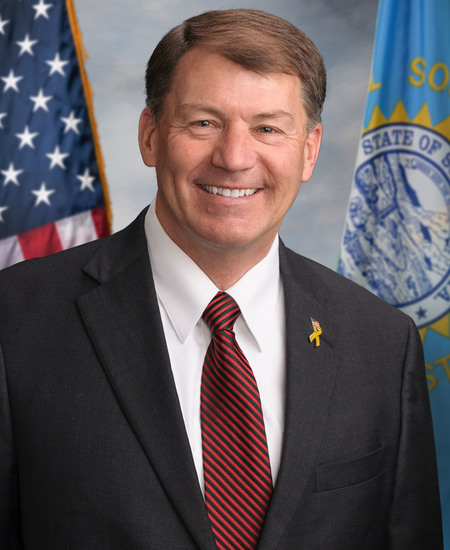
Sen. Mike Rounds
Sponsored bills
Maddy summarySRES 925 is a Senate resolution honoring the late Senator Fred R. Harris of Oklahoma, who died on November 23, 2024, at age 94. The resolution expresses the Senate’s sorrow at his passing, requests that his family be notified, and directs the Senate to adjourn in his memory. It does not create new laws or affect any policies - it is a formal expression of respect for a former senator’s legacy.
Maddy summaryThis bill amends federal firearm transfer rules to allow sellers to send required notification information to local law enforcement via verified electronic means, instead of only using certified mail. It directly affects firearm sellers (like dealers) who must notify the chief law enforcement officer in the buyer's residence before transferring a firearm. The key provision adds "verified electronic notification" as an option, requiring digital communication sent to a designated address with proof of delivery and address verification. This replaces the sole prior requirement of certified mail (return receipt requested) with a new electronic alternative that meets specific verification standards. The change updates existing Section 922(c) of Title 18, U.S. Code, for firearm transfer notifications.
Maddy summarySRES 909 is a non-binding Senate resolution designating November 21, 2024, as "National Rural Health Day." It formally recognizes the contributions of rural health care providers and the unique challenges faced by rural communities, including hospital closures and access barriers. The resolution celebrates rural health care workers and the millions they serve, while expressing the Senate's commitment to improving rural health care accessibility and affordability. This is a ceremonial designation with no new policy or funding changes.
Maddy summaryS 4305, the DHS Better Ballistic Body Armor Act, requires the Department of Homeland Security to procure body armor specifically designed for female agents and officers. The bill mandates that this armor must fit properly (verified via ASTM standards), include technology preventing bullets from skipping into vulnerable areas, and pass gender-specific testing by the National Institute of Justice (NIJ). It directly affects female DHS personnel by ensuring their body armor meets enhanced fit and protection standards. The law also requires annual reports from DHS components tracking compliance and usage, with a final report to Congress within three years of enactment.
Maddy summaryThis bill (S 3267) officially renames a United States Postal Service facility at 410 Dakota Avenue South in Huron, South Dakota, as the "First Lieutenant Thomas Michael Martin Post Office Building." It makes this new name the official designation for the building in all federal references, including laws, maps, and documents. The bill has no policy impact - it is purely a ceremonial naming resolution with no new requirements or funding. It directly affects the building's official identification but does not change services, operations, or regulations.
Maddy summaryThis bill (S. 2143) renames a U.S. Postal Service facility at 320 South 2nd Avenue in Sioux Falls, South Dakota, as the "Staff Sergeant Robb Lura Rolfing Post Office Building." It honors Staff Sergeant Robb Lura Rolfing, a U.S. Army veteran, by updating all official references to the building. The bill has no policy impact - it solely changes the building’s official name and requires federal documents to use the new designation.
Maddy summaryThis is a ceremonial Senate resolution (SRES 902) honoring the late Senator Timothy Peter Johnson of South Dakota, who died after a long career in public service. The resolution expresses the Senate's "profound sorrow" over his death, directs the Secretary of the Senate to share the resolution with the House and send a copy to his family, and calls for the Senate to adjourn in his memory. It does not create new laws or affect any policies, as it is purely a formal expression of respect for a former senator. The resolution commemorates his decades of service, including his time as Chairman of the Banking Committee and his return to work after a serious health setback.
Maddy summaryThis bill, S 5384, abolishes the U.S. Department of Education and transfers all its federal education programs to other federal departments (e.g., Health and Human Services for special education, Treasury for student loans). It directly affects all 50 states, the District of Columbia, Puerto Rico, and U.S. territories by shifting control of education funding from the federal government to state-level administration. Key mechanisms include creating two new Treasury-managed block grant programs: one for K-12 education (funded based on student enrollment) and one for postsecondary education, requiring states to submit data and undergo audits. States must also comply with federal civil rights laws for these programs, with the Justice Department enforcing compliance.
Maddy summarySRES 897 is a Senate resolution designating November 2024 as National Native American Heritage Month and recognizing the Friday after Thanksgiving as Native American Heritage Day, as established by the 2009 Native American Heritage Day Act. It formally acknowledges the contributions of Native Americans to U.S. history, culture, and society, including their roles in agriculture, environmental stewardship, military service, and the influence of Indigenous governance concepts on the U.S. Constitution. The resolution encourages the public to observe these designations through educational programs and activities. As a ceremonial resolution, it does not create new laws or directly affect any individuals or communities.