Maddy summaryThe Critical Minerals Investment Tax Modernization Act of 2025 modifies the federal tax code to allow mining companies extracting specific critical minerals - including the 15 lanthanide elements and scandium - to claim a 22% tax deduction (known as percentage depletion) on their mining operations. This deduction reduces taxable income for qualifying companies, directly affecting firms focused on these minerals used in technologies like electronics and clean energy infrastructure. The change applies to tax years beginning after the bill's enactment date. The legislation targets a narrow tax provision without altering broader tax policy or funding mechanisms.
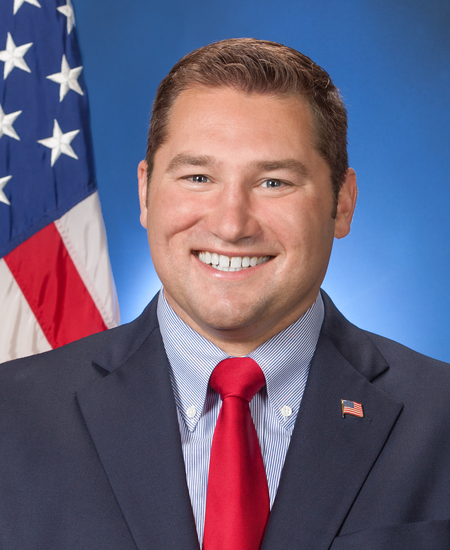
Rep. Guy Reschenthaler
Sponsored bills
Maddy summaryHR 1919, the "Anti-CBDC Surveillance State Act," prohibits the Federal Reserve from developing, testing, or issuing any central bank digital currency (CBDC) or similar digital assets. It specifically bans the Fed from offering direct financial products to individuals, maintaining individual accounts, or issuing CBDCs directly or indirectly through intermediaries like banks. The bill also blocks the Fed from using any digital asset for monetary policy and clarifies that physical currency's privacy protections remain intact. This policy directly affects the Federal Reserve System's ability to create or manage digital monetary tools.
Maddy summaryHR 4415 requires the U.S. Department of Energy to relocate the Office of Fossil Energy and Carbon Management from Washington, DC, to Pittsburgh, Pennsylvania, by December 31, 2026. The bill mandates a report to Congress within one year of the move detailing employee retention issues, the relocation's role in staff departures, and impacts on union negotiations regarding employment conditions. This directly affects the office's current workforce and operations, shifting their primary location while requiring accountability for workforce changes. The legislation focuses on the physical relocation and subsequent reporting requirements, with no additional policy changes beyond the office's geographic shift.
Maddy summaryHR 4382 authorizes the U.S. Mint to produce commemorative coins for the 2028 Los Angeles Olympics/Paralympics and 2034 Salt Lake City Winter Olympics/Paralympics. It specifies gold, silver, and half-dollar coin designs with defined mintage limits (e.g., up to 100,000 $5 gold coins for each event), all bearing inscriptions like "2028" or "2034" and standard coin features. A surcharge ($5-$50 per coin) is added to sales, with all funds directed to the respective Olympic committees to support event hosting and legacy programs like youth sports. The bill ensures no net cost to the government by requiring surcharge revenues to cover all design, production, and marketing expenses before funds are disbursed.
Maddy summaryHRES 571 is a symbolic resolution passed by the U.S. House of Representatives to commemorate the one-year anniversary of the July 13, 2024, attempted assassination of President Donald J. Trump in Butler, Pennsylvania. It condemns two assassination attempts against the President (in Butler and West Palm Beach), honors victims Corey D. Comperatore (who died shielding his family), David Dutch, and James Copenhaver (who were critically injured), and expresses gratitude to first responders. The resolution also condemns incitement of violence against political officials and calls for unity against political violence. As a non-binding resolution, it does not create new laws or policies but formally states the House’s position on these events.
Maddy summaryHR 4199, the Modernize the Au Pair Program Act of 2025, updates federal regulations for the au pair program to improve affordability and flexibility for host families. The bill requires the Department of State to propose new rules within 90 days, including a revised stipend formula reflecting room, board, and childcare costs without making the program prohibitively expensive. It also mandates greater program flexibility to accommodate military families, first responders, single parents, and shift workers with non-traditional schedules. The bill explicitly prohibits states from regulating the program, ensuring all rules remain uniform under federal law as intended by Congress. This directly affects American host families seeking affordable childcare and au pairs participating in the cultural exchange program.
Maddy summaryHR 3946, the FIGHT Act of 2025, amends the Animal Welfare Act to specifically prohibit gambling on animal fighting events and restrict the interstate transport of roosters used in such ventures. It defines "rooster" as male chickens over six months old and makes it unlawful to sponsor, exhibit, attend (for those under 16), or gamble on animal fighting events - whether in-person or broadcast. The bill creates a civil enforcement mechanism allowing any person to file a lawsuit to stop violations after providing 60 days' notice to authorities, with potential fines up to $5,000 per violation. It also establishes seizure of property used to facilitate violations and clarifies that state laws on animal fighting remain in effect unless directly conflicting with federal provisions.
Maddy summaryHR 649, the Whole Milk for Healthy Kids Act of 2025, amends the National School Lunch Act to allow schools participating in the program to offer students both organic and non-organic whole milk, in addition to reduced-fat, low-fat, and fat-free options. Key provisions include clarifying that milk fat in whole milk should not count toward saturated fat limits for meal compliance, prohibiting schools from purchasing milk from Chinese state-owned enterprises, and ensuring schools cannot be barred from offering the full range of milk types listed. The bill directly affects public and private schools serving the National School Lunch Program by expanding their milk options for students. It focuses on concrete policy changes to dietary offerings and sourcing restrictions within the school nutrition program.
Maddy summaryThe Carla Walker Act (HR 3591) creates federal grants to fund forensic DNA analysis using genetic genealogy databases for law enforcement. It authorizes $5 million annually (2024-2028) for two programs: (1) grants to eligible entities like police departments and medical examiners for whole genome sequencing (100,000+ markers) to solve unsolved cases or identify human remains when standard DNA databases fail, and (2) grants to purchase forensic equipment for genetic genealogy analysis. Funds cannot cover staffing or travel, with only 10% allowed for administrative costs. Recipients must report on case outcomes, testing methods, and results, including how often identifications led to arrests. The bill directly affects state/local law enforcement, forensic labs, and medical examiner offices handling unresolved criminal cases.
Maddy summaryHCONRES 30 is a symbolic resolution expressing congressional support for local law enforcement officers. It does not create new laws or policies but formally recognizes their work through four non-binding actions: thanking officers and families for service, honoring those who died in the line of duty, and encouraging community-law enforcement collaboration. The resolution directly addresses Congress's acknowledgment of law enforcement efforts, not any specific group affected by a policy change. It has no legal effect or funding implications, serving solely as a statement of appreciation. This is a procedural resolution, not a legislative bill with concrete policy changes.