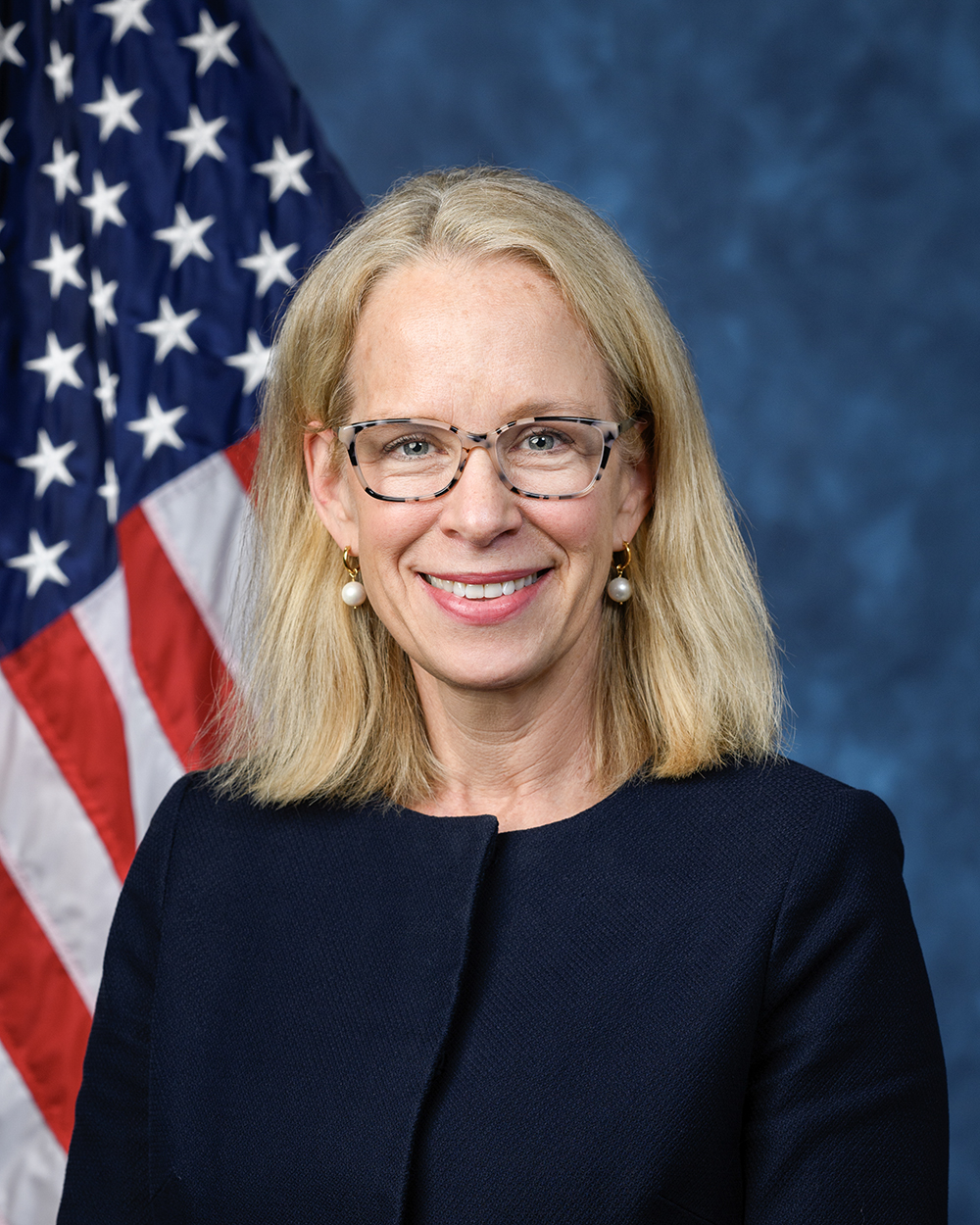
Photo of Kelly Morrison
D United States House · District 3 · Minnesota On the 2026 ballot

Rep. Kelly Morrison

Compare
Total votes
669
all sessions
Attendance
100%
2 missed
Higher than 89% of chamber peers
With party
98%
of cast votes
Higher than 91% of chamber peers
Bipartisan score
1%
crosses aisle rarely
Lower than 92% of chamber peers
Sponsored
266
bills & resolutions
Near the chamber average
Committees
6
assignments
266 bills and resolutions

Sponsored bills

Total
266
Primary
17
Co-sponsor
249
This page
266
matching current filters
Co-sponsor HR 10353
In committee · Texas House · Co-sponsor
SBIC Reporting Modernization Act of 2026

Maddy summaryThe SBIC Reporting Modernization Act of 2026 requires the Small Business Investment Company (SBIC) Administrator to publish a quarterly report on the performance of licensed small business investment companies. This mandate begins 90 days after the bill is enacted and applies to all SBICs operating under the Small Business Investment Act of 1958. The reports must include specific data points such as the number of applicants approved for final licensing, the dollar value of debentures issued, and the total number of jobs created or sustained through these investments.

In committee Sep 16, 2026 1 co-sponsor
Co-sponsor HR 6152
In committee · Texas House · Co-sponsor
Foreign Robocall Elimination Act

Maddy summaryHR 6152, the Foreign Robocall Elimination Act, establishes an interagency task force to address foreign robocalls entering the United States. The task force, composed of the FCC, FTC, DOJ, and private sector representatives, will study the origins, impacts, and potential solutions to foreign robocalls and must submit a report to Congress within 360 days. The bill also modifies existing law to require FCC notices about robocall mitigation every three years instead of annually, and introduces a bond requirement for providers using the Robocall Mitigation Database. This legislation affects telecommunications providers, federal agencies, and all U.S. telephone users who receive unwanted calls. The bill aims to improve coordination between U.S. agencies and foreign countries in combating illegal robocalls through concrete policy changes.

In committee Sep 16, 2026 1 co-sponsor
Co-sponsor HR 6130
In committee · Texas House · Co-sponsor
ASAP Act

Maddy summaryThis bill would require Medicare to cover early detection screening tests for Alzheimer's disease and related dementias starting January 1, 2028. It defines eligible tests as FDA-cleared genomic blood tests, blood product analyses, or equivalent medical imaging methods (like protein expression or whole genome sequencing) that detect pre-symptomatic or early-stage conditions. Medicare beneficiaries would receive this coverage without cost-sharing for these specific screenings. The bill amends Medicare coverage rules to explicitly include these tests under Section 1861(nnn) of the Social Security Act.

In committee Sep 16, 2026 1 co-sponsor
Co-sponsor HR 979
Passed · Texas House · Co-sponsor
AM Radio for Every Vehicle Act of 2025

Maddy summaryThis bill requires all new passenger vehicles manufactured for sale in the U.S. to include AM radio as standard equipment (not an optional add-on) by 2027-2028, depending on manufacturer size. It mandates that AM radio receivers must be easily accessible to drivers and allows compliance through digital AM broadcast technology. During a transition period, manufacturers must clearly label vehicles without AM radio but cannot charge extra for this feature. The bill also mandates a GAO study on AM radio's role in emergency alerts and includes a 10-year sunset provision for the rule. It preempts state laws regarding AM radio access in vehicles.

Passed Sep 16, 2026 1 co-sponsor
Co-sponsor HR 9941
In committee · Texas House · Co-sponsor
Right to IVF Act of 2026

Maddy summaryThis bill establishes federal protections and funding to expand access to in vitro fertilization and intrauterine insemination for individuals, military service members, and veterans. It requires most private health plans, Medicaid programs, and Medicare to cover these fertility treatments without imposing higher cost-sharing than other medical services. Additionally, the legislation mandates that the Department of Defense and the Department of Veterans Affairs provide specific fertility preservation and treatment benefits to uniformed service members and eligible veterans. The bill also includes preemption clauses that override state laws restricting these procedures and prohibits discrimination based on marital status, sex, or sexual orientation in the provision of care.

In committee Jul 23, 2026 1 co-sponsor
Co-sponsor HR 5160
Passed · Texas House · Co-sponsor
Stem Cell Therapeutic and Research Reauthorization Act of 2025

Maddy summaryThis bill reauthorizes funding for the C.W. Bill Young Cell Transplantation Program, setting $31 million for fiscal year 2025 and $33 million annually for fiscal years 2027-2031. It also extends the deadline for the national cord blood inventory program from 2026 to 2031. The legislation directly affects stem cell research programs and cord blood banks by maintaining federal funding levels and prolonging the inventory program’s timeline. These provisions ensure continuity for existing research infrastructure and blood bank operations without introducing new policy changes.

Passed Jul 21, 2026 1 co-sponsor
Co-sponsor HR 9693
In committee · Texas House · Co-sponsor
Patients First Act of 2026

Maddy summaryThe Patients First Act of 2026 modifies how Medicare reimburses physicians and primary care providers to improve access and stabilize payments. It establishes a new hybrid payment model for primary care services from 2027 to 2031, which pays a monthly fee per patient to eligible independent practices while covering specific services like care management and telehealth without cost-sharing for patients. The bill also updates the formula for calculating reimbursement rates to account for high inflation years and requires more frequent updates to the costs used in calculating payments. Additionally, the legislation reforms the performance-based payment system by adding care efficiency measures, creating a task force to recommend new quality metrics, and adjusting penalties for providers who fail to report on certain data.

In committee Jul 15, 2026 1 co-sponsor
Co-sponsor HR 3514
In committee · Texas House · Co-sponsor
Improving Seniors’ Timely Access to Care Act of 2025

Maddy summaryThis bill requires Medicare Advantage plans to implement electronic pre-approval systems for medical services by 2028 and meet transparency reporting standards starting in 2027. Plans must publicly report data on approval/denial rates, appeal outcomes, response times, and technology use for pre-approval requests, including details on how denials relate to clinical criteria. It establishes a 24-hour response timeframe for certain requests and mandates annual reviews of pre-approval requirements based on data and input from seniors and providers. The law directly affects Medicare Advantage plans, seniors enrolled in these plans, and healthcare providers who submit pre-approval requests. These changes aim to make the pre-approval process faster, more transparent, and more accountable for seniors seeking covered medical services.

In committee Jul 15, 2026 1 co-sponsor
Primary HR 9634
In committee · Texas House · Lead sponsor
Voter Choice Act

Maddy summaryThe Voter Choice Act establishes a federal program to assist states and local governments in transitioning to ranked choice voting systems for elections. Under this bill, the Election Assistance Commission would provide technical support and financial grants to help jurisdictions acquire necessary equipment, design ballots, and create educational materials for voters. Grants awarded through this program are capped at 50 percent of project costs and must be distributed across a diverse range of geographic areas and population types. The legislation authorizes $40 million in funding for fiscal year 2027 to support these transition efforts.

In committee Jul 9, 2026 0 co-sponsors
Co-sponsor HR 9374
In committee · Texas House · Co-sponsor
Find Our Families Act of 2026

Maddy summaryThe Find Our Families Act of 2026 requires the Department of Homeland Security to create a public online system that allows families to locate individuals detained by Customs and Border Protection or Immigration and Customs Enforcement. This system must provide search results within eight hours of detention, display information in multiple languages, and include specific details such as names, dates of birth, and facility locations, while excluding data for minors. The bill also mandates that families be notified within five hours if a detainee is transferred for medical care and establishes new reporting requirements for CBP arrests, including details on the circumstances of the arrest and the number of agents involved. Additionally, the legislation creates a process for families to report errors in detainee information and imposes penalties on employees or contractors who fail to comply with these data-sharing and reporting obligations.

In committee Jul 7, 2026 1 co-sponsor
Showing 1 to 10 of 266 bills
1 2 3 … 27 Next