

Department of Homeland Security Appropriations Act, 2026 This bill provides FY2026 appropriations for various agencies and offices within the Department of Homeland Security (DHS), except for U.S. Immigration and Customs Enforcement (ICE), U.S. Customs and Border Protection (CBP), and management and oversight activities of the Office of the Secretary. Specifically, the bill provides appropriations to DHS for the Federal Protective Service, the Office of Inspector General, the Transportation Security Administration, the U.S. Coast Guard, the U.S. Secret Service, the Cybersecurity and Infrastructure Security Agency, the Federal Emergency Management Agency (FEMA), U.S. Citizenship and Immigration Services, the Federal Law Enforcement Training Centers, and the Science and Technology Directorate. The bill does not provide appropriations for some agencies and activities that have been funded in prior DHS appropriations acts, including ICE, CBP, and management and oversight activities of the Office of the Secretary.
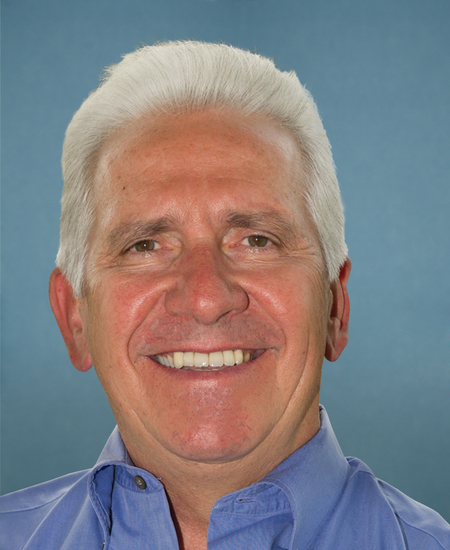
Rep. Jim Costa
Sponsored bills
Maddy summaryThe PART Act requires new vehicles to have catalytic converters marked with a unique identification number that links directly to the vehicle's identification number, stored in a law enforcement-accessible database. It establishes a $7 million grant program to help repair shops, dealers, law enforcement, and fleet owners purchase equipment for marking converters with visible, durable identifiers (using die or pin stamping and high-visibility paint). The bill also mandates that businesses buying catalytic converters keep detailed seller records (including vehicle information) for two years and use traceable payments, banning cash or cryptocurrency transactions. Additionally, it creates new federal criminal penalties for stealing or trafficking in catalytic converters, with potential sentences of up to five years in prison.
Maddy summaryHRES 1038 is a non-binding House resolution expressing the sense of Congress that the U.S. must reaffirm its commitment to the Fourteenth Amendment’s guarantees of birthright citizenship, due process, and equal protection under the law. It calls on all federal branches to defend these rights against actions that threaten them, such as policies undermining birthright citizenship or restricting voting access. The resolution specifically urges Congress to oppose legislation or executive actions that weaken these constitutional protections and to work toward full equal protection for all people. As a symbolic resolution, it does not create new law or impose legal requirements but emphasizes the importance of upholding these constitutional principles for democratic fairness.
This resolution supports the designation of the International Year of the Woman Farmer and recognizes the critical role of women in agriculture. The resolution also encourages citizens to celebrate the impact these women have on the food systems and agricultural workforce of the United States by encouraging and empowering women to pursue careers in agriculture and cultivate leadership opportunities.
Maddy summaryHJRES 144 is a congressional disapproval resolution targeting a specific rule issued by the Department of Veterans Affairs (VA) on December 31, 2025, which addressed "Reproductive Health Services" (90 Fed. Reg. 61310). This resolution directs Congress to disapprove the VA rule under Chapter 8 of Title 5, U.S. Code, meaning the rule would have no legal effect if passed. The bill directly affects the VA's implementation of reproductive health services for veterans, as it seeks to nullify the agency's existing policy. This is a procedural measure, not a substantive policy change, aimed solely at blocking the VA's rule through congressional action.
Maddy summaryHRES 1022 is a non-binding congressional resolution expressing support for Catholic schools and celebrating the 52nd annual National Catholic Schools Week (January 25-31, 2026). It recognizes Catholic schools' contributions to education, noting their role in serving 1.7 million students across diverse backgrounds, with high graduation rates and community-focused values. The resolution specifically supports the week's goals, highlights the National Catholic Educational Association and U.S. Conference of Catholic Bishops' partnership, and applauds the 2026 theme "Catholic Schools: United in Faith and Community." It does not create new policies, allocate funding, or impose obligations.
Maddy summaryThis bill requires the Social Security Administration to regularly inform disabled beneficiaries about the Ticket to Work program. Specifically, the Commissioner must send program information to each disabled beneficiary within one year of the law's enactment, and then every six months thereafter. The program helps disabled individuals access employment services while retaining benefits. This change directly affects Social Security disability beneficiaries by mandating ongoing outreach about work support options, without altering the program's existing rules or benefits.
Maddy summaryHR 7271, the Evan Anzoo Memorial Act, requires the Comptroller General to produce a report investigating deaths linked to USAID service cuts. The bill mandates a one-year report estimating 2025 deaths and five-year future deaths due to USAID stop-work orders, plus an assessment of whether specific individuals (like Evan Anzoo, 5, South Sudan, who died after losing HIV treatment) died because of lost USAID services. It also requires an interim update within 180 days and a list of other verified deaths tied to these service disruptions. The act does not change USAID policy but directs a factual review of impacts from prior USAID service reductions.
Maddy summaryThis bill creates a tax credit for businesses selling products made with U.S.-grown cotton. The credit equals 24% of the cotton's market value if processed only in the U.S. or in countries with U.S. trade deals, or 18% for other processing locations. To qualify, cotton must be digitally traced from U.S. farms to finished products and certified by the USDA as meeting origin requirements. It directly affects clothing and textile manufacturers selling qualifying products in the U.S. market.
Maddy summaryHR 7206, the Farm and Family Relief Act, provides direct financial assistance to agricultural producers facing market challenges during the 2025 crop year. It establishes one-time payments for eligible crop producers (including wheat, corn, soybeans, and cotton) when expected costs exceed expected returns, with payment limits based on farming income (capping at $125,000 or $250,000 depending on farming income percentage). The bill allocates $5 billion for specialty crop producers, $500 million for timber industry assistance, and $330 million for sugar beet producers through cooperative block grants. Additionally, it delays certain cost-shift provisions in food assistance programs and terminates specific tariff-imposing executive orders.