

Maddy summaryThe FAMILY Act would establish a national paid family and medical leave insurance program that provides wage replacement benefits for workers needing time off for caregiving or medical reasons. It defines "qualified caregiving" to include caring for a family member with a serious health condition, personal medical needs, or recovery from violence (including domestic violence, sexual assault, or stalking). Benefits would be calculated based on earnings, with a minimum monthly benefit of $580 and maximum of $4,000, administered by a new Office of Paid Family and Medical Leave within the Social Security Administration. Eligible individuals would need to have worked for at least 8 quarters in the previous year and file an application with required documentation, while existing state paid leave programs would continue to operate alongside this federal program.
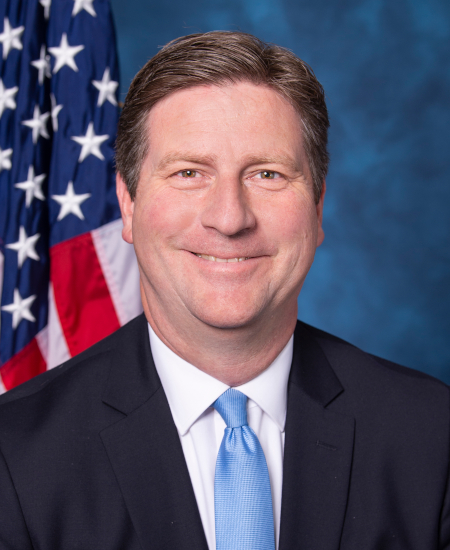
Rep. Greg Stanton
Sponsored bills
Maddy summaryHJRES 117 is a joint resolution terminating a national emergency declared by the President on July 30, 2025, under Executive Order 14323. It directly ends the legal authority granted by that emergency declaration, which would have allowed the executive branch to use special powers under the National Emergencies Act (50 U.S.C. 1622). The resolution requires congressional action to formally end the emergency, as mandated by Section 202 of the National Emergencies Act. This is a procedural step affecting federal agencies' emergency powers, not a new policy.
Maddy summaryThe FAIR Act of 2025 would prohibit companies from requiring pre-dispute arbitration agreements or waivers that prevent individuals from joining class or collective lawsuits in employment, consumer, antitrust, or civil rights cases. This directly affects workers, consumers, and small businesses who currently face forced arbitration for issues like workplace discrimination, product defects, or unfair business practices. The bill makes such agreements unenforceable while allowing voluntary arbitration after disputes arise and leaving collective bargaining agreements unaffected. It applies to all disputes occurring after the law takes effect, without changing how voluntary arbitration works post-dispute.
Maddy summaryThe FLAME Act requires the U.S. Fire Administration to provide Congress 60 days' notice before canceling 25% or more of the National Academy’s annual courses, including details on affected departments and justifications. It mandates notifying enrolled firefighters and fire chiefs at least 45 days before cancellations, with reimbursement for fire departments’ travel and staffing costs (like overtime) unless cancellations are due to "good cause" (e.g., facility closures or national emergencies). The bill also directs a GAO study by March 2026 to analyze how large-scale cancellations impact fire department readiness, interoperability, and the Academy’s role in training. This directly affects fire departments nationwide that send personnel to the Academy for in-person or virtual training.
Maddy summaryHR 5321 extends the deadline for allowing low-emission and energy-efficient vehicles to use high-occupancy vehicle (HOV) lanes from September 30, 2025, to December 31, 2026. It also requires the Transportation Secretary to conduct a study within 180 days of enactment on whether electric vehicle exemptions in HOV lanes reduce traffic congestion, with results reported to Congress. The bill directly affects state and local transportation agencies managing HOV facilities and the Department of Transportation. Key provisions include the deadline extension and the mandated study, with no changes to vehicle eligibility rules.
Maddy summaryThis bill directs the U.S. President to identify Pakistani officials responsible for undermining democracy and human rights within 180 days of enactment, then impose Global Magnitsky sanctions on them. It targets senior government, military, or security officials found to have committed gross human rights violations or interfered with democratic processes, such as during Pakistan’s 2024 elections or through constitutional changes. Sanctions would include asset freezes and travel bans, with exceptions for humanitarian aid, UN obligations, and national security activities. The bill expires on September 30, 2030, and aims to pressure Pakistan to uphold democratic norms, human rights, and judicial independence.
Maddy summaryThis bill reauthorizes and updates federal programs for newborn screening, primarily affecting infants, children with genetic conditions, and their families. It increases annual funding for screening programs to $20.8 million (2026-2030) and research to $22.25 million, requiring states to develop parent education materials on screening follow-up and treatment. Key provisions include creating a public clearinghouse for screening data, improving coordination between state health programs, and mandating that research on genetic testing must consult with state health departments. The bill also updates deadlines for advisory committee work and technical assistance for screening panels through 2030.
Maddy summaryThe Mental Health in Aviation Act of 2025 requires the Federal Aviation Administration (FAA) to update regulations within two years to encourage pilots and air traffic controllers to seek mental health care and disclose conditions without fear of losing medical clearance. It mandates annual reviews to improve the medical clearance process for mental health conditions - such as approving additional safe medications, enhancing examiner training, and reducing backlogs - and allocates $13.74 million yearly (2026-2029) to hire more aviation medical examiners. The bill also directs the FAA to implement recommendations from a mental health rulemaking committee and fund a public campaign to reduce stigma around mental health care in aviation. These provisions aim to support aviation workers' well-being while streamlining safety-related medical evaluations.
Maddy summaryThis bill requires the EPA to establish guidelines for indoor air contaminants like radon, formaldehyde, and carbon monoxide that affect schools and childcare facilities. It mandates a national assessment of indoor air quality in these buildings, with updates every five years, and provides technical assistance to schools and childcare providers to implement air quality improvements. The EPA must publish science-based guidelines with recommended concentration limits for key contaminants and support voluntary building certifications for healthier indoor environments. These provisions directly impact local schools, childcare centers, and state/local governments responsible for building maintenance and health standards.
Maddy summaryThis bill prohibits Members of Congress, their spouses, and dependent children from owning or trading certain investments, including stocks, commodities, and derivatives (referred to as "covered investments"). It requires affected individuals to divest these investments within 90-180 days, with specific exemptions for Treasury bonds, diversified mutual funds, small business interests, and family trusts meeting strict conditions. Violations incur penalties of 10% of the investment's value plus disgorgement of profits, paid directly to the U.S. Treasury. The law applies to all covered individuals during federal service, with exceptions for investments acquired through inheritance or occupational trading (e.g., a spouse’s finance job).