

Maddy summaryThe Support our Firefighters Act establishes a new paid rest and recuperation leave program for federal wildland firefighters working for the Forest Service and the Department of the Interior. Under this law, these employees would receive paid time off immediately after completing a qualifying fire incident, with specific rules requiring a minimum number of rest days following periods of deployment. The bill also allows for the transfer of up to $5 million in funding from the Department of Agriculture to the Department of the Interior to help sustain salary increases for these workers. Additionally, the legislation updates existing overtime rules to remove specific year limits, ensuring that wildland firefighters can work extended hours without hitting caps in future years.
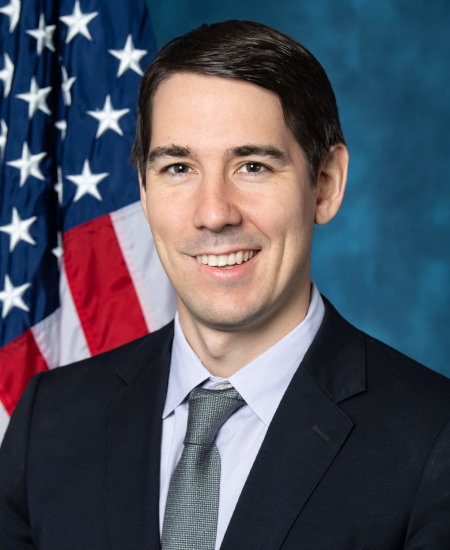
Rep. Josh Harder
Sponsored bills
Maddy summaryThe Protecting America's Herds Act creates a grant program for cooperative extension services to help prepare for and respond to New World screwworm outbreaks in livestock. Funds awarded through this competitive process can be used to train staff, support animal inspections, educate producers, and provide direct technical assistance on prevention and treatment. The Department of Agriculture must prioritize grants for states and Tribal communities at higher risk of the pest spreading and coordinate closely with veterinary and agricultural experts. This legislation aims to strengthen the nation's ability to detect and manage this specific animal health threat through improved readiness and education.
Maddy summaryThis bill directs the government auditor (Comptroller General) to study how wildfire prevention programs operate across different land ownerships - including federal, state, tribal, and private lands. The study will examine current federal rules, funding access, and specific wildfire mitigation activities from the 2003 Healthy Forests Restoration Act. It will identify barriers and opportunities to improve cross-boundary collaboration, with a report due to Congress within two years. The bill itself does not create new programs or funding, only requiring this analysis.
Maddy summaryThis bill allows the President to declare a smoke emergency in any state facing significant air quality drops due to wildfire smoke, either based on current conditions or future predictions. Once declared, the Federal Emergency Management Agency and other federal agencies can provide grants, equipment, and personnel to help states and local communities set up smoke shelters, air purifiers, and monitoring sites. The legislation also authorizes the Small Business Administration to offer grants to small businesses that suffer major revenue losses because of the smoke. Additionally, the bill adjusts federal budget rules to ensure that money designated for these smoke emergency efforts is not subject to certain deficit reduction measures.
Maddy summaryHR 5408, the Faster Labor Contracts Act, requires employers to begin negotiating a first contract with a newly certified union within 10 days of written request. If no agreement is reached within 90 days, the parties must seek mediation, and if unresolved after 30 days of mediation, the dispute moves to binding arbitration by a three-member panel. The arbitration decision, based on factors like employer finances, industry standards, and cost of living, becomes binding for two years. This bill directly affects newly certified unions and their employers during initial contract negotiations, aiming to reduce delays that currently average 465 days.
Maddy summaryThe Child Care Modernization Act of 2026 updates federal rules to help states create flexible child care systems that offer parents more choices across different settings like homes, centers, and schools. It expands eligibility for assistance to include children of parents who are job seekers, students, or those receiving health treatment, while also raising the income limit for some families. The bill requires states to use cost-based models to set payment rates that cover provider expenses and mandates the creation of new grants to help build and expand child care facilities. Additionally, it establishes new reporting requirements to track how much families spend on care and measures progress on improving workforce quality and access.
Maddy summaryThis resolution expresses support for designating May 2026 as Necrotizing Fasciitis Awareness Month to highlight a rare and severe bacterial infection. The bill encourages federal, state, and local agencies, healthcare providers, and community organizations to promote public education about the disease's symptoms and risks. By raising awareness, the measure aims to encourage early detection and prompt medical treatment, which are critical for improving patient outcomes and survival rates. Additionally, the resolution offers support to patients, survivors, and their families who face long-term physical and emotional challenges from the infection.
Maddy summaryThis bill would add pharmacist services to Medicare Part B coverage for beneficiaries, specifically covering pharmacist-led testing and treatment for illnesses like flu, COVID-19, or strep throat during public health emergencies. It defines covered services as those performed under state law, often requiring collaboration with a physician, and sets payment at 80% of the lesser of the actual charge or 85% of physician payment rates. Pharmacists would be prohibited from balance billing for these services, ensuring Medicare beneficiaries pay only their standard copayment. The changes would take effect January 1, 2026.
Maddy summaryThe Recycling Infrastructure and Accessibility Act of 2025 establishes a competitive federal grant program to fund projects improving recycling access in underserved communities. It authorizes $30 million annually (2025-2029) for grants to states, local governments, tribes, or public-private partnerships to build infrastructure like transfer stations, expand curbside collection, or reduce transport costs. Grants must be $500,000-$15 million, with 70% reserved for projects in communities lacking a materials recovery facility within 75 miles. The program requires grantees to report on implementation and outcomes, excluding funding for recycling education.
Maddy summaryThis bill authorizes the U.S. Mint to produce commemorative $5 gold and $1 silver coins marking the 25th anniversary of the September 11, 2001, terrorist attacks. The coins must feature designs honoring victims and first responders (including the inscription "Never Forget") and will be sold only during 2027-2028. All surcharges ($35 per gold coin, $10 per silver coin) collected from sales will fund the National September 11 Memorial and Museum at the World Trade Center, with no net cost to the federal government. The coins are legal tender but primarily intended for collectors, not circulation.