Issue · Housing

Housing

Every housing bill, vote, and legislator stance in Tennessee, automatically classified by Maddy, our AI policy reader.

Total bills
116
114th Regular Session (2025-2026)
Top supporter
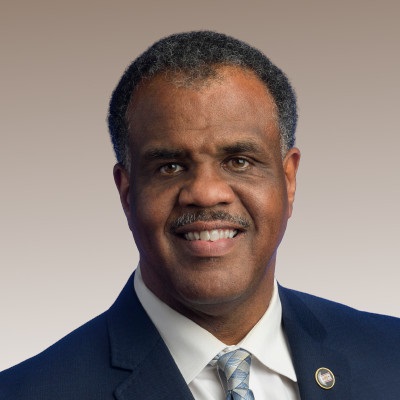
Ronnie Glynn
100% support rate
Top opponent
Raumesh Akbari
20% support rate
Ranked legislators
10
5 support · 5 oppose
Key legislators

Who's moving housing in Tennessee

Legislators moving housing in Tennessee
Legislator Party Stance Support rate Votes
Ronnie Glynn
Ronnie Glynn House · District 67
D
Strong +
100% 51
Larry Miller
Larry Miller House · District 88
D
Strong +
88% 58
Sam McKenzie
Sam McKenzie House · District 15
D
Strong +
83% 39
Bob Freeman
Bob Freeman House · District 56
D
Strong +
80% 47
Caleb Hemmer
Caleb Hemmer House · District 59
D
Strong +
80% 47
Raumesh Akbari
Raumesh Akbari Senate · District 29
D
Strong −
20% 21
Vincent Dixie
Vincent Dixie House · District 54
D
Oppose
29% 56
Karen Camper
Karen Camper House · District 87
D
Oppose
33% 52
Bo Mitchell
Bo Mitchell House · District 50
D
Oppose
38% 65
Ron Travis
Ron Travis House · District 31
R
Oppose
40% 54
Showing 11–20 of 116 bills

All housing bills

signed · Tennessee · House May 27, 2026

HB 2509: Housing - As enacted, establishes the community workforce housing innovation pilot program to be administered by the Tennessee housing development agency; authorizes the agency to provide loans to an applicant for construction or rehabilitation of workforce housing in each of the three grand divisions; requires the housing to be affordable to natural persons or families who meet certain criteria. - Amends TCA Title 7, Chapter 53; Title 13; Title 48, Chapter 101, Part 3; Title 56 and Title 67.

HB 2509 establishes Tennessee's Community Workforce Housing Innovation Pilot Program, administered by the Tennessee Housing Development Agency. It authorizes the agency to provide loans for constructing or rehabilitating workforce housing affordable to households earning no more than 150% of area median income, prioritizing projects that set aside at least 80% of units for workforce housing. The program requires applicants to form public-private partnerships and contribute at least 10% of project costs through grants or land donations, with funding targeted to all three grand divisions and projects near employment centers. Projects must demonstrate regulatory incentives (like streamlined permits) or innovative features (e.g., mixed-use design) to qualify for loans.
in committee · Tennessee · Senate Mar 23, 2026

SB 2628: Criminal Offenses - As introduced, enacts the "Fair Background Check and Due Process Act." - Amends TCA Title 37; Title 38; Title 39; Title 40; Title 47; Title 50; Title 62; Title 66 and Title 71.

SB 2628, the "Fair Background Check and Due Process Act," prevents background check companies from reporting unproven criminal charges (like pending cases, dismissals, or non-convictions) to employers, landlords, or licensing agencies, except for specific serious offenses like theft, fraud, or violent crimes. It directly affects job applicants, renters, and license seekers who have arrest records without convictions. The bill requires background checks to only include convictions or excluded offenses, while allowing employers to ask about job-related conduct and conduct required licensing checks. This changes how background checks are conducted for employment, housing, and licensing in Tennessee.
Sub-Topics Firearms
in committee · Tennessee · Senate Mar 17, 2026

SB 2656: Welfare - As introduced, directs TACIR to conduct a study into homelessness and ways to combat the rise of homelessness; requires TACIR to file the report with the health and welfare committee of the senate, the committee in the house of representatives with jurisdiction over matters pertaining to homelessness, and the legislative librarian before January 31, 2027. - Amends TCA Title 4 and Title 71.

SB 2656 requires Tennessee's Advisory Commission on Intergovernmental Relations (TACIR) to study homelessness in the state and identify effective strategies to address its rising prevalence. TACIR must complete this study using existing resources and submit a detailed report to the Senate Health and Welfare Committee, the relevant House committee on homelessness, and the legislative librarian by January 31, 2027. This bill does not create new funding or programs but mandates a data-driven review to inform future legislative decisions on homelessness. The study aims to provide concrete recommendations for state lawmakers to address homelessness trends.
Sub-Topics Homelessness
failed · Tennessee · Senate Mar 10, 2026

SB 2506: Human Rights - As introduced, enacts the "Tennessee Fair Chance Housing Act." - Amends TCA Title 4, Chapter 21 and Title 66.

SB 2506, the "Tennessee Fair Chance Housing Act," prohibits landlords and housing providers from refusing to rent or lease housing solely based on a person's criminal history. It limits consideration of criminal records to a 3-year look-back period for misdemeanors and 10 years for felonies (except for sex offenses, which require an individualized safety assessment). Housing providers must conduct an individualized assessment considering factors like the offense severity, time since conviction, rehabilitation efforts, and safety risks before denying housing. This law directly affects renters with criminal records and housing providers managing residential properties across Tennessee.
Sub-Topics Renters Tenant Rights
in committee · Tennessee · Senate Feb 5, 2026

SB 2341: Tennessee Housing Development Agency - As introduced, enacts the "First-Time Homebuyer Assistance Program," which creates a first-time homebuyer assistance program, to be administered by the agency. - Amends TCA Title 5; Title 6; Title 7 and Title 13, Chapter 23.

SB 2341 creates Tennessee's First-Time Homebuyer Assistance Program, providing up to $20,000 in financial support to eligible first-time homebuyers for down payments, closing costs, or reducing mortgage interest rates. The program applies to new residential units under $450,000 purchased in Tennessee, requiring owner-occupancy within 60 days and meeting federal tax criteria for first-time buyers (including specific provisions for single parents). Recipients must repay up to 50% of their home equity gain if they sell the property before the original mortgage term ends. The Tennessee Housing Development Agency administers the program using state appropriations and other funds.
in committee · Tennessee · Senate Mar 24, 2026

SB 2282: Real Property - As introduced, makes void and unenforceable any restrictions on the operation of a family child care home or group child care home that may be in a homeowners' association declaration that applies to a property where a family child care home or group child care home is or will be sited by the property owner; makes other changes relative to restrictions on the use of real property. - Amends TCA Title 66.

SB 2282 invalidates homeowners' association (HOA) restrictions that block licensed family or group child care homes from operating on residential properties. It requires HOAs to enforce state licensing rules instead of their own covenants, and allows care providers to sue HOAs for violations (with actual damages plus up to $1,000 in punitive damages). The bill also prohibits landlords from refusing to rent to tenants operating licensed child care, though landlords may require notice, liability insurance, or restrictions on shared spaces. These changes apply to new HOA documents or rental agreements after the law takes effect. The bill directly affects licensed child care providers, HOAs, and landlords in Tennessee.
Sub-Topics Landlords Renters
in committee · Tennessee · Senate Mar 17, 2026

SB 2516: Housing - As introduced, encourages municipalities to study and assess housing affordability and inventory availability, and to adopt a pattern book for purposes of encouraging the construction of medium-density housing. - Amends TCA Title 6; Title 7 and Title 13.

SB 2516 encourages Tennessee municipalities to study local housing needs and adopt standardized design guides for medium-density housing (such as townhouses or small apartment buildings). It requires cities to inventory housing stock, assess affordability gaps between household income and housing costs, and create "pattern books" with pre-approved designs and streamlined permitting processes. These pattern books would help developers build more housing options without altering neighborhood character by providing clear, approved layouts. The bill applies to all Tennessee cities and towns that choose to participate in these planning efforts.
in committee · Tennessee · House Feb 5, 2026

HB 2234: Trade Regulation - As introduced, enacts the "Stop Rent Rigging Act." - Amends TCA Title 47 and Title 66.

HB 2234, the "Stop Rent Rigging Act," prohibits landlords and software providers from using technology to coordinate rental prices across multiple properties. It bans facilitating agreements where landlords avoid competing on rent or using algorithmic tools that collect and analyze pricing data from two or more landlords (who aren’t subsidiaries) to recommend rents or lease terms. The law directly affects residential property owners/managers and companies offering data analytics services that enable coordinated pricing. Violations face penalties matching existing antitrust laws, and the bill takes effect July 1, 2026.
Sub-Topics Renters
in committee · Tennessee · House Apr 16, 2026

HB 2409: Taxes, Real Property - As introduced, adds an exception to the requirement that mineral and other interests in real property are assessed to the owner of the real property. - Amends TCA Title 67, Chapter 5.

HB 2409 amends Tennessee property tax law to change how mineral interests and similar property rights are assessed. It specifies that these interests (like mineral rights or leasehold improvements) are generally assessed to their owner, but adds two exceptions: 1) if a lessee has a "payments in lieu of taxes" agreement with state/local government (effective April 30, 2019 or later), or 2) if the lessee is part of a housing authority's affordable housing project under specific lease terms (entered after April 30, 2026). In these cases, the property is assessed solely to the governmental entity (like a housing authority), not the private owner. The bill directly affects mineral rights holders, property owners with lease agreements, and housing authorities managing affordable housing projects.
died · Tennessee · House Feb 2, 2026

HB 1988: Planning, Public - As introduced, authorizes the City of Clarksville and Montgomery County to participate in the Tennessee local land bank program. - Amends TCA Title 13, Chapter 30.

HB 1988 proposed to amend Tennessee law to allow Clarksville and Montgomery County to join the state's local land bank program by establishing specific population thresholds. The bill would have required Clarksville's population to fall between 166,700 and 166,800, and Montgomery County's between 220,000 and 220,100, based on the 2020 or later census. This change would have directly enabled these two jurisdictions to participate in the land bank program, which helps manage vacant or abandoned properties. The bill was introduced in 2026 but withdrawn the same year.
Showing 11 to 20 of 116 bills