

Maddy summaryThe BIS STRENGTH Act allows the Under Secretary of Commerce for Industry and Security to hire up to 25 outside experts for the Bureau of Industry and Security, bypassing standard civil service hiring rules to fill critical skill gaps. These temporary appointments are limited to a maximum of five years per employee, with total annual compensation capped at the Vice President's salary level. The bill requires the Under Secretary to submit annual reports to congressional committees detailing the expertise gaps identified, the qualifications of hired individuals, and their impact on export control missions. This special hiring authority expires five years after the act is enacted, though existing employees may finish out their appointed terms.
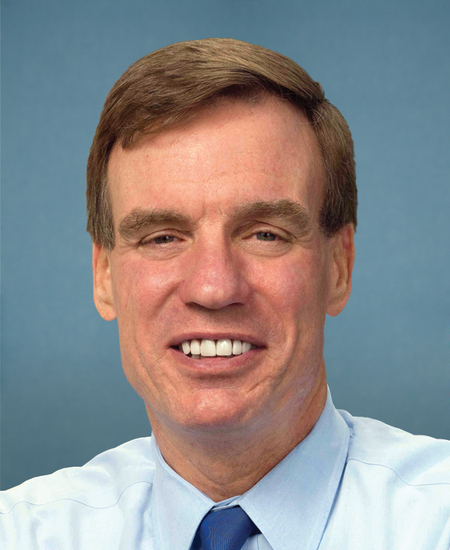
Sen. Mark R. Warner
Sponsored bills
Maddy summaryThe INSULIN Act of 2026 requires health insurance plans to limit insulin copayments to $35 per 30-day supply starting in 2027, with plans choosing to cap costs at 25% of the negotiated price after 2028. The bill also mandates that pharmacy benefit managers pass all rebates and discounts related to insulin directly to health plans rather than retaining them. Additional provisions include measures to speed up the approval process for generic and biosimilar insulin products, establish a pilot program to provide affordable insulin to uninsured individuals in 10 states, and create a resource center and hotline to help uninsured people access assistance programs.
Maddy summaryThis resolution designates the week of August 22 through August 30, 2026, as "National Park Week." It directly affects the public by encouraging responsible visits and support for the National Park System, which includes parks, battlefields, and historical sites located across the United States and its territories. The measure serves as a formal declaration to highlight the parks' role in recreation, education, and economic activity without altering any laws or funding.
Maddy summaryThis resolution designates August 16, 2026, as National Airborne Day to honor the history and contributions of U.S. airborne military forces. The bill calls on the American people to observe the day with programs and ceremonies celebrating the bravery and achievements of paratroopers and air assault units. It highlights the legacy of these forces, which began with the first official Army parachute jump on that date in 1940 and have since served in numerous conflicts worldwide. The measure serves as a commemorative recognition rather than a change to federal law or military operations.
Maddy summaryThe Financial Artificial Intelligence Risk Reduction Act directs the Financial Stability Oversight Council to assess how artificial intelligence impacts financial system stability and requires it to submit a report to Congress within 180 days identifying specific threats, regulatory gaps, and recommendations for action. The bill mandates that the Securities and Exchange Commission issue rules requiring major financial entities, such as issuers and brokers, to establish policies and controls that specifically address their use of AI, including governance measures for testing, monitoring, and human oversight. Additionally, it expands regulatory authority over third-party service providers by allowing federal housing finance agencies to examine contractors performing activities on behalf of regulated entities and clarifies that the use of AI does not excuse compliance with existing securities laws.
Maddy summaryThe Strengthening Coast Guard Communities Act of 2026 transfers specific intergovernmental support agreement authorities from the Secretary of Defense to the Commandant of the Coast Guard. This change allows the Commandant to directly manage agreements that provide services and infrastructure support to Coast Guard communities, rather than requiring approval through the Department of Defense. To ensure transparency, the bill requires the Commandant to notify the relevant Senate and House committees in writing within 60 days of exercising this new authority.
Maddy summaryThe Constructing the Path to Suicide Prevention Act directs the Centers for Disease Control and Prevention to conduct a study analyzing suicide risk factors among construction workers who have died by suicide. The investigation will examine specific variables such as employment status, union membership, health insurance coverage, substance use history, financial stress, and prior mental health diagnoses. To protect privacy, all collected data must adhere to applicable federal and state laws. Within three years of the bill’s enactment, the agency is required to submit a report to Congress containing policy recommendations for addressing these identified risk factors.
Maddy summaryThe Civil Nuclear Export Act of 2026 amends the Export-Import Bank Act to allow federal financing for nuclear reprocessing facilities when authorized under existing atomic energy agreements. It expands the scope of the Program on China and Transformational Exports to explicitly include civil nuclear energy technologies, materials, services, and related infrastructure. Additionally, the bill raises the cap on excess lending authority by $50 billion for this specific program and increases the default rate threshold from 2 percent to 4 percent before mandatory monitoring actions are triggered.
Maddy summaryThe MATCH IT Act of 2026 directs the Department of Health and Human Services to create a uniform definition for patient match rates and establish a minimum data set required to accurately link patients with their medical records. These new standards would be integrated into federal health information technology certification criteria and Medicare interoperability program requirements, affecting electronic health record vendors and healthcare providers participating in these programs. To encourage adoption, the bill introduces a voluntary bonus measure within the Medicare Promoting Interoperability Program that allows eligible providers to receive payment adjustments for achieving high patient match rates, such as 90 percent or higher. Additionally, the legislation mandates the creation of an anonymous reporting program where providers can submit matching accuracy data to help the government monitor progress and adjust incentive thresholds over time.
Maddy summaryThe Kids Online Safety Act (S 1748) requires major social media platforms, online video games, and other "covered platforms" to implement specific safety features for minors (under 17). These features include default privacy settings that limit harmful design features like infinite scrolling and auto-play, parental controls for managing minors' accounts, and restrictions on advertising illegal products to minors. The bill also mandates annual transparency reports about how platforms are used by minors and requires platforms to provide clear notices about their content algorithms. It creates a Kids Online Safety Council to advise Congress on online safety issues for children. The law applies to platforms with more than 10 million monthly users in the U.S. and takes effect 18 months after enactment.