Maddy summaryThis Senate resolution designates the week of September 20 through September 27, 2026, as Gold Star Families Remembrance Week. The measure honors families who have lost loved ones while serving in the U.S. Armed Forces or as veterans. It encourages the American public to observe this period by performing acts of service and recognizing these families' sacrifices.
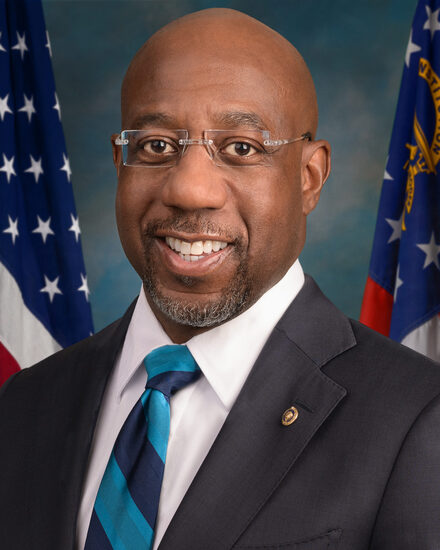
Sen. Raphael G. Warnock
Sponsored bills
Maddy summaryThis bill requires the Federal Aviation Administration (FAA) to update regulations to encourage pilots and air traffic controllers to seek and disclose mental health care without fear of losing their medical certification. It mandates an annual review of the "special issuance" process (for medical certification) to consider new treatments, improve examiner training, and reduce backlogs, while allocating $15 million annually (2026-2029) to recruit more medical examiners and provide mental health training. Additionally, it funds a $1.5 million annual public campaign to destigmatize mental health care in aviation, improve trust with workers, and make resources easily accessible at aviation medical offices and training facilities. The FAA must consult with industry stakeholders and report progress to Congress on implementation.
Maddy summaryThis resolution formally honors the life, service, and legacy of Jon Llewellyn Kyl, a former U.S. Senator from Arizona who passed away at age 84. It details his career highlights, including his time in the House of Representatives, his long tenure in the Senate, and his work on issues such as water policy, national security, and crime victims' rights. The bill directs the Secretary of the Senate to share this tribute with the House of Representatives and Kyl's family, while also ordering the Senate to adjourn for the day as a mark of respect.
Maddy summarySRES 870 is a congressional resolution that officially recognizes Hispanic Heritage Month, which runs from September 15 to October 15, 2026. The bill highlights the demographic, economic, and military contributions of Latino Americans, noting their significant role in population growth, workforce participation, and national defense. It urges the public to observe the holiday with programs that celebrate the heritage and culture of Latinos in the United States.
Maddy summaryThe Terrorism Risk Insurance Program Reauthorization Act of 2026 extends the federal terrorism insurance program through 2034, ensuring continued government support for insurance companies facing large losses from terrorist attacks. The bill also updates the schedule for recouping federal funds, shifting the timeline for when insurers must repay taxpayer money to later dates ranging from 2029 to 2036. These changes directly affect insurance carriers and policyholders by maintaining the program's availability for a longer period and adjusting the financial obligations tied to it.
Maddy summaryThis joint resolution proposes an amendment to the U.S. Constitution that would explicitly prohibit using slavery or involuntary servitude as a punishment for a crime. The bill seeks to remove the exception in the 13th Amendment that currently allows such practices within the criminal justice system. If ratified by three-fourths of state legislatures, this change would directly affect incarcerated individuals by banning forced labor as a sentence. The text clarifies that the amendment does not prevent voluntary work programs or community service alternatives for those in correctional institutions.
Maddy summaryThe End Trump's Tariff Tax Act terminates specific import duties imposed under recent trade investigations and repeals two statutory authorities used to impose tariffs for forced labor violations, balance-of-payments issues, and foreign discrimination. The bill requires the U.S. Customs and Border Protection Commissioner to automatically refund all duties collected during specified periods in 2026, along with interest, without requiring importers to submit formal requests or documentation. Importers who paid these tariffs will receive their money back, with small businesses prioritized for payment where practicable.
Maddy summaryThe Foreign Robocall Elimination Act establishes a taskforce to address unlawful robocalls made into the United States from foreign countries. The taskforce, composed of government agency representatives and private sector experts from telecommunications and related industries, must produce a report within 360 days detailing the scale of foreign-originating robocalls, their financial impact, and solutions like improved caller ID authentication technology and international cooperation. The report will specifically study call origins, identity theft losses, enforcement strategies, and incentives for foreign countries to collaborate on combating these calls. This bill directly affects federal agencies (including the FCC, FTC, and Department of Justice) and the telecommunications industry by mandating a collaborative effort to develop actionable recommendations for Congress.